
Please Follow us on Gab, Minds, Telegram, Rumble, Gettr, Truth Social, Twitter, YouTube, Instagram
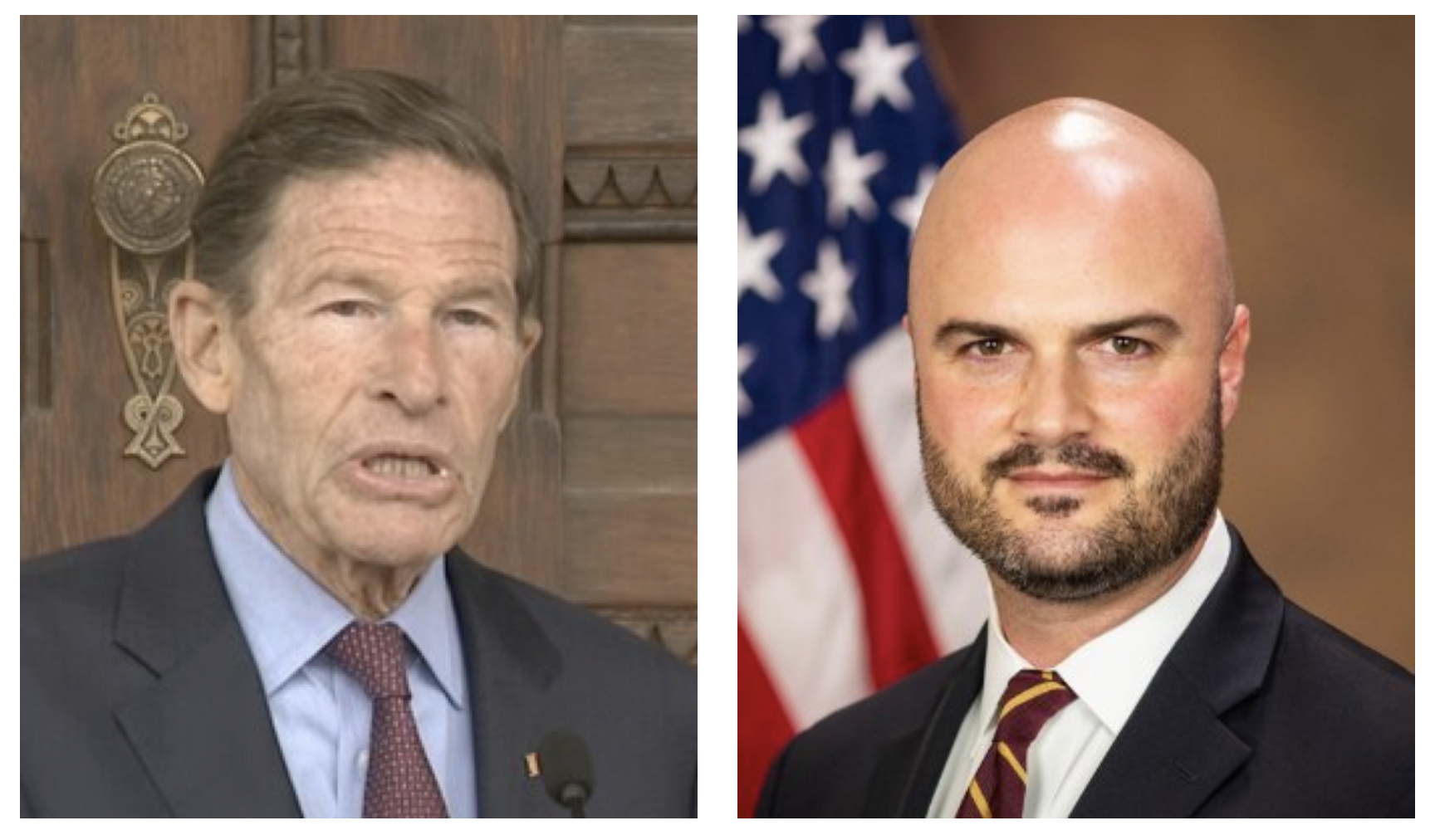
Connecticut’s senior senator responded Thursday to U.S. Attorney Aaron Reitz’s formal demand that he preserve records related to efforts targeting Americans for their associations with President Trump, by framing the letter as an “unlawful” attempt to intimidate Congress itself.
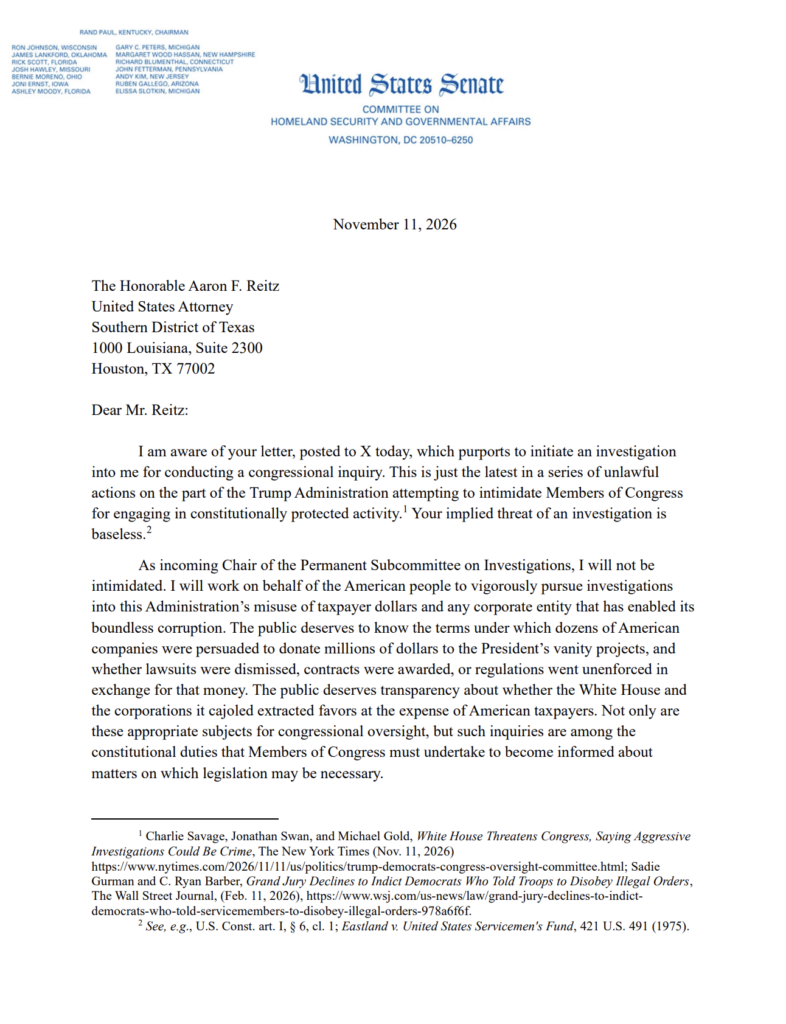
In a multi-post thread on X, Blumenthal declared that Reitz’s notice—citing federal statutes against conspiracies to deprive citizens of rights (18 U.S.C. §§ 241 and 242)—was “just the latest in a series of unlawful actions on the part of the Trump Admin attempting to intimidate Members of Congress for engaging in constitutionally protected activity.” He added that the implied threat was “baseless” and that, as incoming chair of the Permanent Subcommittee on Investigations, “I will not be intimidated.”
Blumenthal further insisted the public “deserves transparency” about whether the White House and corporations “extracted favors at the expense of American taxpayers” in connection with the privately funded White House ballroom project, casting his inquiries as core constitutional oversight.
Reitz’s November 11 letter and accompanying public statement took a sharply different view. The Southern District of Texas prosecutor demanded preservation of documents, communications, and records tied to what he described as efforts to “intimidate” or “suppress” Americans for constitutionally protected associations with the president and his allies. “Congress is not a weapon to be wielded against the American people,” Reitz wrote, warning that failure to preserve evidence could lead to sanctions or adverse inferences. The letter set a November 18 deadline for confirmation.
The exchange highlights a familiar pattern from Blumenthal: aggressive use of congressional investigative tools against private citizens and donors over political associations, followed by claims of victimization when federal prosecutors assert that such tactics may cross into protected First Amendment territory. While Blumenthal frames his actions as routine oversight into potential conflicts involving taxpayer dollars and corporate influence, Reitz and the Justice Department have treated the targeting of individuals for philanthropic support of administration-linked projects as potential harassment that risks chilling free association.
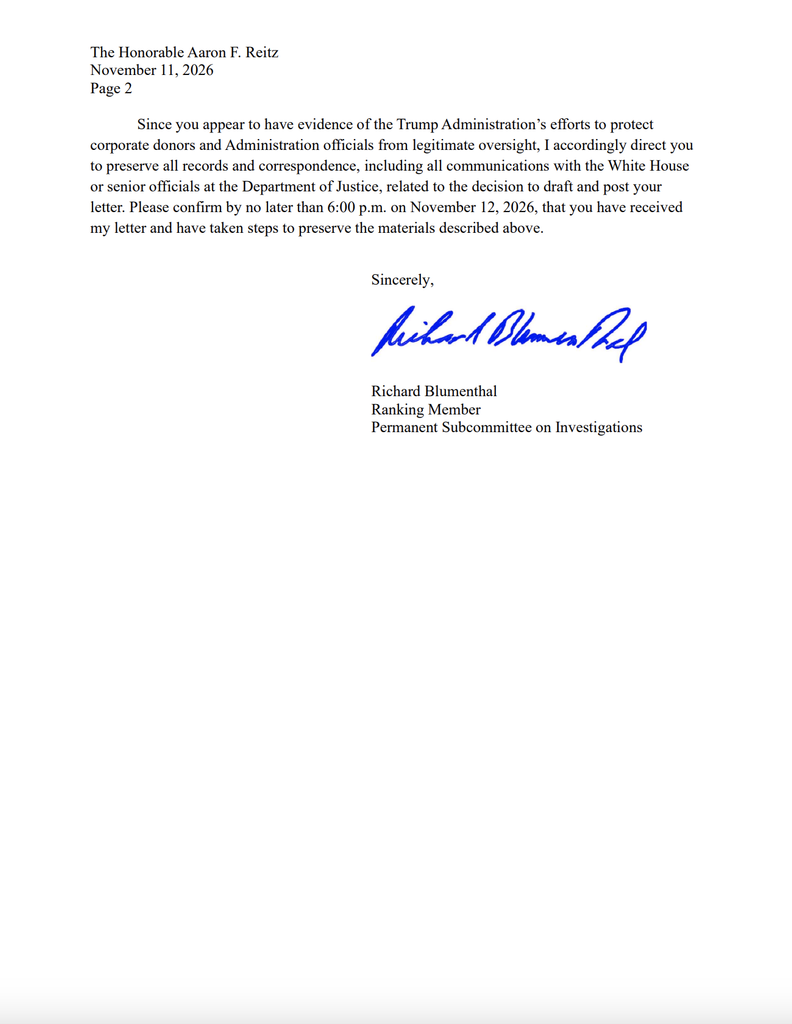
Blumenthal’s defiance—echoed in a formal reply letter in which he demanded preservation of Reitz’s own records—does little to address the core concern that investigative power is being deployed against ordinary Americans for their political leanings rather than concrete evidence of wrongdoing. For Connecticut residents who have watched their senator treat oversight as a partisan instrument, the exchange is less a defense of constitutional duties than confirmation that the incoming Democratic majority intends to continue using Congress as a vehicle for political retribution.






Stay updated with the latest in the Constitution State with The CT Centinal