
Please Follow us on Gab, Minds, Telegram, Rumble, Gettr, Truth Social, Twitter, YouTube, Instagram
Connecticut’s top Democrats gathered in Hamden on Friday the 13th to warn that proposed Trump administration changes to the 2030 Census could undercount the state by roughly 250,000 people, costing federal dollars and potentially threatening a congressional seat. The press conference, featuring Gov. Ned Lamont, Lt. Gov. Susan Bysiewicz, U.S. Rep. Rosa DeLauro, Hamden’s mayor, and several advocacy groups, framed the rules as an unconstitutional power grab aimed at blue states.
The actual proposal, published by the Census Bureau in September, would restrict the population base used for congressional apportionment (House seats and Electoral College votes) to U.S. citizens and lawful permanent residents—green-card holders. Undocumented immigrants, temporary visa holders, refugees, asylum seekers, DACA recipients, and international students would be excluded from that specific count. The rule also proposes dropping race and ethnicity questions from the short form and adjusting “usual residence” criteria so that people are more likely counted where they lawfully spend the greatest number of days between early January and mid-April. That could shift snowbirds toward their winter homes and college students toward their parents’ addresses rather than campus towns.
Lt. Gov. Bysiewicz called the proposed rule changes an effort to “manipulate the census to give taxpayer funding and political power to the states that he favors” and a violation of the Constitution’s command to count “every person.” She specifically flagged the college-student and snowbird rules as disadvantages for Connecticut cities with universities—Hamden, New Haven, Hartford, Middletown, New London, Bridgeport—and warned of “significant loss of federal funding.” DeLauro went further, arguing that failing to count every resident of Hamden, which presumably includes those here illegally, would deny the town its “fair share” of funding for Medicare, Head Start, school lunches, child care, schools, hospitals, roads, and bridges. She invoked the 14th Amendment’s “persons” language and promised litigation if the rules advance. Both officials treated the distinction between legal and illegal presence as largely irrelevant to the political and fiscal consequences.
Hamden Mayor Adam Sendroff stressed that local governments need “reliable” data for planning and that undercounting threatens education, transportation, community development, public health, and public safety funding. Patricia Rossi of the League of Women Voters of Connecticut said the changes would hurt people of color, renters, the homeless, the poor, and those whose immigration status has been questioned; she labeled a potential citizenship question a “scare tactic” whose damage could not even be estimated. Census consultant Terri Ann Lowenthal, a longtime Democrat-side expert who previously served as staff director of the House census subcommittee and worked on the Obama transition, echoed the charge that the revisions are designed to serve “partisan and political goals.” Michelle Riordan-Nold, executive director of the Connecticut Data Collaborative, called them “nefarious attempts to subvert our census” and pledged her group would help “count every resident.”
Gov. Lamont called the timing “ironic” on Friday the 13th and expressed particular surprise at the winter-residence window, saying it risked “playing games” that would move people and resources from blue states to red ones. He and DeLauro both suggested Connecticut could potentially be at risk of losing a House seat if 250,000 people were excluded from the Connecticut census numbers—though they acknowledged the risk is smaller than it would be in New York or California.
The 250,000 estimate appears to reflect the state’s non-citizen population that would fall outside the new apportionment base. Connecticut’s foreign-born share is about 15.9 percent, ranking roughly 11th among states—consistent with DeLauro’s earlier boasts about the state’s immigrant density. The speakers repeatedly blurred legal permanent residents with temporary or illegal status, even though the Trump Administration proposal continues to count green-card holders.
Public comments ran roughly 89–90 percent against the draft rule, according to an analysis promoted by the “Hands Off Our Census” campaign, a coalition of left-leaning data, housing, and civil-rights groups that supplied templates and organized submissions. The volume reflects organized opposition rather than spontaneous public consensus.
The Democrats’ core claim—that the Constitution requires counting every person present on Census Day for apportionment—is the traditional practice, but it has never been free of debate. The proposed rule argues that illegal aliens and those with temporary or less durable status lack the “enduring tie and allegiance” of true inhabitants. Counting non-citizens for seats and Electoral College votes dilutes the representation of citizens and transfers political power toward jurisdictions that host large numbers of non-citizens, legal or otherwise. Federal funding formulas that rely on the same population numbers raise a parallel question: why should the presence of people ineligible to vote determine the allocation of billions in taxpayer resources for programs that primarily serve citizens and legal residents?
The race-and-ethnicity data complaint is particularly pointed given recent Connecticut practice. A Connecticut Centinal report earlier this week documented that the Lamont administration used COVID child-care relief funds to award higher rates to providers in majority-minority census tracts and to minority owners, explicitly citing Social Vulnerability Index factors that include race and ethnicity. Officials who insist the Census must continue collecting race data for “civil rights” and equity purposes have already shown they are willing to deploy demographic data to distribute benefits unequally by race when it suits progressive priorities.
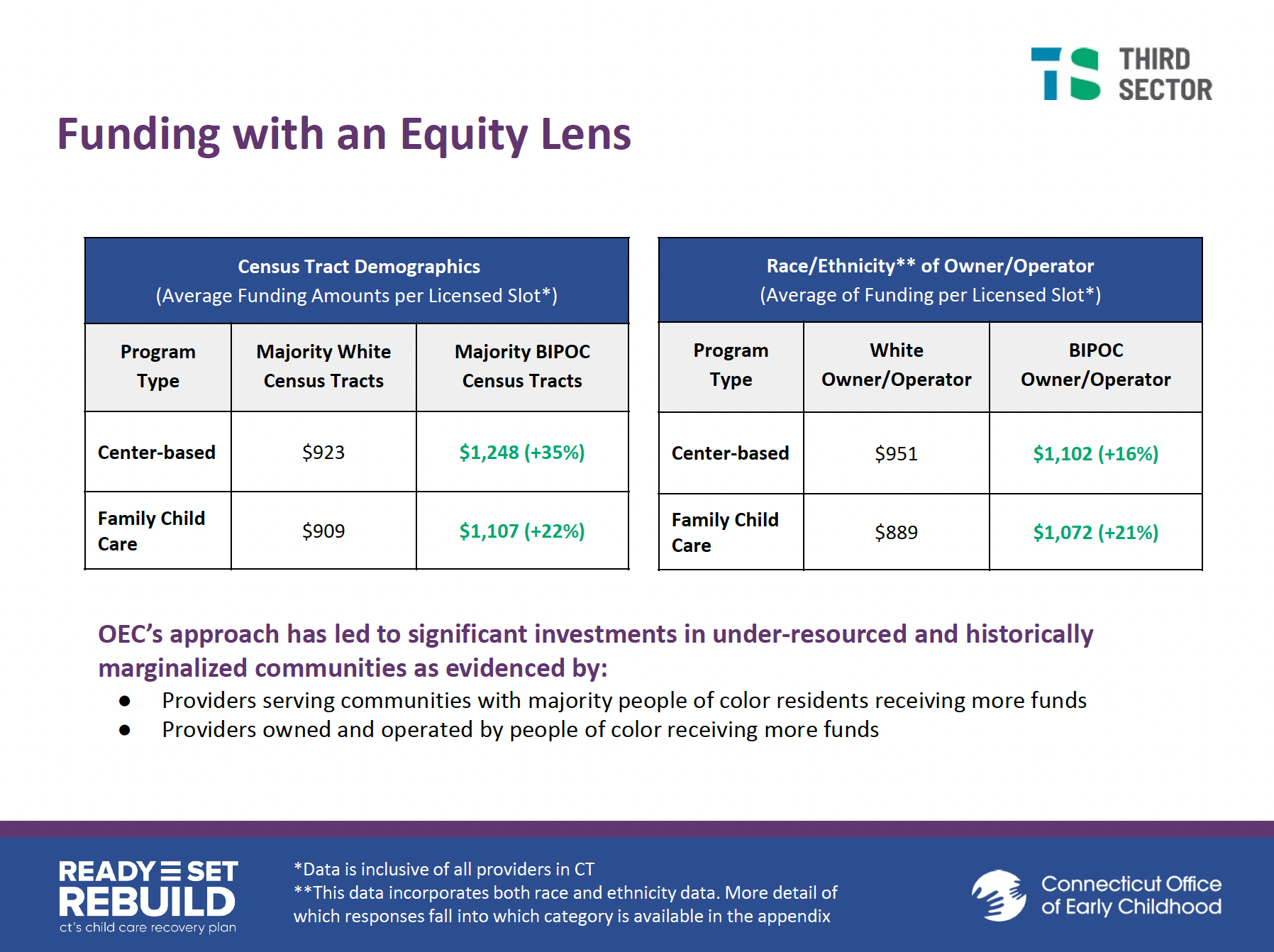
Attorney General William Tong has already submitted comments opposing the rule. Readers may recall his December 2024 remarks, covered by Connecticut Centinal, in which he stated that “America runs on Dunkin and undocumented workers,” that half of farm and meatpacking labor is undocumented, and that removing 100,000 such workers from Connecticut’s workforce would leave the state “toast.” The same officials now warning of catastrophe if those populations are excluded from the apportionment count have previously treated their presence as economically indispensable.
The press conference was less a defense of neutral statistical accuracy than a defense of the status quo in which non-citizen residents, including those here illegally, inflate the population numbers that determine political representation and federal transfers. Whether courts ultimately accept the administration’s interpretation of “persons” and “usual residence” remains to be seen. What the Democrats made clear on Friday is that they regard any reduction in the counted non-citizen population as an unacceptable threat to their share of power and resources.






Stay updated with the latest in the Constitution State with The CT Centinal