Please Follow us on Gab, Minds, Telegram, Rumble, Gettr, Truth Social, Twitter, YouTube, Instagram
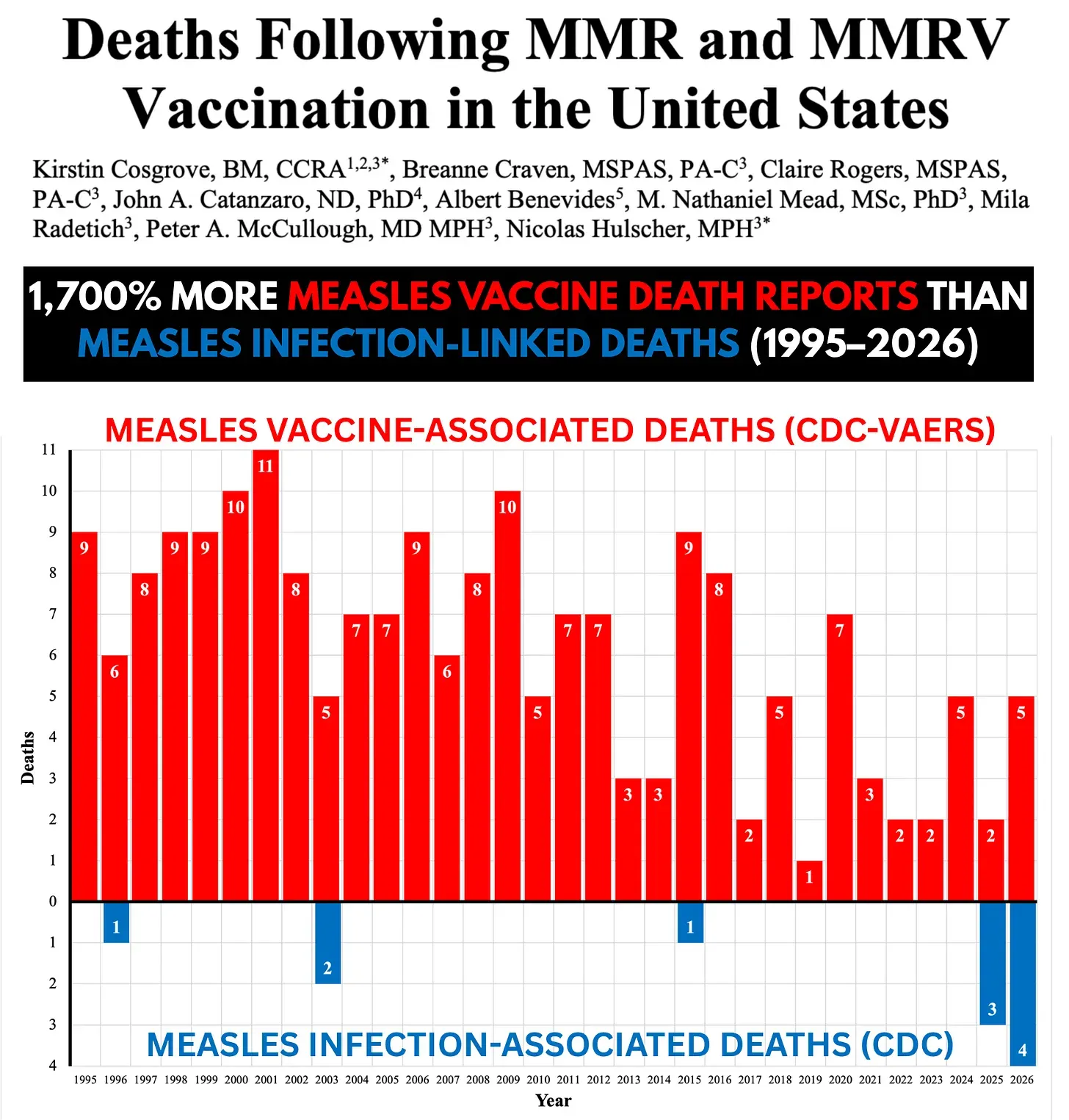
A recently updated study reveals that, between 1995 and 2026, 198 U.S. children died reportedly in association with measles–mumps–rubella (MMR) and measles–mumps–rubella–varicella (MMRV) vaccines, compared to 11 child deaths from the measles infection counted by the Centers for Disease Control and Prevention (CDC).
In a February 2026 study – not yet peer-reviewed – researchers from the McCullough Foundation concluded that, between 1995 and 2025, 193 measles vaccines-associated deaths, with identifiable dates, had been reported to the Vaccine Adverse Event Reporting System (VAERS). During the same period, however, only seven measles infection–associated deaths have been documented.
As McCullough Foundation epidemiologist Nicolas Hulscher, MPH reported Thursday at The Focal Points, the research team’s recent updated analysis – which included 2026 data as well – found that 198 U.S. children were reported to VAERS as having died, with identifiable dates, in association with the MMR/MMRV vaccines, while the CDC counted 11 deaths tied to measles infection.
“That represents 1,700% more deaths following measles vaccination than CDC-counted measles deaths since 1995,” Hulscher wrote.
In the February study, the researchers concluded they had identified “a serious mortality safety signal following MMR/MMRV vaccination in the United States,” adding that “a substantial number of reported deaths were documented, with patterns demonstrating pronounced alignment across age, temporality, routine-dose timing, concomitant vaccine exposure, and recurring clinical presentations—including fever, seizures, SIDS, and cardiac arrest.”
The researchers reported that most of the deaths occurred in children under two years of age and within the first two weeks after receiving the vaccines.
“The synchronization of age-specific clustering with immediate post-vaccination timing reflects a non-random pattern of mortality,” the researchers wrote. “This concern is further amplified by the stark contrast between reported vaccine-associated deaths and the exceedingly rare number of measles infection–associated deaths in the modern era.”
Given these results, the study team recommended “rigorous, transparent, and fully independent evaluation.”
“Future research should prioritize active surveillance cohort studies, detailed autopsies with virologic testing, and record-linked datasets capable of assessing background mortality and determining causal relationships,” they added.
Hulscher himself argued Thursday that some of the 2026 “measles deaths” highlighted in the media “were likely not actually due to measles.”
“Dying WITH measles is not the same as dying FROM measles,” he wrote.
“Medical malpractice may also have contributed— including failure to administer vitamin A when clinically indicated, delayed recognition of pneumonia or encephalitis, inadequate hydration, or delayed treatment of secondary bacterial infections,” Hulscher noted, asserting that the numbers of deaths from the measles vaccines are also underreported to VAERS – as observed in a report by Lazarus et al that found “fewer than 1% of vaccine adverse events are reported.”
That concern has apparently been heard at the U.S. Department of Health and Human Services.
As The Defender reported November 9, a new Centers for Medicare & Medicaid Services (CMS) rule, published in the Federal Register, has introduced a billing code that would reimburse doctors for the cost of diagnosing and treating patients with suspected vaccine-related adverse effects.




Stay updated with the latest in the Constitution State with The CT Centinal