Please Follow us on Gab, Minds, Telegram, Rumble, Gettr, Truth Social, Twitter, YouTube
America’s 250th wouldn’t be complete without a salute to the first official U.S. flag, which Congress adopted on June 14, 1777. Here’s the story behind it.
After the Continental Army’s victories at the Battles of Trenton and Princeton in December 1776 and January 1777, General George Washington and his men rested and regrouped in Morristown, New Jersey in the first several months of 1777. This gave Washington an opportunity to reflect on the next steps in the fight for independence. Because the Declaration of Independence had created the new nation on July 4, 1776, he decided to also focus on something that his army and the American people needed: an official flag.
Washington had learned the hard way that their unofficial flag, the Grand Union flag, was too British. When he drove the British military from Boston in March 1776, he flew the Grand Union flag, which confused the enemy. The British thought that he was flying a British flag. It’s understandable why. Despite its new feature of 13 stripes, the Grand Union Flag included the British flag in the upper left quadrant.
This confusion exposed the need for a new flag that distinguished America in its new, non-British and non-colonial identity.
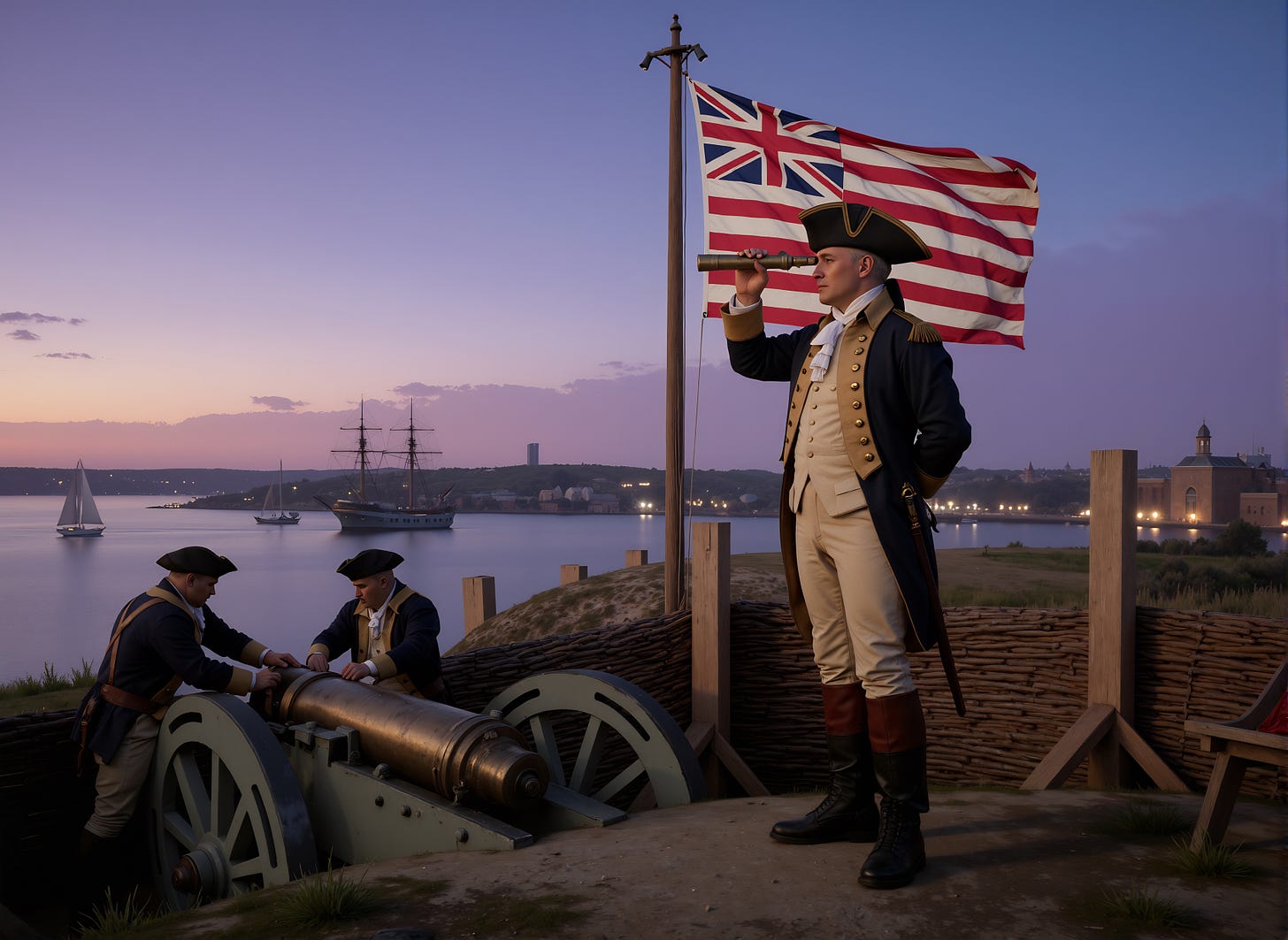
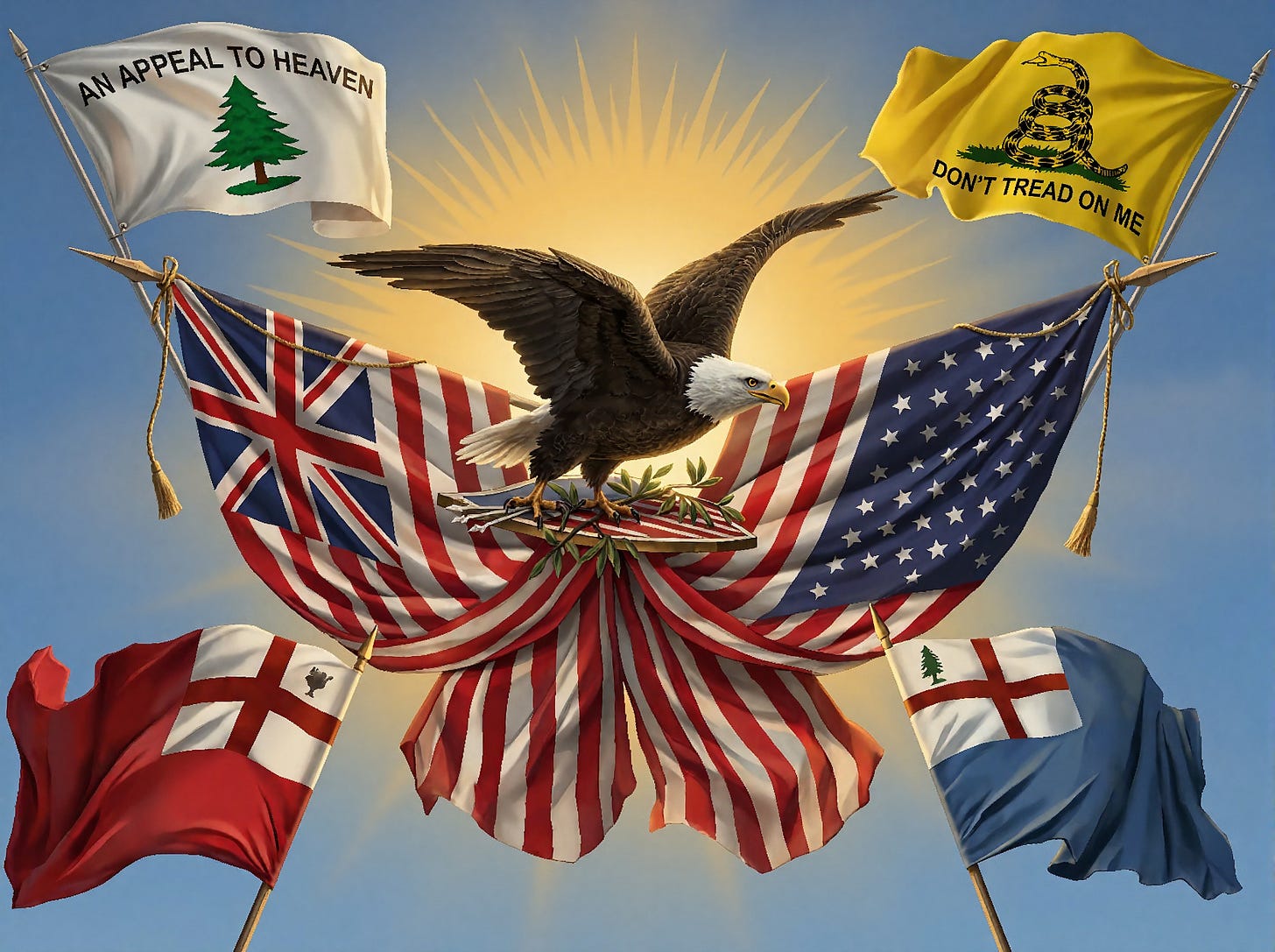
Washington discussed the flag matter with members of the Continental Congress and others. Nearly a year after adopting the Declaration of Independence, the Continental Congress passed a resolution describing the first official flag of the United States of America on June 14, 1777.
“In CONGRESS, June 14, 1777. Resolved, That the FLAG of the United States be THIRTEEN STRIPES alternate red and white; that the union be THIRTEEN STARS white in a blue field, representing a new constellation.”[i] The public first learned about it when the Pennsylvania Evening Post reported on Aug. 30, 1777, the minutes from Congress’s June 14 meeting.
Discover more in my new book, A Great and Grateful Nation.
Gone were the Union Jack and the Grand Union flags. Gone, too, were the thirteen British colonies. Replacing them were America’s new thirteen states, which both the flag’s stripes and stars represented.
These states were more than just separate entities. Whereas the colonies had often acted as separate nation states disjointed from each other, these new united states were united into one nation. Though many view the flag today as a symbol of freedom. The first official flag meant union. In order to symbolize freedom, it first needed to symbolize unity.
The meaning of the first official United States flag had nothing to do with skin color, sex, class, race, ethnicity, religion or any other distinction. Congress intended for the flag of the United States to mean one thing: UNION.
Through a new constellation, the white stars on the blue background depicted this union of states. When the stars were arranged in a circle, they also conveyed the equality of that union because no state was more important than another.
The new U.S. flag embodied the sentiment of Patrick Henry.
“The distinctions between Virginians, Pennsylvanians, New Yorkers and New Englanders, are no more. I am not a Virginian, but an American,” Patrick Henry declared.
Unfortunately, the Continental Congress was too busy prosecuting the business of the war to provide more information in their journal record about the flag on June 14, 1777. We know that integrity was on their minds that day. Their record shows that they fired a ship captain of poor character and replaced with him with a new upstart: Captain John Paul Jones. He later became America’s first naval war hero because he literally wouldn’t surrender his ship’s colors—the flag—in a battle with a British ship.
On that first flag day in 1777, Congress didn’t explain the meaning of the colors, red, white and blue. But in the days and weeks ahead, Congress would come to know the meaning of these colors through the valor and perseverance of George Washington’s army and others who contributed to the cause of liberty.
[i] “In Congress,” Pennsylvania Evening Post, Aug. 30, 1777, (Philadelphia, PA) 453, Genealogy Bank, accessed Jan. 22, 2022, https://www.genealogybank.com/nbshare/AC01111014165929282711643488439


Stay updated with the latest in the Constitution State with The CT Centinal