Please Follow us on Gab, Minds, Telegram, Rumble, Gettr, Truth Social, Twitter, YouTube, Instagram
The movie Young Washington brings to life the largely unknown heroic story of Major George Washington during the French and Indian War, which was a great film to help celebrate America’s 250th.
Years earlier at the age of sixteen, Benjamin and his older brother, James Franklin, had operated a Boston newspaper’s printing press. They didn’t mind the tedious toil of setting blocks of type by picking capital letters from the press drawer’s upper case and choosing the smaller letters from the drawer’s lower case. Their noses had gotten used to the fishy, sometimes nutty, smell of linseed oil mixed with soot to create oily ink.
James and Ben’s hands were continuously stained by balls of wool, which resembled little handheld mops, called ink beaters. They willingly dipped the beaters into the ink and slathered it onto a rectangular frame holding rows of typeset blocks. They’d gotten used to the smelliest part of the job: cleaning the ink beaters every night with urine. They also eagerly accepted the repetitive motion of pulling the wooden lever as it pressed paper over the inked typeset to create a newspaper sheet. The Franklin brothers didn’t mind this labor because James had a greater purpose to accomplish. To these awakened Bostonians, it was time to speak truth to power.
Frustrated at the hypocrisy of the government and clergy, James and a group of talented writers had started an anti-establishment rag called the New England Courant in 1721.
Instead of publishing news and without receiving permission from the government, the Courant printed weekly essays on a variety of topics designed to stimulate discussion among Boston residents. Stimulate it did. Those who approved of the Courant referred to its writers as the Free Thinkers. Those who disapproved called them the Hell First Club that was guilty of wicked libel.
In July 1722, Benjamin experienced horror when the British government arrested James and put him into jail. This left the teenage Benjamin in charge. What should he do? While his brother languished in a prison cell, Benjamin published one of his finest works on July 9, 1722, on the New England Courant’s front page. Its key passage resonates even today.
“Without freedom of thought there can be no such thing as wisdom and no such thing as public liberty without freedom of speech,” Benjamin boldly wrote, using a false identity as a woman named Silence Dogood to avoid being thrown in jail like his brother. “Whoever would overthrow the liberty of a nation, must begin by subduing freeness of speech, a thing terrible to public traitors.”
Meanwhile the government published a resolution against James and the New England Courant. “Resolved, that no such weekly paper be hereafter printed or published without the same be first perused and allowed by the Secretary, as has been usual (for other papers).”
When James was released four weeks later, he responded by publishing excerpts from the Magna Carta, the 1215 British document that guaranteed Englishmen political liberties. The conflict between freedom of the press and the British authorities in Boston continued for several months, leading the Massachusetts General Court, which was the House of Representatives, to issue an edict.
Because the “tendency of the said paper to mock religion” and injure His Majesty’s government, the House of Representatives censored James. “For the prevention of the like offense for the future, the committee humbly proposes that James Franklin, the printer and publisher thereof, be strictly forbidden by this Court to print or publish the New England Courant, or any pamphlet or paper of the like nature except it be first supervised by the Secretary of this Province.” In addition to stripping him of freedom of the press and speech by requiring government approval for each newspaper he published, they fined him.
How did James Franklin respond? He got creative. Instead of publishing in his name, he listed Benjamin as the publisher. Proving himself to be an effective writer through his Silence Dogood essays, Benjamin continued to show his writing prowess. As time wore on, it was clear that Benjamin had a more appealing, lighter writing style and a more congenial personality than his brother, which endeared Ben to readers. Such skill, however, also erupted in jealousy from James.
Eventually Benjamin left his brother’s paper and moved to Philadelphia. Believing that “every body’s business is no body’s business, and the business is done accordingly,” Franklin humorously led colonial newspaper publishing into their golden age when he bought the Pennsylvania Gazette in 1729. Because Pennsylvania had been founded by Quakers, the colony had welcomed all people, regardless of their religious beliefs, including Jews, Catholics, Anglicans, Baptists and so on. The result was a more tolerant society that gave Franklin what he wanted – freedom of speech and of the press.
From news to literature to science and mathematics, Franklin held a wide view of his world. Knowing that some colonies didn’t have newspapers or even a printing press, Franklin also published a magazine and Poor Richard’s Almanac to reach readers in other colonies, especially those in the South. For years the people loved reading Franklin, and he loved educating and entertaining them.
With George Washington’s discoveries of the French incursion into English territory in 1754, now Franklin called his friends to action through his join or die snake woodcut. The image was tied to an important June meeting in Albany, New York. For months, Franklin had been working to implement a British government edict to bring the colonies together under a common government called the Albany Plan of Union. Colonel Washington’s news had given him the justification he needed to advocate for a united front against the French. Franklin hoped that his join or die message and Washington’s journal would motivate these separately-charted colonies to unite under one national government.
The book, 110 Rules of Civility, had given Washington a lifelong code for evaluating the truth or falsehood of something. “Be not apt to relate news if you know not the truth thereof,” rule 79 instructed. That advice works best when people speak the same language as their opponents. If not, the results can be disastrously false.
Was the news true? Say it isn’t so. Had their hero, George Washington, assassinated an ambassador? As he and his followers discovered in the spring of 1754, sometimes the truth is complicated, especially during the fog of war.
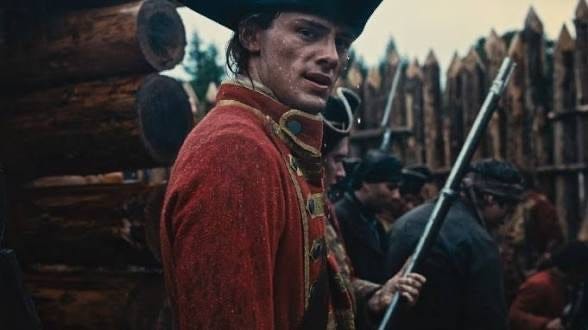
Because he’d been assured that additional recruits from Virginia, South Carolina, and New York were marching to join him, Colonel Washington remained in the Ohio territory in May 1754. Camping in an area called the Great Meadows, the colonel and his men prepared to defend themselves.
As he’d done on his first mission, Washington pragmatically enlisted the help of Half King, an indigenous ally of the English. Half King was a village leader within the Iroquois Confederation, which was a compact among several tribes. The English called him Half King because he could present diplomatic gifts as part of the Iroquois confederation but he lacked the power to make treaties.
Why was Half King an ally of the English? The answer was less about a preference for the English and more about vengeance against the French. Half King carried a grudge against the French for breaking their treaties with his tribe and killing his father. His story showed that native tribes allied themselves with Europeans for different reasons. This war pit tribe against tribe as well as European nations against each other.
“Major (Colonel) Washington had intelligence from our friend the Half King, that a party of French were encamped this side of the fork,” the Boston Post Boy newspaper reported on July 1, 1754.
For a few days, Washington and Half King led their men in a game of hide and seek with this group of thirty Frenchmen, who seemed to be following them while attempting to conceal their location and intentions. Finally, fearing the French would attack first, Washington marched forty men toward the French camp on May 28, 1754. When the Frenchmen saw his men, they fired and killed one of them. Washington’s soldiers returned fire, killing seven or eight Frenchmen. The rest of the French ran for their lives.
“But the Half King” and his native allies lay in an “ambush to cut off their retreat, fell upon them and soon killed and scalped five of them,” the Boston Post Boy chronicled. Among the dead was a Frenchman named Sir de Jumonville. The rest of the Frenchmen surrendered and begged the native fighters for quarter. At first Half King refused, wanting to kill all of the Frenchmen.
“Major (Colonel) Washington interposed between them and it was with great difficulty that he prevented” them from “doing any further mischief, the Half King insisting on scalping them all, as it was their way of fighting and he alleged that those people had killed, boiled and eat(en) his father,” the Boston Post Boy detailed.
Washington found himself in the most awkward social circumstance of his young life. No manners book could prepare him for this situation. What should he do? He employed his best manners and talked to Half King. If he followed the 110 Rules of Civility, he gave Half King the chance to speak first and showed empathy for the native leader’s desire for revenge.
“However, Major (Colonel) Washington at length persuaded him to be happy with the scalps he had already got,” the Boston Post Boy reported. Sparing the lives of the remaining Frenchmen, Washington sent them back to Virginia as prisoners. His good manners saved his life and theirs.
Londoners learned about the news weeks later when a letter that Washington wrote to his younger brother Jack about the incident appeared in the August 1754 edition of the London Magazine.
“I fortunately escaped without a wound, though the rightwing where I stood was exposed to and received all the enemy’s fire and was the part where the man was killed and the rest wounded,” Washington had written to Jack.
Readers of the London Magazine also discovered that this young Colonel Washington had a cocky side. “I can with truth assure you, I heard bullets whistle and believe me there was something charming in the sound,” he’d penned. This sensational phrase caught the attention of the king of England. “He would not say so, if he had been used to hear many,” King George II quipped of Washington’s bragging about the charming sound of bullets.
Washington had also made a bold declaration to Jack. “We expect every hour to be attacked by a superior force, but shall, if they stay one day longer, be prepared for them.”
Little did he know, but a Washington would soon find himself at the center of a breaking news story.
The next standout news suddenly changed Washington’s fortunes and his public image as the darling of the press. He was accused of being an assassin.
“The third of this instant July, about 9 o’clock, we received intelligence that the French, having been reinforced with 700 recruits, had left Monongahela, and were in full March with 900 men to attack us,” the New York Mercury printed of the latest news from Ohio. Captain James Maccay had brought Washington reinforcements from the Carolinas. Their combined force was about two-hundred fifty men. Washington and Maccay issued a joint report, which was printed in multiple newspapers.
After building a crude fortification called Fort Necessity for his men and about eighty of their native allies’ families, Washington and Maccay were outnumbered more than three to one. Though they tried to defend themselves, heavy rain dampened their ammunition, making much of it unusable. Despite hours of having the upper hand, the French suddenly called for a parley. The signal puzzled Washington, who thought it was a ruse or a deceit because the French were winning. The French called for parley again.
What was going on? Had his men killed a French officer? Concluding this was likely the case, Washington sent an officer over to the French side. In a back-and-forth negotiation through a translator, Washington agreed to surrender in exchange for the Frenchmen that he had saved from Half King but had imprisoned five weeks earlier and had sent to Virginia. Had he allowed Half King to kill those men as Half King had wanted, the French might have killed him on the spot. The two sides signed the capitulation terms, which were written in final form in French.
Controversy about his surrender arose a few weeks later when the New York Mercury and other newspapers printed a translation of Washington’s capitulation terms. “And as the English have now in their power an officer, two cadets and most of the prisoners made in the assassination of Sir de Jumonville, that they promise to send them back with a safe guard to the Fort Duquesne,” the newspaper reported.
The word assassination was fake news at worst, misleading at best. Yes, Half King and his men had killed Jumonville at the battle of Great Meadows. The term implied that Washington had assassinated Jumonville, whom the French claimed was a diplomat. If true, then Washington had violated the rules of warfare.
Washington’s reputation was on the line. What should he do? Fully appreciating his dilemma requires understanding the role of the truth and standards for the press in his day. One person who understood this was Ben Franklin, especially after he faced colonial cancel culture.


Stay updated with the latest in the Constitution State with The CT Centinal