Please Follow us on Gab, Minds, Telegram, Rumble, Gettr, Truth Social, Twitter
The Centers for Disease Control and Prevention’s (CDC) Advisory Committee on Immunization Practices (ACIP) voted 8-3 today to recommend that parents make the individual decision of whether to have their newborns given the hepatitis B vaccine at birth if the mother tests negative for the virus.
As the Department of Health and Human Services (HHS) noted in a press statement, ACIP suggests that infants who do not receive the birth dose have their initial dose of the vaccine no earlier than at two months old.
Additionally, committee members voted to recommend that parents consult their medical providers regarding potential risks of hepatitis B infection, such as in the case of a household member who has already been infected with the virus or maintains frequent contact with individuals who have come to the United States from areas where hepatitis B disease is common.
As HHS observes, ACIP met yesterday and today, with presentations during Thursday’s session focused on the “burden” of hepatitis B disease, vaccine safety issues, and a comparison of the U.S.’s current immunization policies with those of other nations.
Vaccine manufacturers also presented briefings regarding their hepatitis B vaccine products.
Debate was contentious at times during the ACIP sessions, with at least one vaccine advisor who voted "no," expressing outrage at the shift in policy and warning of “harm” to be done as a result.
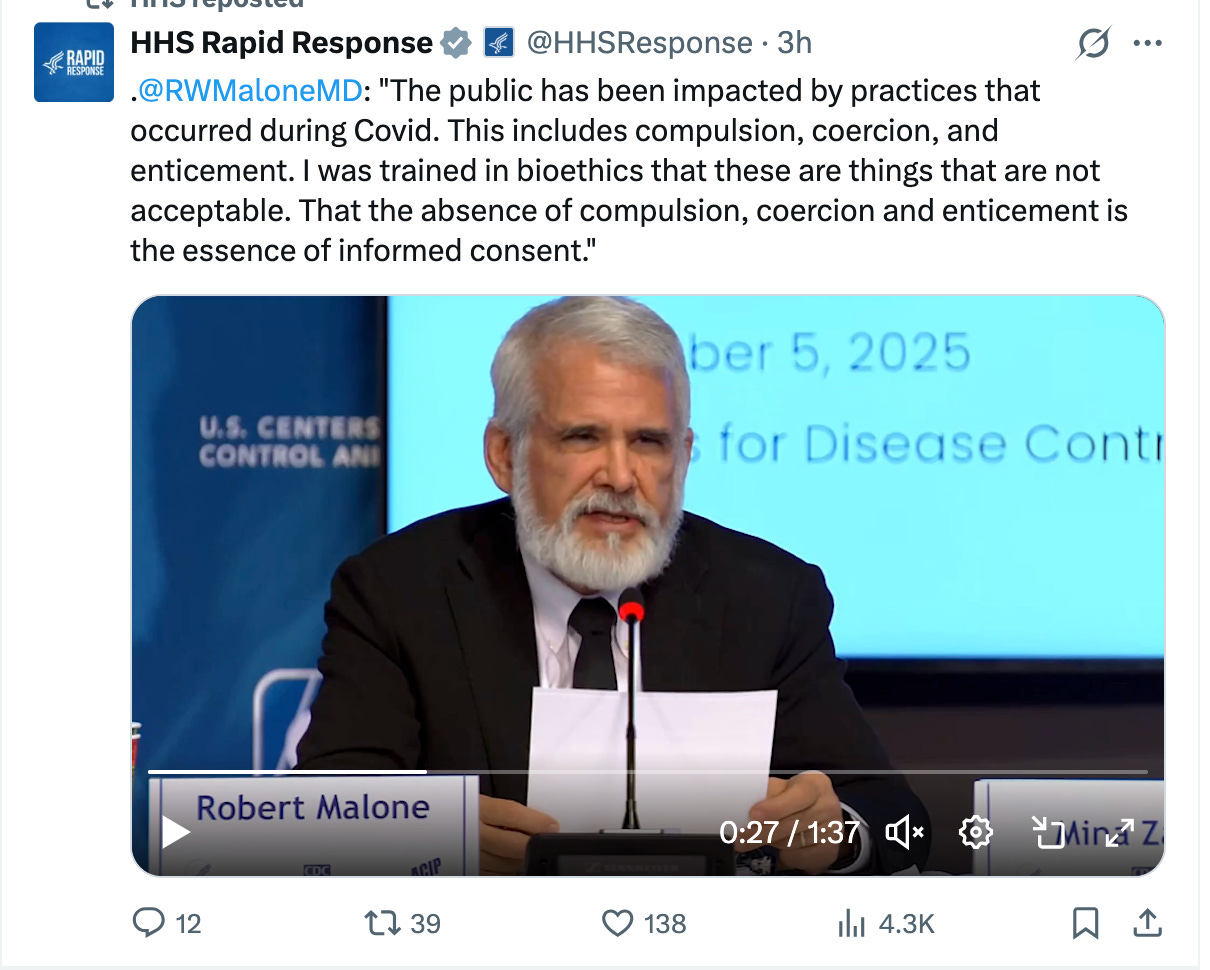
Dr. Robert Malone, vice chair of ACIP, directed the sessions and summarized the 8-3 vote.
“A core issue here … is the right of self-determination, and, by extension, the right of self-determination for the dependent from their caregivers,” he said. “And what I’m hearing is the logic of public health, which is focused on maximizing the greatest good for the greatest number.”
“The counter-balance to that is the need to respect the rights of the individual for self-determination,” Malone asserted, adding that his “personal bias” is “to err on the side of enabling individual decision- making and individual rights over the rights of the collective.”
He continued:
I think, to be honest, we’re torn by these two conflicting points of view and … there are these two fundamental differences of opinion about the rights of individuals versus the rights of society and the goals and objectives of society … and it reflects fundamental, frankly philosophical disagreements about the role of public health in medical practice.
Dr. Retsef Levi explained the crux of his “yes” vote to recommend ending universal hepatitis B vaccines for infants upon their birth.
“If you’re a baby that was born to a mother that was tested negative to hep B, you need to realize as a parent that your risk of infection throughout your early stage of life, and probably throughout most of your childhood, is extremely low, to the extent that it’s even hard to quantify how low it is,” he noted. “It’s probably one in several millions.”
“And that means that, as a parent, we encourage you, in consultation with your physician, to think very carefully,” Levi urged, adding:
Do you want to expose your child, your baby, to an intervention that could have some potential harms when the risk is so low? And mind you that we are talking about a very, very young baby in the first few months of their life, where they are not fully developed, and where we don’t know the exact potential impact of exposure to vaccines, but we do know that their immune system is not fully developed, their metabolism is not fully developed, their brain is not fully developed, and we know that all of these systems are interacting with each other.
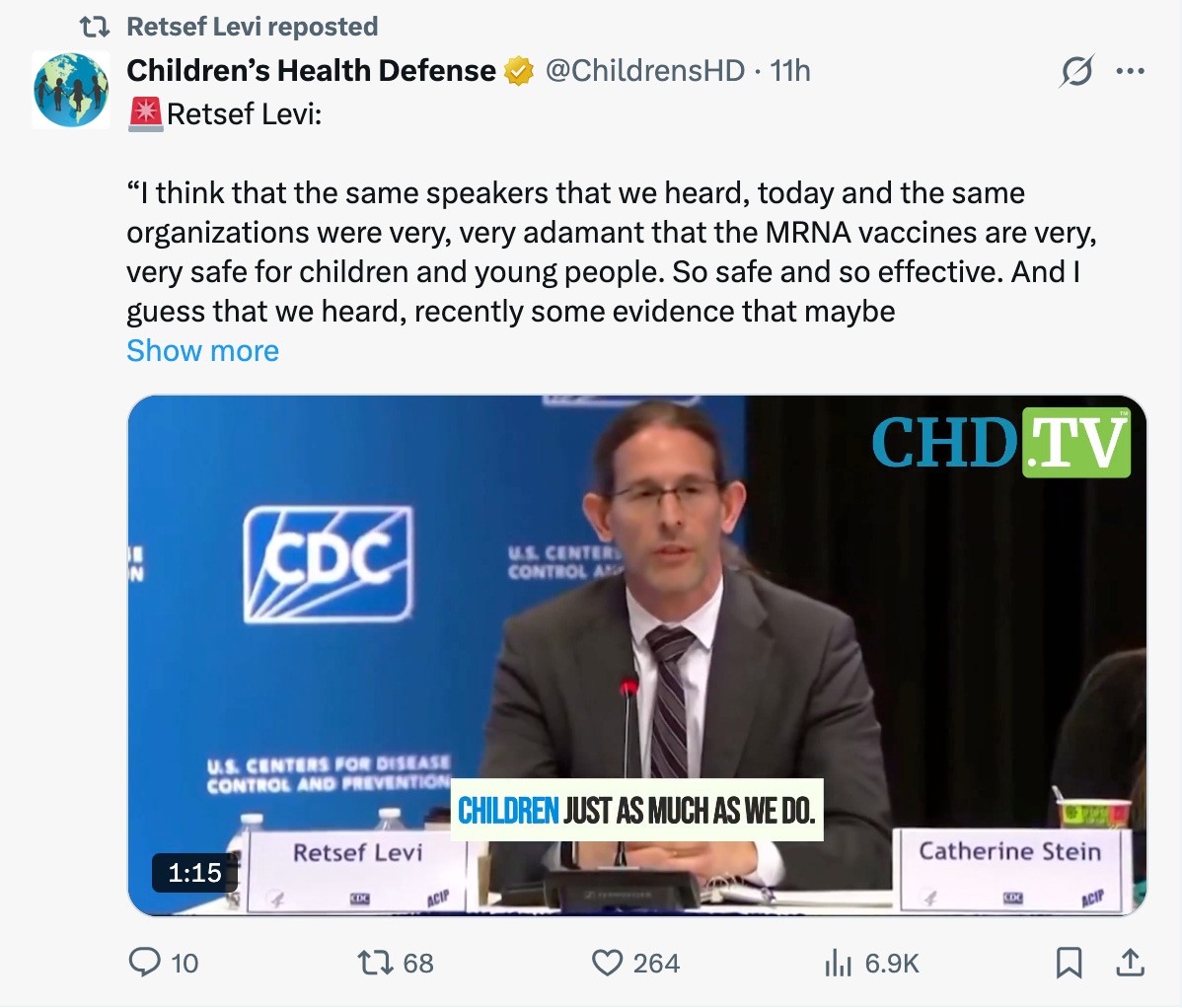
Additionally, Levi confronted the view that every newborn needs a hep B shot within hours of birth, pointing out that this decades-long U.S. practice is “completely misaligned with many countries that… care about their children just as much as we do.”
This evening the White House Office of Communications released a memorandum, signed by President Donald Trump, addressed to the secretary of the Department of Health and Human Services (HHS) and the CDC director on the topic of “Aligning United States Core Childhood Vaccine Recommendations with Best Practices from Peer, Developed Countries.”
The memorandum states:
In January 2025, the United States recommended vaccinating all children for 18 diseases, including COVID-19, making our country a high outlier in the number of vaccinations recommended for all children. Peer, developed countries recommend fewer childhood vaccinations — Denmark recommends vaccinations for just 10 diseases with serious morbidity or mortality risks; Japan recommends vaccinations for 14 diseases; and Germany recommends vaccinations for 15 diseases. Other current United States childhood vaccine recommendations also depart from policies in the majority of developed countries. Study is warranted to ensure that Americans are receiving the best, scientifically-supported medical advice in the world.
The president directed the HHS secretary and CDC director to “review best practices from peer, developed countries for core childhood vaccination recommendations — vaccines recommended for all children — and the scientific evidence that informs those best practices, and, if they determine that those best practices are superior to current domestic recommendations, update the United States core childhood vaccine schedule to align with such scientific evidence and best practices from peer, developed countries while preserving access to vaccines currently available to Americans.”
Levi also asserted that those criticizing the recommendation of individual decision-making by parents with mothers who test negative for hep B have also been “very adamant that the mRNA vaccines are very safe for children and young people.”
“We heard recently some evidence that maybe that confidence was not necessarily correct,” he said. “Maybe we’ll be a little bit more humble and less confident … and not present the discussion as something that has to do with being evil or being irresponsible.”
“I don’t think that’s the basis for a scientific discussion,” Levi added.
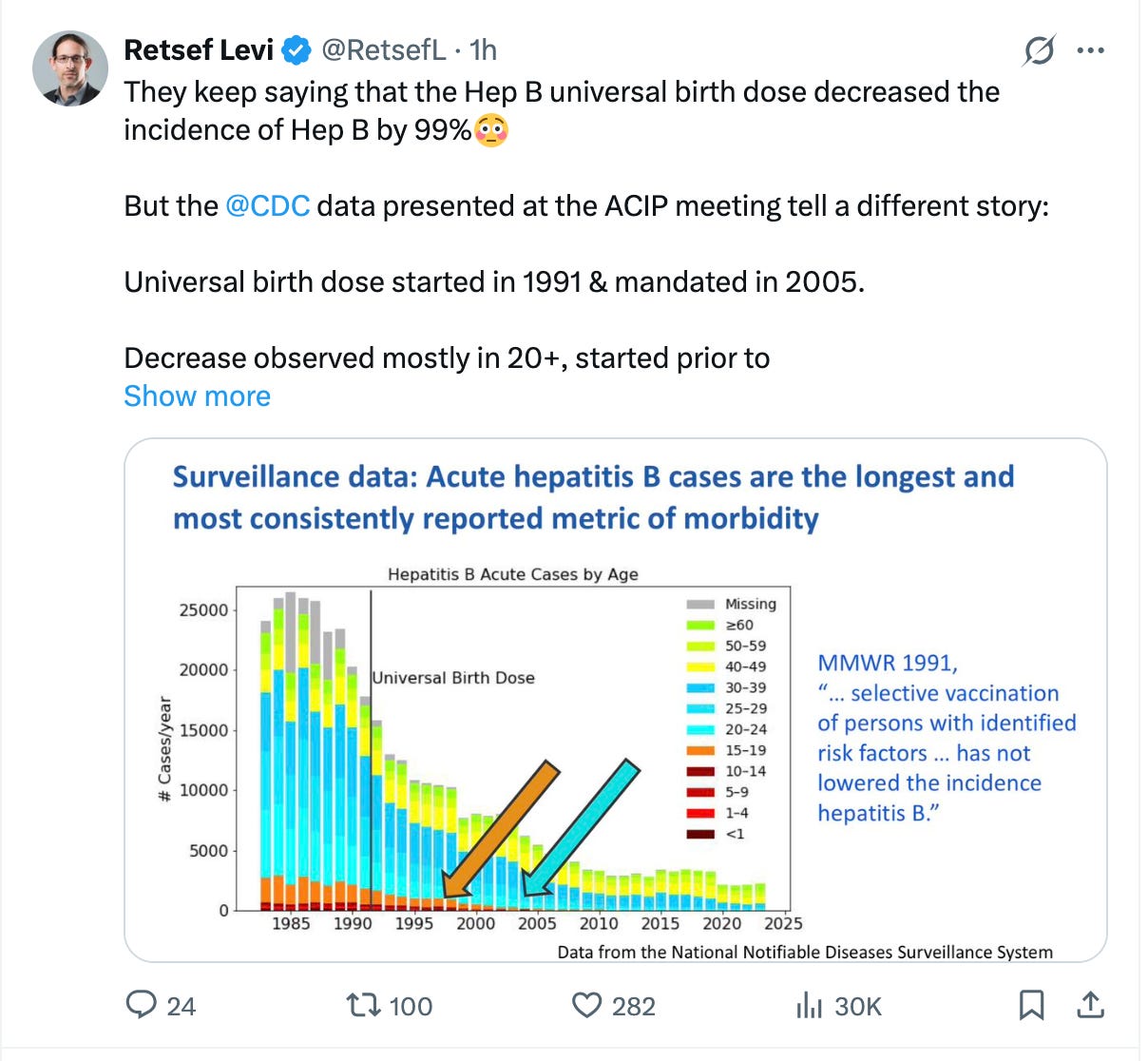
On Thursday, Dr. Cynthia Nevison presented on the decline of hepatitis B disease since 1985. As HHS noted in its press release, Nevison’s analysis concluded that “the universal birth dose contribution to acute case decline is likely small.”
“It identified sharp declines in post-transfusion hepatitis B transmission due to advanced blood screening, improved dialysis practices, and needle exchange programs,” HHS observed. “It also acknowledged a 2019 study that found 57.9% of estimated births to women who test positive for the hepatitis B surface antigen were attributable to non–US-born women, mainly from high-endemicity countries. The study reported that 0.5% of pregnancies in the U.S. are to women who test positive for the hepatitis B surface antigen, which is the most significant risk to newborns for being infected with the virus.”
The recommendation voted on today by ACIP must be adopted by the CDC director.


Stay updated with the latest in the Constitution State with The CT Centinal