Please Follow us on Gab, Minds, Telegram, Rumble, Gettr, Truth Social, Twitter, YouTube
The American Heart Association’s (AHA) updated dietary guidelines haven’t changed much from the group’s previous version, but they do contain stark differences from those of the Make America Healthy Again (MAHA) recommendations that emphasize a return to “basics,” such as red meat and animal fats, in order to maintain a healthy lifestyle.
“In general, heart-healthy dietary patterns contain primarily vegetables and fruits, whole grains, healthy sources of protein, liquid nontropical plant oils (eg, soybean, canola, olive oils), and minimally processed foods,” AHA advises in its new guidelines. “Dietary patterns higher in plant-based foods and lower in animal products have been associated with lower coronary heart disease risk and more favorable coronary heart disease risk factors and metabolome profiles. Heart-healthy dietary patterns are also low in beverages and foods with high amounts of added sugars, saturated fat, and sodium.”
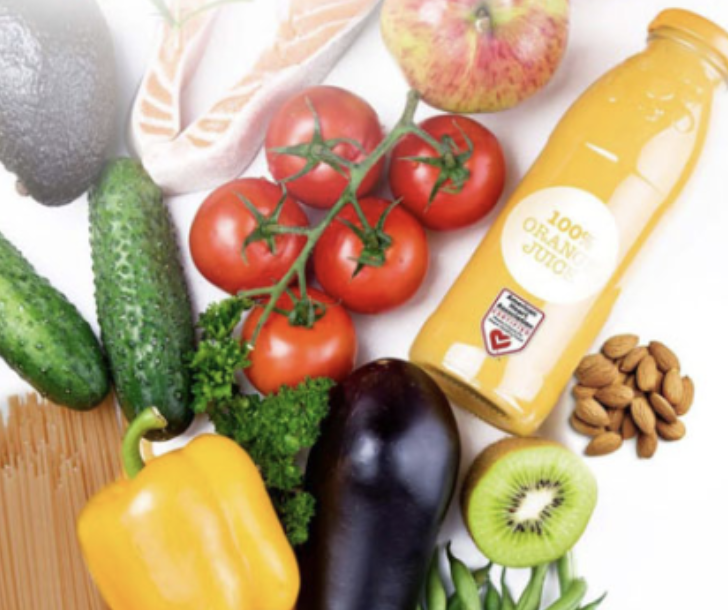
Much of the latest AHA guidance represents, in fact, what Americans have been taught for decades. The organization’s colorful graphic encourages us to choose “plenty of vegetables and fruits,” followed by “healthy proteins.” Absent from the proteins pictured, however, is red meat and full-fat dairy products. Instead, beans, low-fat milk, fat-free yogurt, tofu, tuna, salmon, boneless chicken breast, and nuts are the proteins AHA recommends.
The group published its dietary guidelines at the end of March, just several months following the release of the Trump administration’s new food pyramid that urges Americans to eat “real food.”
“For decades, we’ve been fed a corrupt food pyramid that has had a myopic focus on demonizing natural, healthy saturated fats, telling you not to eat eggs and steak, and ignoring a giant blind spot: refined carbohydrates, added sugars, ultra-processed food,” Food and Drug Administration (FDA) Commissioner Dr. Marty Makary asserted in January at a press conference.

The guidelines of the AHA and those of the U.S. Departments of Health and Human Services (HHS) and Agriculture (USDA) do show areas of agreement. Both assert, for example, that added sugars and ultra-processed foods should be avoided, and that eating a healthy diet should begin early in life in order to prevent obesity and disease.
But what is markedly different is AHA’s assertion that the research underlying its recommendations about avoiding red meat and saturated fats, and limiting salt, remains valid.
A report at JAMA Network noted that the Tufts University nutrition scientist who oversaw the writing of the AHA guidelines agreed the recommendations have not changed much since the publication of the last version in 2021.
“In general,” said Alice Lichtenstein, DSc, “the findings that have been emerging for the past few decades actually still are solid and have been validated.”
Amit Khera, MD, director of preventive cardiology at the University of Texas Southwestern Medical Center – vice chair of the AHA statement’s writing group – also said that AHA acknowledges “the majority of Americans eat a fair amount of meat.”
“But if people even shifted somewhat more towards plant-based sources or healthier sources of protein, we think that could go a long way for cardiovascular health,” he said.
The AHA guidance also states that disease prevention should begin early in life by starting lipid profiling for all children between the ages of 9 and 11 years, and adults, beginning at age 19, in order to assess and manage cholesterol levels.
Many physicians in the medical freedom movement, nevertheless, welcome the HHS guidelines. They assert that the research touted as supporting a plant-based diet that limits red meat, saturated fats, and salt – while focusing on lower cholesterol levels – was never valid in the first place.
“The American Heart Association was instrumental in the first set of dietary guidelines that came out of the McGovern commission because they hired Ancel Keys,” nephrology expert and independent medicine advocate Richard Amerling, MD, said in a conversation with Lumen-News this week.
Amerling, who serves as academic director at independent medical platform GoldCare, described the AHA in the early 1960s as “a rag tag group of cardiologists that had zero funding and zero impact until a huge grant from Proctor and Gamble put them on the map.”
Keys, an American physiologist, was the primary driver of the theory casting blame on saturated fat for heart disease.
“Procter and Gamble loved this because they had this Crisco that they had devised, which was hydrogenated cottonseed oil – the most toxic stuff you can imagine that would be useful only for machine lubrication, which is what it was originally used for,” Amerling noted:
And they marketed Crisco as a smart, modern alternative to lard. They made Crisco cookbooks that they distributed for free, and pushed through these dietary guidelines that were simply an industry-driven scam. From the beginning, there was never any credible science that saturated fat was harmful. This is what we’ve lived off the entire history of the human race, and many examples of societies that just eat saturated fat and protein – like the Inuit people and the Maasai people in Africa – are extremely healthy, with no heart disease to speak of.

Keys, Amerling continued, designed what became known as the Seven Countries Study, in which he claimed to have identified diet, saturated fat, and cholesterol as the underlying causes of cardiovascular disease.
“But he cherry-picked the countries that he knew would fit his model,” Amerling observed. “He did not consider Germany or France – both of which have very high fat diets and very low rates of heart disease.”
“So, the whole thing was a scam. That’s why they put out these ‘heart-healthy’ things for Cheerios. You know, you buy yourself a heart healthy sticker from the American Heart Association for money. So they have zero credibility, and they have continued to push this low-fat dogma that is completely unjustified by actual science.”

In May 2023, Beyond Meat – one of the top producers of plant-based “meat” – announced that its products are now “certified by the American Heart Association’s Heart-check program.”
“For nearly 100 years, the American Heart Association has been helping people live longer, healthier lives,” said Beyond Meat CEO Ethan Brown at the time. “As part of that legacy, the Heart-Check Mark has become a gold standard in empowering consumers to make informed health decisions … With this recognition, Beyond Steak becomes part of a group of certified and trusted foods that everyone can enjoy with the confidence that they are making a great decision for their health.”
Amerling believes the government should not be advising people what to eat.
“We’ve seen the consequences of it,” he explained. “The dietary guidelines came out in 1977, and it was right around 1979-80 when the obesity epidemic started. You can see the curve just start to go up. It’s never come down. It’s only going up. And a big part of it is this huge over-consumption of seed oils that are high in linoleic acid – a very nasty Omega-6 fatty acid that is pro-inflammatory and pro-obesity.”
“These things have caused obesity by the way they’re handled by the mitochondria. Our mitochondria were not designed to handle large quantities of these unsaturated fatty acids, and they malfunction.”
He asserts that the most important change people can make to start improving their health is to stop eating seed oils, which food manufacturers have used because they’re inexpensive.
“Just completely eliminate them, and then also get away from the added sugars,” he advises.
The AHA’s push for Americans to consume non-fat dairy products is also “destructive,” Amerling asserts.
“Breast milk is almost 60% fat – saturated fat – and kids need fat for their developing brain,” he points out. “The brain is mostly fat. Nerves are mostly fat. Limiting fat is just an absurdity, and it’s harmful.”
Interestingly, AHA’s Khera acknowledged that “there’s limited evidence” regarding the group’s recommendation to avoid dairy fat.
“It’s probably beneficial if you’re consuming a decent amount of milk to focus on low-fat or fat-free in this evidence void,” he told JAMA Network, “but we do acknowledge that there’s an evidence void.”
As for the recommendation for restricting salt, Amerling states this also lacks validity.
“There’s just no data to support salt restriction unless you have heart failure, kidney failure, or liver failure,” he explains. “Those are the only situations where salt restriction makes sense. There is also a subset of patients with salt-sensitive hypertension – largely in the African-American community – they need to restrict salt.”
But salt, Amerling observes, is necessary to maintain normal blood pressure and health.
“We are completely dependent on salt to maintain our blood volume. If you deprive salt and become salt-deficient, you trigger counter regulatory hormones to maintain blood pressure and to retain salt, and these are not good to have running around your bloodstream all the time – that’s for emergencies. I think we should just use salt according to our taste preferences. There’s nothing harmful about it.”


Stay updated with the latest in the Constitution State with The CT Centinal