


Please Follow us on Gab, Minds, Telegram, Rumble, Gettr, Truth Social, Twitter, YouTube
As the Connecticut General Assembly convenes for its regular February session, one proposal is almost certain to reappear: “HUSKY for All,” a single-payer, state-run universal health-care system.
This proposal has failed repeatedly in prior years. But following poor local election turnout and low-engagement special elections, the Democratic super-majority appears newly emboldened. Under the banner of “affordability,” single-payer health care is likely to return—without incorporating the hard fiscal lessons learned by states that studied it and ultimately rejected it, most notably New York.
That is not reform. It is willful disregard of evidence.
Connecticut has developed a pattern of watching progressive policy experiments fail elsewhere—particularly in New York and California—and then attempting to replicate them anyway, often without modification.
Single-payer health care is the latest and most dangerous example.
Despite years of economic modeling and clear warnings, Connecticut lawmakers continue to flirt with state takeover of the entire health-care system, as though the risks are hypothetical.
They are not.
Under the proposal:
This creates unlimited demand with finite and inadequate revenue, while placing cost control in the hands of politicians and bureaucrats facing constant pressure from special interests.
When care becomes “free,” utilization rises sharply. That is not ideology—it is economics.
Without firm guardrails:
The result is not universal care—it is rationed care.
To implement single-payer, Connecticut would require federal waivers allowing Medicare and Medicaid dollars to flow to the state.
Even if granted, those funds would fall dramatically short of covering total costs.
The gap must be filled by:
New York commissioned the RAND Corporation to evaluate the New York Health Act—a proposal nearly identical to Connecticut’s.
RAND’s findings were decisive:
RAND further warned that if even 0.5% of top earners left the state, the plan would collapse financially.
New York listened—and walked away.
Connecticut’s problem is not just high taxes. It is tax concentration.
Unlike New York, Connecticut relies on a small number of towns and taxpayers to fund state government. Any policy that materially increases the tax burden on these communities threatens the entire revenue system.
These towns represent the financial backbone of Connecticut state government
Applying RAND’s New York modeling to Connecticut produces a stark conclusion:

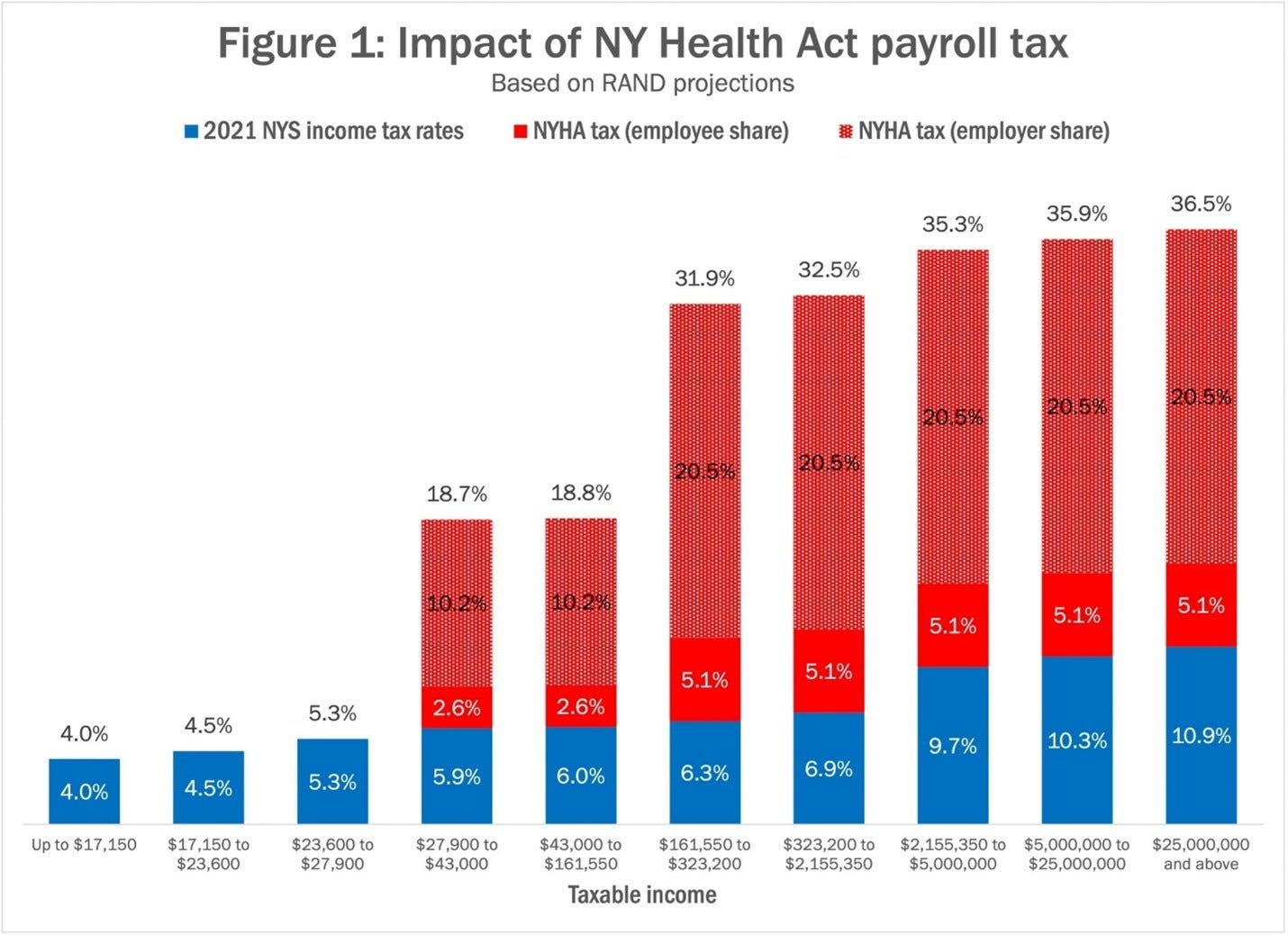
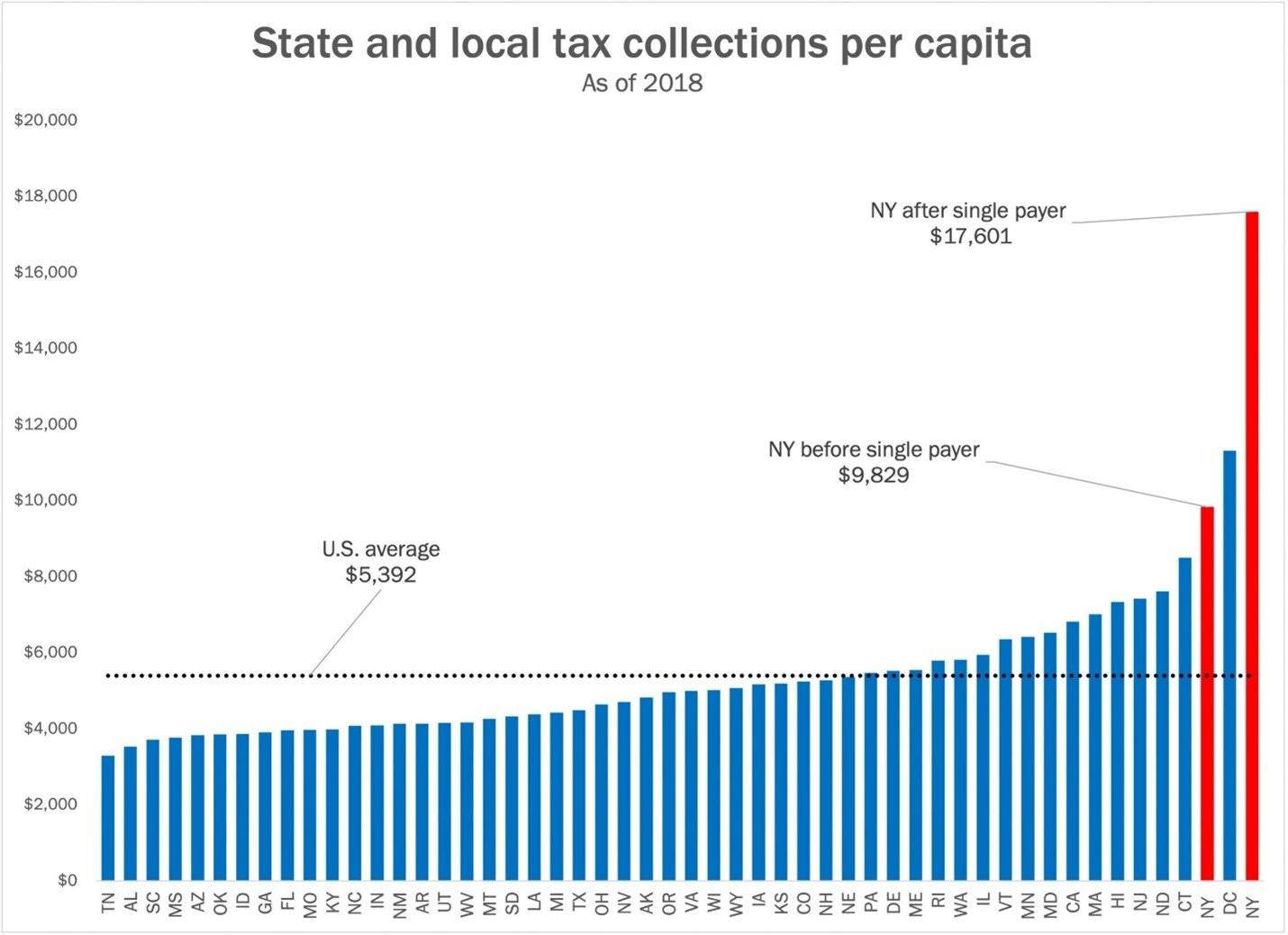
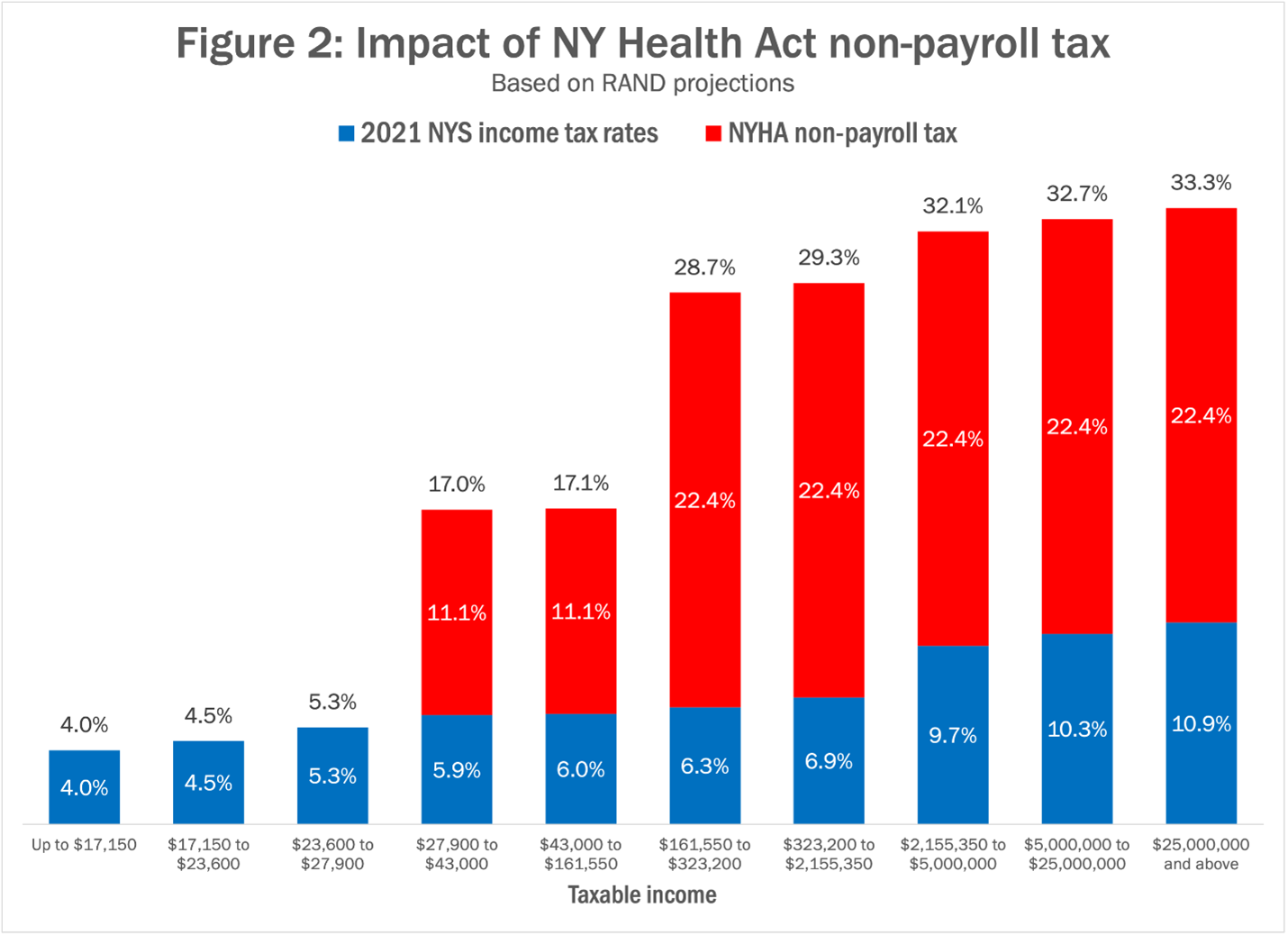
These figures exclude federal taxes.
That level of taxation is not sustainable.
Connecticut does not have a broad tax base to absorb this shock.
If even a small percentage of high-income households leave:
This is the same revenue death spiral RAND identified for New York—but faster and more severe due to Connecticut’s smaller, more concentrated base
Middle-class and upper-middle-class workers—the backbone of Connecticut’s economy—pay more, often substantially more.
Single-payer health care is not merely expensive.
It is structurally incompatible with Connecticut’s tax reality.
A system that depends on tripling taxes on the very towns that fund the state is not compassionate.
It is reckless.
New York studied the numbers and walked away.
Connecticut should learn from that wisdom—before it is too late.



Stay updated with the latest in the Constitution State with The CT Centinal



The problem you have is where are all the Medical providers coming from. The State of Connecticut has 4 PA schools and 8 NP schools. State's gonna have to increase enrollment in those schools if they want more mid-level providers.