Please Follow us on Gab, Minds, Telegram, Rumble, Gettr, Truth Social, Twitter, YouTube, Instagram
CT Voices for Children, a progressive advocacy group whose mission centers on “equity,” has released a new report decrying federal SNAP reforms under the One Big Beautiful Bill Act and proposing state-owned grocery stores alongside a slate of tax hikes, expanded benefits, and other left-leaning priorities.
Titled Shifting Costs, Eroding Access: The Early Impacts of the One Big Beautiful Bill Act on SNAP in Connecticut and authored by Research & Policy Director Dr. Emily Knox and Associate Ruchi Sheth (August 2026), the report documents declines in SNAP enrollment after the federal law expanded work requirements, narrowed exemptions, and shifted some costs to states. Enrollment fell from about 360,000 to under 300,000 recipients between mid-2025 and mid-2026, with the group projecting hundreds of millions in lost federal dollars and strain on food banks.
Among its recommendations: create a non-lapsing state food fund and SNAP-like nutrition program; pursue Medicaid “Food as Medicine” waivers; collect more disaggregated food-insecurity data; and establish “community food hubs”—explicitly described as state-owned, non-profit grocery stores intended to combat food deserts, negotiate bulk prices, source local produce, create jobs, and lower costs.
Funding ideas include progressive revenue measures such as capital-gains and dividend surcharges on high earners, estate-tax adjustments, closing the “tax gap” via more auditors, and tweaking budget-reserve and volatility rules.
About CT Voices for Children
Connecticut Voices for Children describes itself as a research-and-advocacy organization that envisions “a Connecticut that is thriving and equitable, where all children achieve their full potential.” Its primary focus, repeated across mission statements and materials, is equity for “historically disadvantaged” children and families. It prioritizes family economic security, affordable housing and health care, criminal and foster-youth justice, fair employment (especially early care), tax reform, and “inclusive economic growth and income/wealth equity.”

Beth Bye, former Commissioner of the Connecticut Office of Early Childhood, serves on its Board of Directors.
The group’s 2026 Candidate Briefing Book (“Connecticut Families Plan”) aligns closely with Democratic/progressive priorities: a refundable state Child Tax Credit, defense and expansion of CT Baby Bonds and the Earned Income Tax Credit, offsetting federal SNAP and Medicaid (HUSKY) cuts, progressive taxes to fund safety-net expansions, “affordable housing as a human right” with zoning reforms and anti-displacement measures in every town, universal early care, workforce protections, and resistance to federal work requirements or restrictions affecting mixed-status immigrant families.
It is lukewarm-to-critical on “Trump Accounts,” preferring the state’s equity-targeted Baby Bonds program and arguing the federal accounts are not designed to address wealth gaps and could exacerbate inequality.
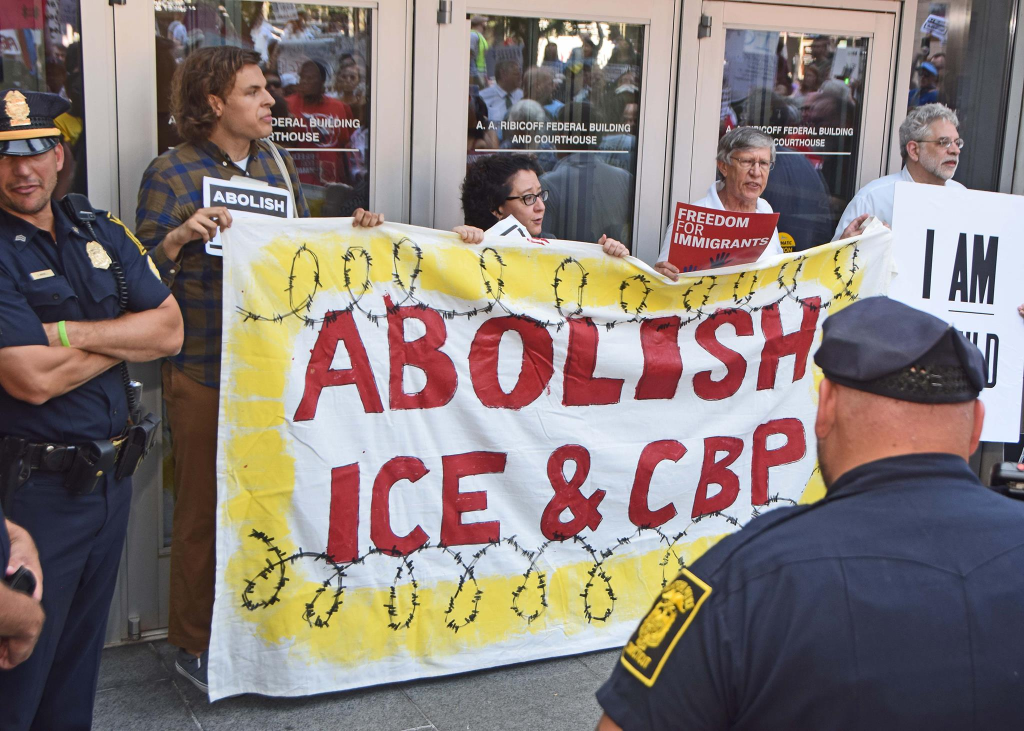
CT Voices partners with or publicly supports other left-wing activist groups, including Connecticut Students for a Dream, an organization that advocates for education benefits, in-state tuition, and expanded health coverage for illegal aliens, and Make the Road Connecticut, another activist group that advocates for illegals and for abolishing federal immigration and border patrol agencies.
The Voices for Children housing advocacy work tracks directly with efforts led by radical groups like Desegregate CT that push denser affordable housing statewide.

The organization frequently frames taxation in power terms—“tax power is public power” style rhetoric appears in broader progressive tax debates it engages—and routinely highlights “wealth inequality” in Connecticut as a core problem requiring progressive revenue solutions. It has supported expanded HUSKY access in contexts involving all immigrant families and children up to age 26, including illegals.

Funding
Nearly all revenue comes from contributions (over 99% in recent Form 990 filings; roughly $2.06 million of $2.08 million total revenue in the fiscal year ending 2024).
Funders documented by InfluenceWatch and grant records include left-of-center foundations and groups such as the Annie E. Casey Foundation, Community Foundation for Greater New Haven, Nellie Mae Education Foundation, Melville Charitable Trust, Connecticut Health Foundation, and others. Recent grants have supported general operations, racial-equity education advocacy, affordable-housing work, capacity building, and Medicaid defense.
Connecticut Voices for Children’s call for state-owned grocery stores and progressive tax hikes is not a serious solution to food insecurity. Under the divisive banner of “equity,” the group is again pushing to expand government deep into private markets while demanding that working taxpayers foot the bill for an ever-growing list of left-wing priorities.
This is not surprising. The group has spent years advancing the same progressive agenda: higher taxes on “the wealthy,” expanded benefits for illegal immigrants, housing as a supposed human right, and soft-pedaling biological reality when it comes to children.
The latest SNAP report simply continues that pattern—more government control, more redistribution, and less regard for markets, taxpayers, or common sense—while the mainstream media in Connecticut doesn't even bat an eye.





Stay updated with the latest in the Constitution State with The CT Centinal