Please Follow us on Gab, Minds, Telegram, Rumble, Gettr, Truth Social, Twitter, YouTube, Instagram
Glock, Inc. and a separate coalition of gun-rights groups filed federal lawsuits Monday in the U.S. District Court for the District of Connecticut, challenging Hartford’s ban on so-called “convertible pistols” before it takes effect October 1.
The law, signed by Gov. Ned Lamont in June, makes it a Class D felony to knowingly import, advertise, or sell newly manufactured semiautomatic handguns with a cruciform trigger bar that the state claims can be “readily converted” into a machine gun. Violators face up to five years in prison and a $5,000 fine. There is no exemption for sales to law enforcement — even though these pistols are used by Connecticut state troopers and the vast majority of municipal departments.
Glock’s complaint names Chief State’s Attorney Patrick Griffin, all 13 state’s attorneys, and DESPP Commissioner Ronnell Higgins. The company first asks the court to declare that its current Slimline, V Series, and Gen6 pistols fall outside the statute. Those models were redesigned with a “triple block” system to resist illegal machine-gun conversion devices, a change Glock says the ATF has tested. State officials refused to give a clear answer before the lawsuit was filed, leaving dealers facing felony exposure with no guidance.
If the court finds those pistols are covered, Glock argues the ban is unconstitutionally vague, violates the Second Amendment, and even criminalizes commercial speech by prohibiting advertisements of legal products.
The companion case was filed the same day by the National Shooting Sports Foundation (NSSF), gunmaker Shadow Systems LLC, and Connecticut retailer Blue Trail Range Corporation. NSSF’s argument cuts to the logical core of the statute: “If Connecticut can ban cruciform-trigger handguns because of the risk that criminals can convert them into fully automatic machine guns, then it could ban ‘virtually any semiautomatic weapon’ for the same reason.”
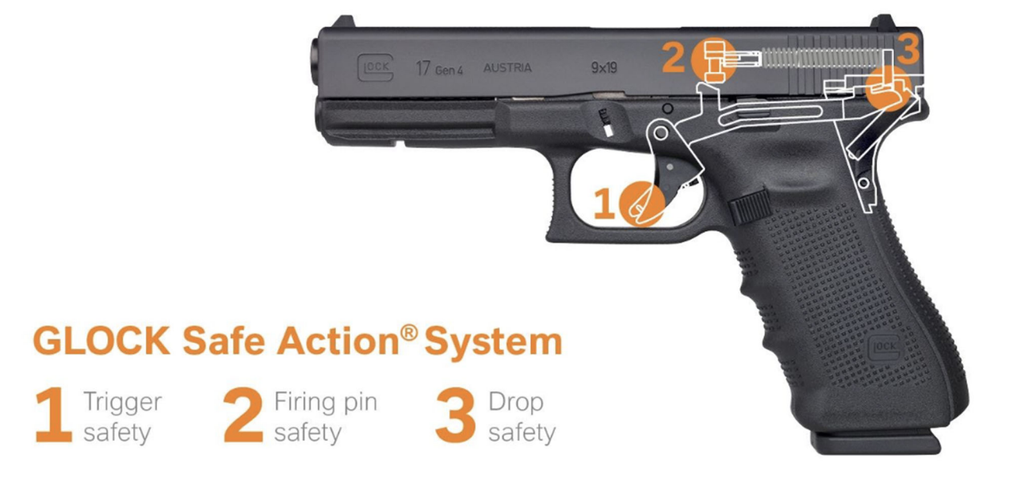
Both lawsuits note that hundreds of thousands of cruciform-trigger handguns are manufactured in the United States every year. The design itself is popular in part because its three independent safeties make accidental discharge less likely, not more. Before 2026, no state had banned a class of semiautomatic firearms solely because criminals might attach an already-illegal conversion device. Those devices — “Glock switches” — are already prohibited under federal law, with penalties far steeper than anything Connecticut just enacted.
Attorney General William Tong responded with the familiar line that Connecticut’s gun laws are “lawful and lifesaving.” Lamont called the ban “commonsense” when he signed it, blaming Congress for failing to act. Everytown for Gun Safety, the Bloomberg-backed group born after Sandy Hook, championed the bill. None of them explained why dealers and police departments should guess at what is legal nine days before felony liability attaches.
This is the same incremental strategy used against “assault weapons”: take a popular, commonly owned firearm, invent a novel category around an already-banned accessory, and dare the courts to stop you. Glock pistols are in common use for lawful self-defense.
Both lawsuits seek injunctive relief before October 1.


Stay updated with the latest in the Constitution State with The CT Centinal