Please Follow us on Gab, Minds, Telegram, Rumble, Gettr, Truth Social, Twitter, YouTube, Instagram
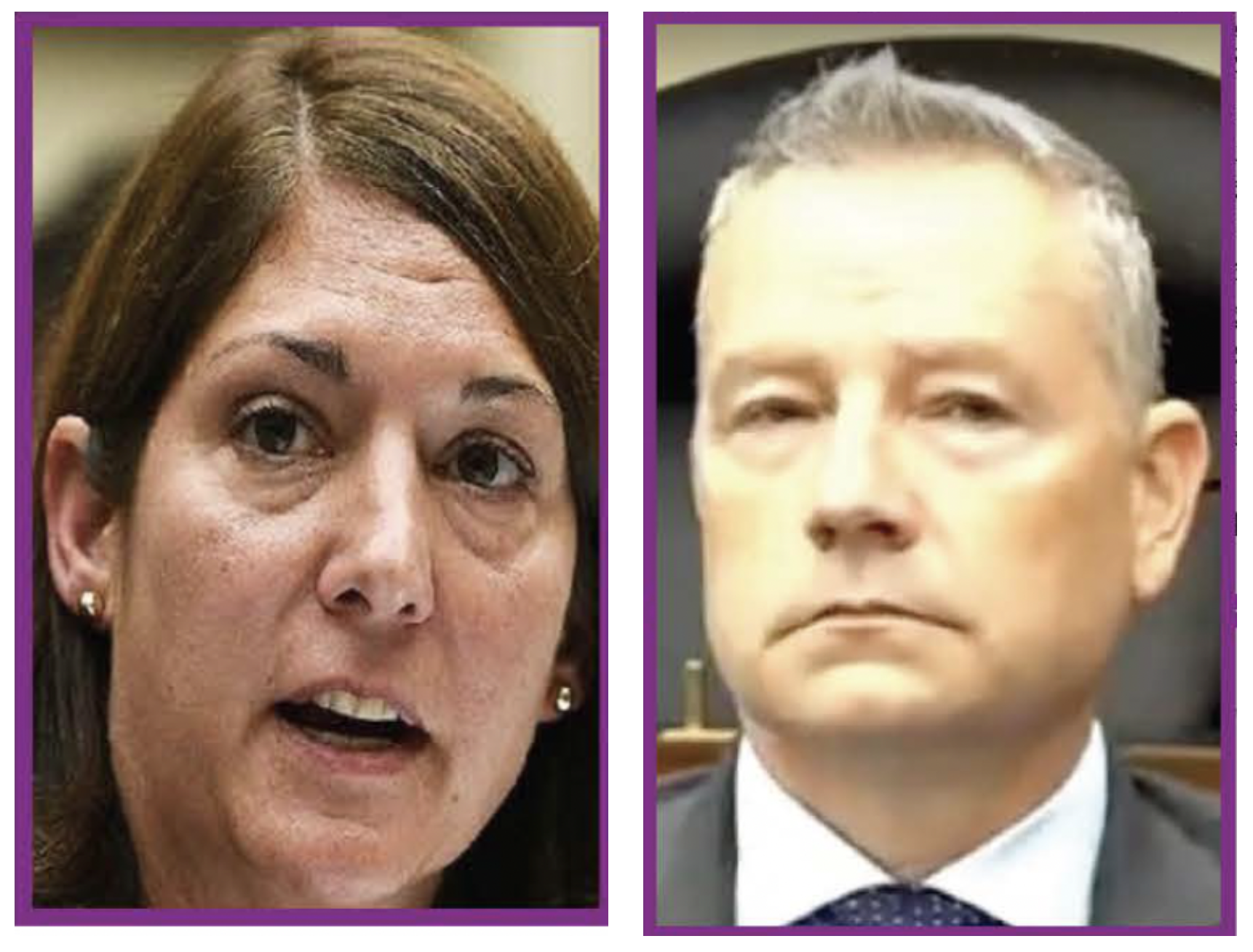
The Department of Justice announced Friday that two former senior FBI officials have been charged with making false statements to Congress about their roles in the FBI’s Foreign Influence Task Force (FITF) and investigations into Hunter Biden ahead of and after the 2020 election. Nikki Cole Floris, 46, of Alexandria, Virginia, and Bradley Benavides, 56, of Aiken, South Carolina, each face one count of making false statements in a matter within the jurisdiction of the legislative branch under 18 U.S.C. § 1001(a)(2). Both surrendered on arrest warrants.
U.S. Attorney Jeanine Ferris Pirro stated: “Lying to Congress by anyone strikes at the heart of our democratic system—but when senior FBI agents lie to Congress believing they are above the law, it’s time to bring the hammer of justice down on them. When senior officials entrusted with safeguarding our nation’s security choose deception over duty, they undermine the very institutions they swore to uphold. Today’s action makes clear that no one is above the law, and we will hold accountable all who obstruct the truth.”
Attorney General Todd Blanche said, “The weaponization of government goes against the interest of the American people, and public servants, including federal law enforcement officials, cannot lie to Congress and get away with it,” while FBI Director Kash Patel noted that one of the individuals was “on record privately claiming to be ‘running a shadow government’ during the 2020 election.” Patel emphasized that “weaponization will never be tolerated at this FBI.”
Floris served as Deputy Assistant Director of the FITF from mid-2019 through mid-2022. Benavides was the FITF Section Chief from mid-2019 through the 2020 election. The FITF, now dissolved, led the FBI’s efforts related to foreign malign influence on the 2020 election. According to the DOJ, evidence shows Floris discussed the FBI’s Hunter Biden investigations routinely for more than a year within the FITF and with others in the FBI. Benavides regularly discussed the Hunter Biden laptop with FBI officials in the lead-up to the election—contrary to his later claim that he only learned of the FBI’s possession of the laptop from a Wikipedia article in 2023.
In 2023 House Judiciary Committee interviews, both were warned that lying to Congress is a crime. Floris testified that she was involved in no discussions about Hunter Biden while at the FITF and that the FITF was not involved in the investigations. Benavides similarly denied meaningful involvement or contemporaneous knowledge of the laptop and investigations.
A detailed Statement of Facts filed with the complaint, however, cites documentary evidence, contemporaneous communications, and witness accounts contradicting those claims. These include FITF-hosted classified briefings on the Hunter Biden case in which both were active participants; communications and calls with case teams about defensive briefings and related topics; circulation of the Grassley-Johnson report on Hunter Biden’s foreign transactions; handling of FBI responses to the October 2020 New York Post laptop story; and specific discussions about the laptop’s source, contents, and FBI possession in October 2020. Witnesses, including FBI employees involved in the investigations, confirmed the pair’s awareness and engagement.
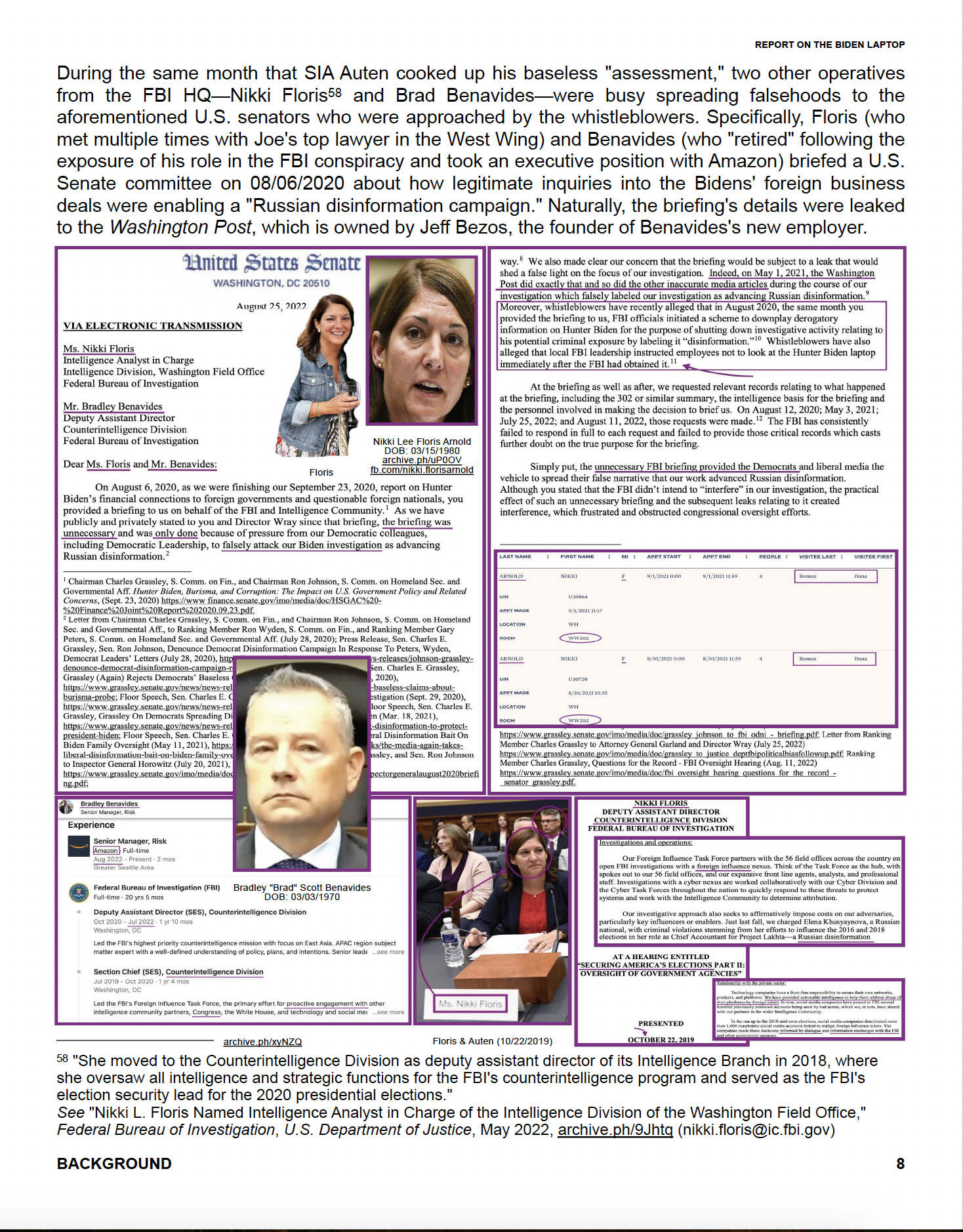
This connects directly to the August 6, 2020, “defensive” briefing that Floris and Benavides provided to Senators Chuck Grassley and Ron Johnson. The briefing, coordinated through the Office of the Director of National Intelligence and focused on potential Russian disinformation, was later leaked. Grassley and Johnson have long maintained it consisted largely of information they already knew or that was unrelated to their investigation into Hunter Biden’s foreign business dealings, and that the leak was used to falsely portray their work as advancing Russian disinformation—effectively interfering with legitimate congressional oversight.
The charges come amid years of questions about how the FBI handled the laptop in the critical weeks before the 2020 election, when major media outlets and tech platforms suppressed or dismissed the New York Post’s reporting as potential Russian disinformation—despite the FBI’s prior possession of the device and internal knowledge of its relevance. The FITF’s role in election-related foreign influence assessments has drawn particular scrutiny.
Charges in a complaint are allegations, and the defendants are presumed innocent unless and until proven guilty beyond a reasonable doubt. Floris’s attorneys have described her as a longtime public servant and called the charges politically motivated. Benavides has not publicly commented in available reporting.
Connecticut readers and others concerned about accountability in federal law enforcement will be watching how this case proceeds, as it touches on broader issues of institutional transparency, congressional oversight, and the handling of politically sensitive investigations. The Marco Polo report remains available as a primary reference compiling the laptop’s contents and related documentation. You can download it for free.


Stay updated with the latest in the Constitution State with The CT Centinal