


Please Follow us on Gab, Minds, Telegram, Rumble, Gettr, Truth Social, Twitter, YouTube, Instagram
Documents obtained through a Freedom of Information request show that the Connecticut Office of Early Childhood (OEC) deliberately structured its “Ready Set Rebuild” child care recovery plan so that federal COVID relief dollars produced higher average payments to providers serving majority-BIPOC census tracts and to providers owned or operated by people of color.
Governor Ned Lamont announced the program on March 26, 2021, promising roughly $210 million from Coronavirus Response and Relief Supplemental Appropriations Act (CRRSAA) and American Rescue Plan funds, including $120 million in operational stabilization grants. The governor’s press release stated that the grants would have “an equity focus, with total funding weighted to support programs in underserved communities hardest hit by COVID-19.”
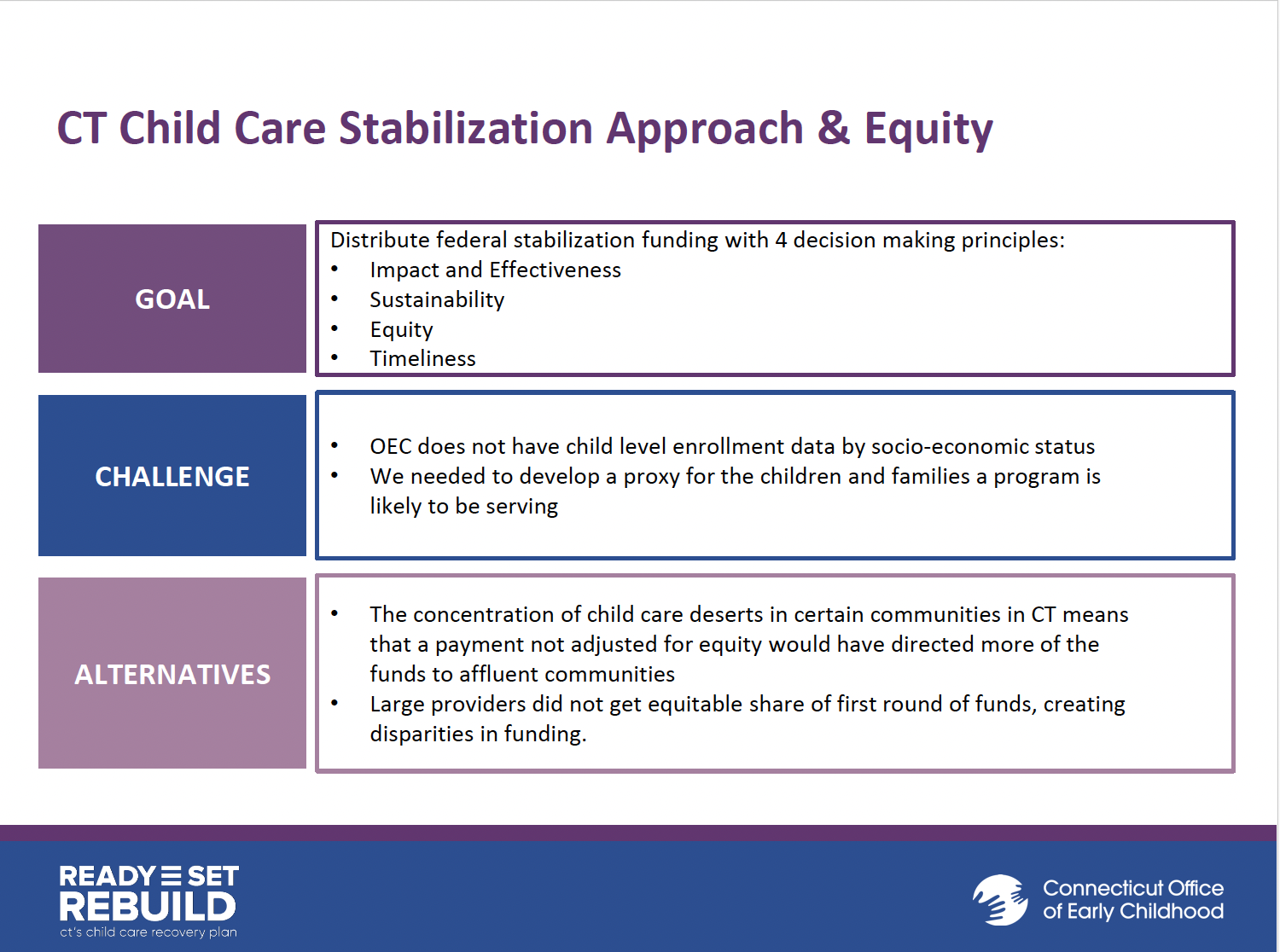
The FOI materials reveal how that equity focus was implemented and measured, including an internal OEC presentation developed with Third Sector, a racial-equity-focused nonprofit consulting firm that has received at least $737,000 from the state under a non-competitive contract to “improve/redesign” the state’s early-care system.
The grant funding formula was straightforward on its face: a base amount per child plus bonuses for accreditation, serving Care 4 Kids subsidy families, remaining open during the peak of the pandemic, and two different levels of an “Equity Adjustment.”
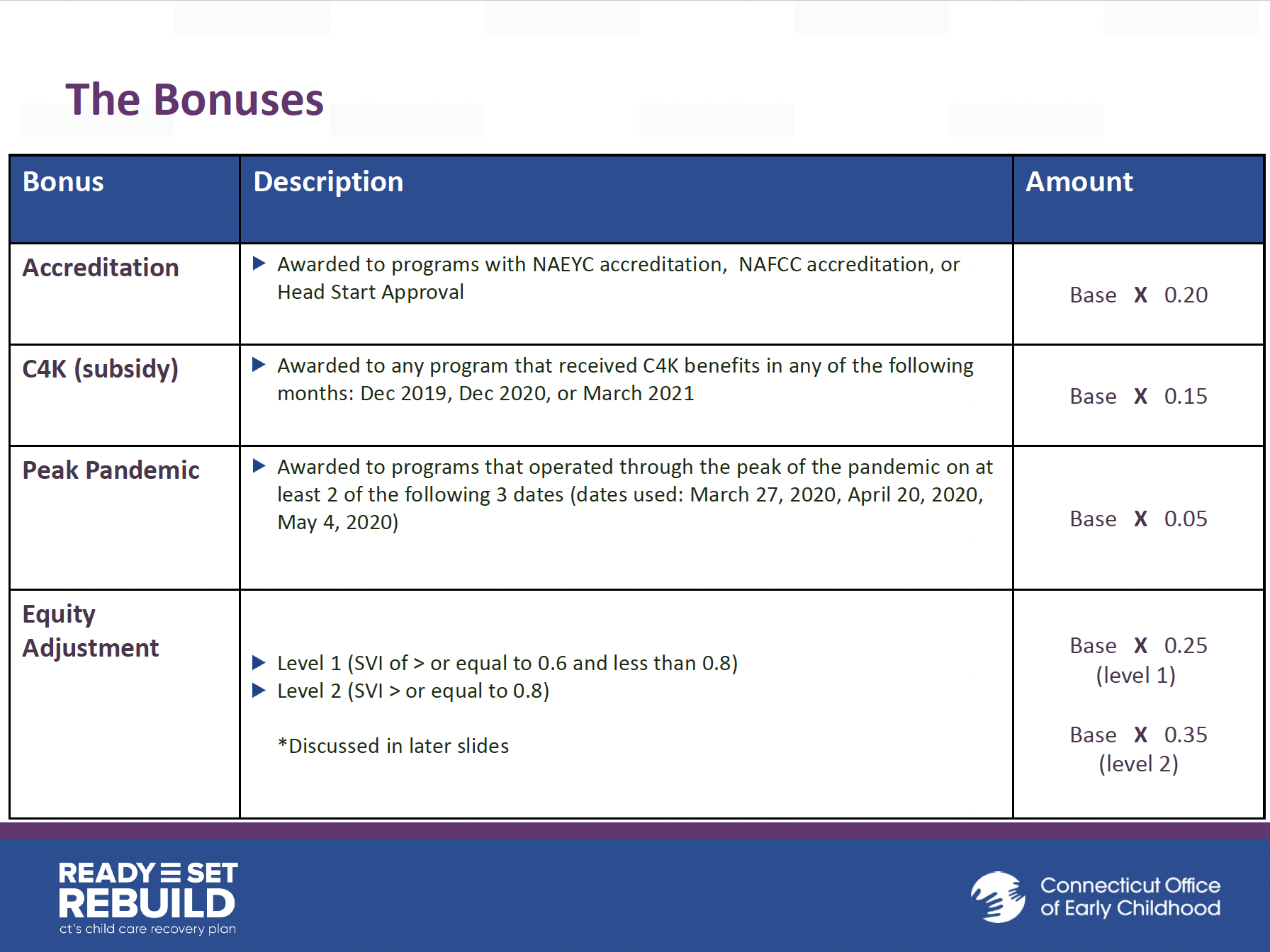
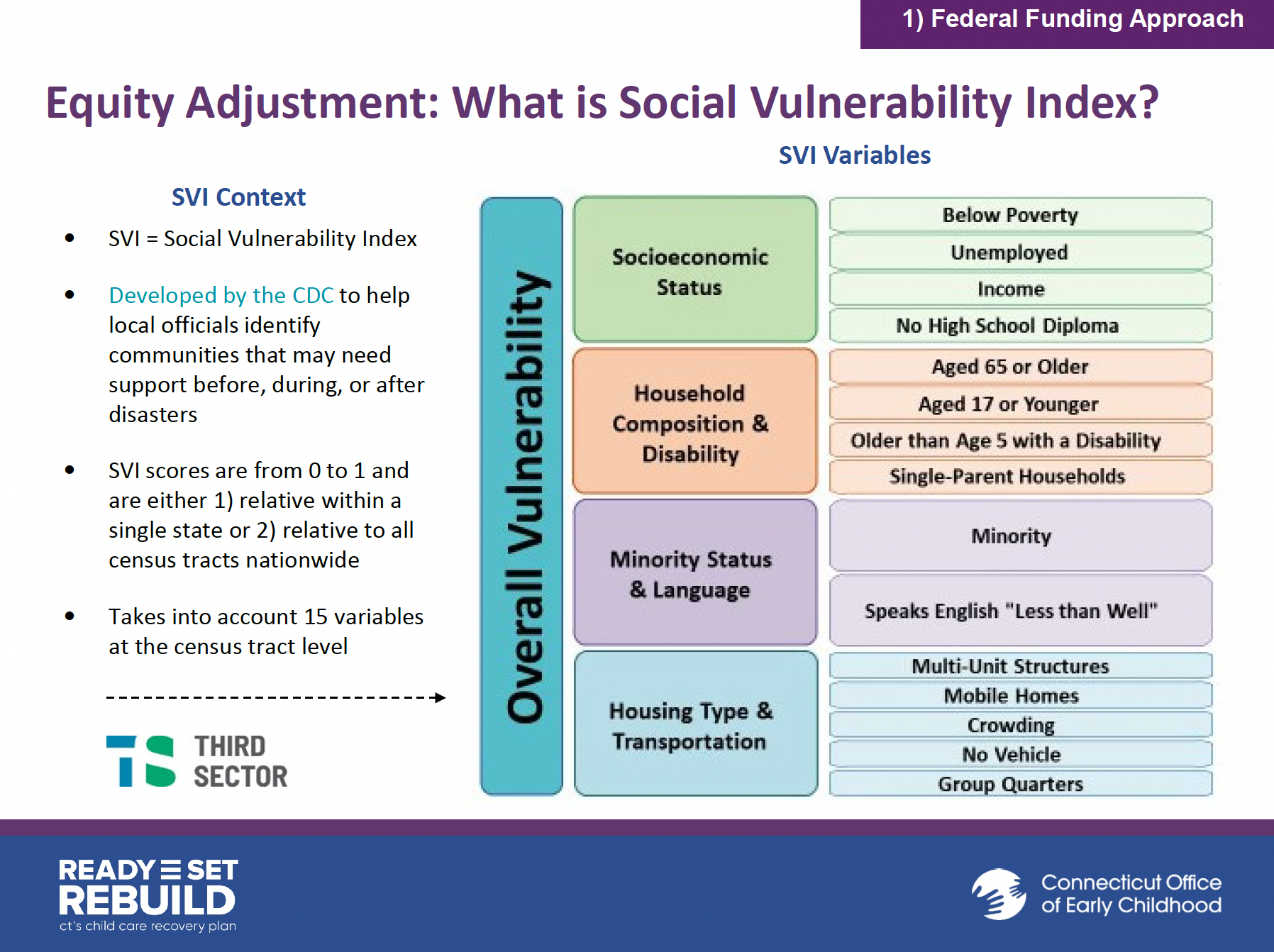
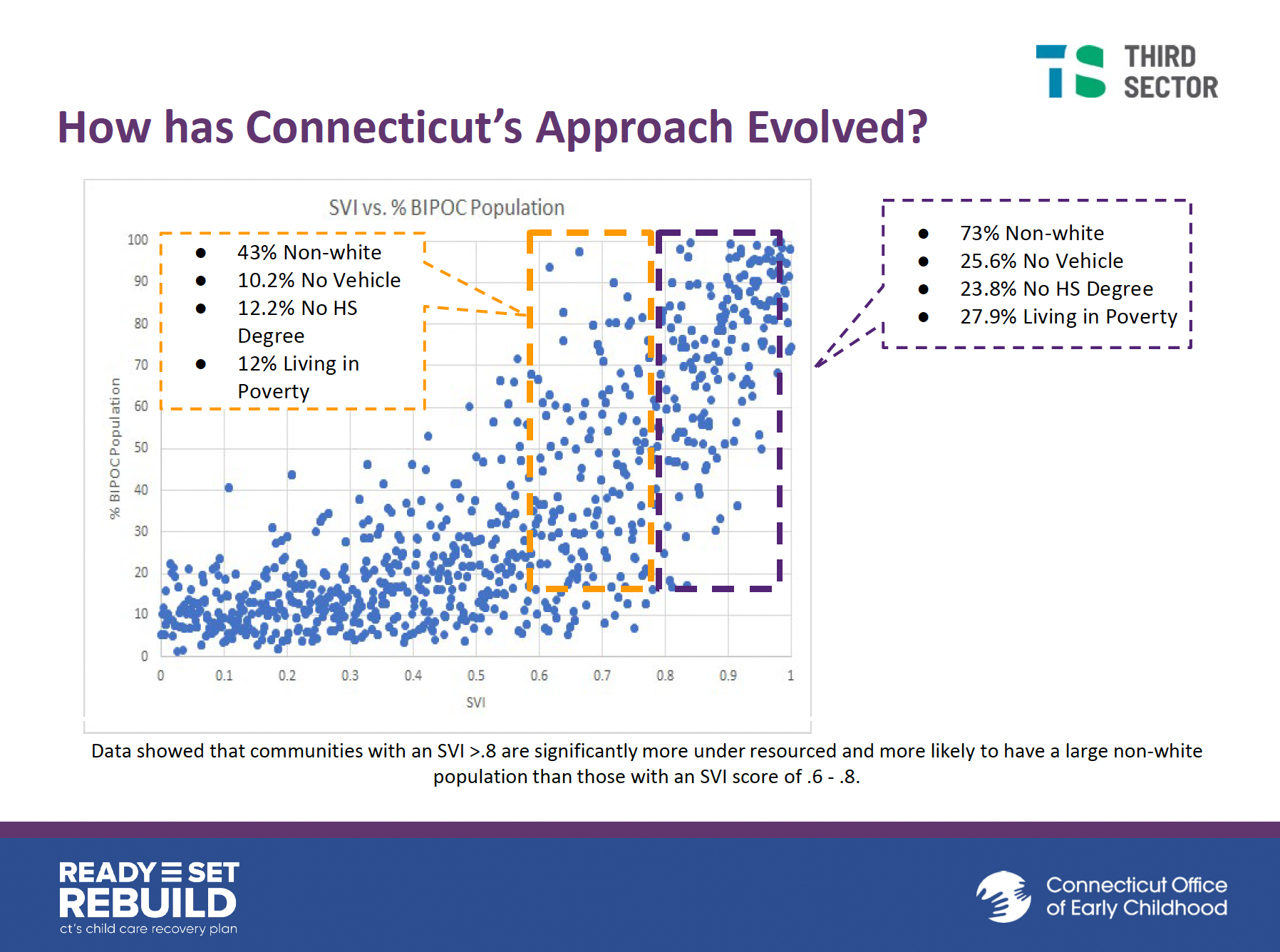
The equity bonus was tied to the CDC’s Social Vulnerability Index (SVI). Programs in census tracts with an SVI of 0.6–0.8 received a 25% boost; those at 0.8 or higher received a 35% boost. SVI incorporates socioeconomic factors, household composition, “Minority Status & Language,” and type of housing and transportation.
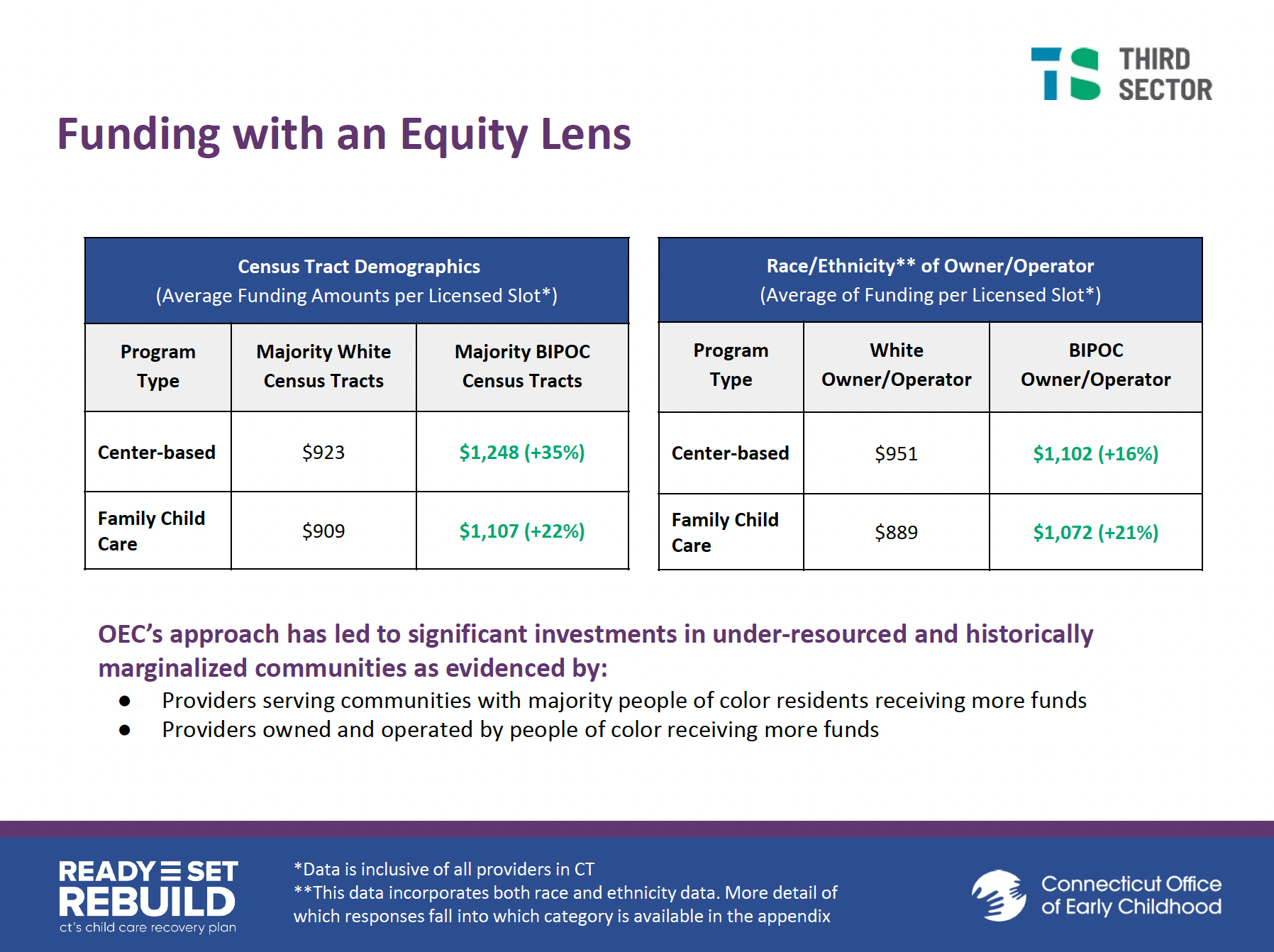
A later slide titled “Funding with an Equity Lens” quantified the results. Average funding per licensed slot was higher in majority-BIPOC census tracts than in majority-White tracts:
The same pattern appeared by the race/ethnicity of the owner or operator:
The presentation explicitly celebrated these disparities: “OEC’s approach has led to significant investments in under-resourced and historically marginalized communities as evidenced by: Providers serving communities with majority people of color residents receiving more funds [and] Providers owned and operated by people of color receiving more funds.”
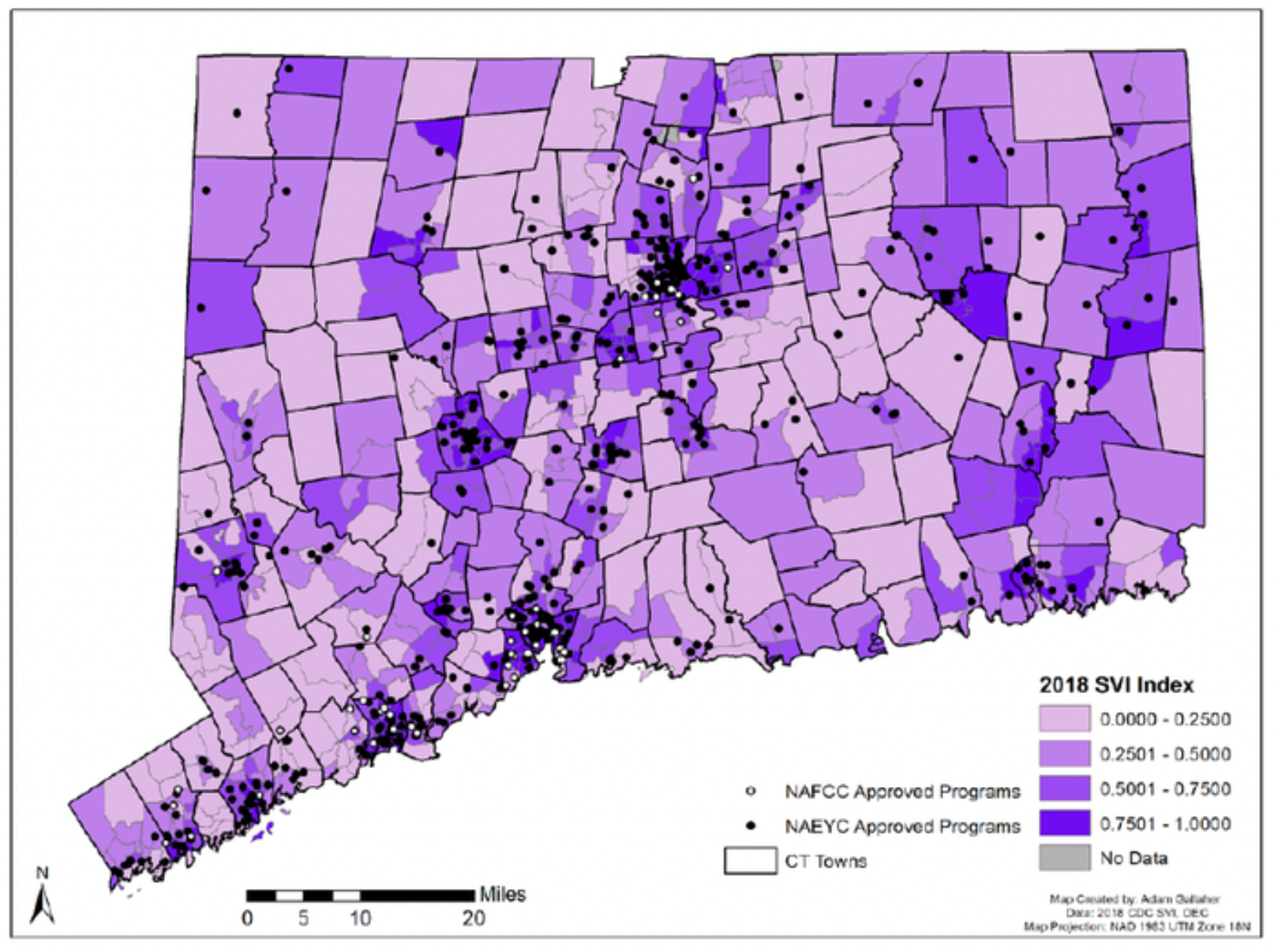
Other slides showed that high-SVI areas (the ones receiving the largest equity bonuses) were also the areas with the highest percentages of non-White residents, lower vehicle ownership, lower educational attainment, and higher poverty rates. OEC treated this correlation as confirmation that the formula was working as designed.
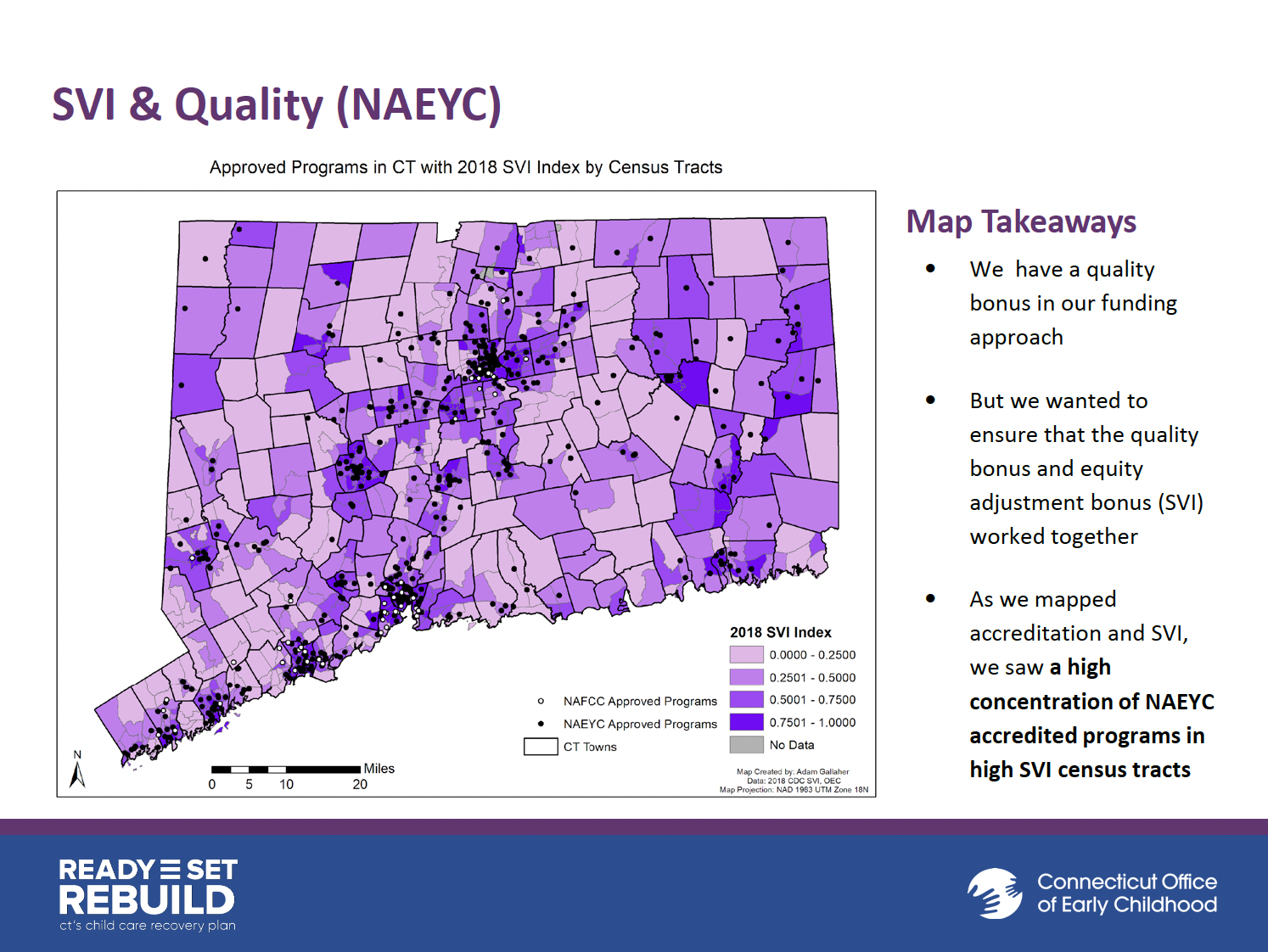
The materials also documented strong overall uptake (73% of eligible programs applied, totaling more than $108 million in one round) and a 97% opt-in rate for the requirement that centers dedicate a portion of funds to staff compensation. Survey responses indicated that most providers used the money for wages and bonuses. Those operational details, however, received far less emphasis than the racial outcomes. Note that racism was officially declared a public health crisis in Connecticut: the resolution passed the Senate on May 18, 2021, and the House on June 1, 2021, and Governor Lamont signed it on June 14, 2021.
Federal COVID relief statutes were not written as racial preference programs. Using a metric that incorporates minority status—and then publicly highlighting the resulting higher per-slot payments to BIPOC-serving and BIPOC-owned providers as a success—presumably raises equal-protection questions, especially after the Supreme Court’s 2022 decision limiting race-based preferences.
The FOI materials make it clear these racial outcomes were not accidental. Equity was a primary goal.



Stay updated with the latest in the Constitution State with The CT Centinal

Racial profiling. Discrimination based on skin color. Unequal application of the law based on skin color. Civil rights violations. Fostered by the "government" that has the "reports" justifying this expropriation of the rights of people who are not "BIPOC". This is Orwellian and Kafkaesque.