Please Follow us on Gab, Minds, Telegram, Rumble, Gettr, Truth Social, Twitter, YouTube, Instagram
Celebrating America’s 250th anniversary is a great opportunity to discover a little-known date in American history. On June 20, 1782, the Continental Congress adopted the Great Seal of the United States. For the first time, they gave Americans seven virtues defining the nation’s colors that are still relevant today.
When Congress adopted the U.S. flag on June 14, 1777, they were prosecuting a war. They didn’t have time to take perspective because war is chaos. Though they explained that the 13 stars and stripes represented the union of the 13 states, they didn’t define the meaning of the colors red, white, and blue.
Following the war’s last major battle in 1781, Congress took time to reflect. When they released the Great Seal of the United States in June 1782, they explained that the seal’s eagle symbolized independence because nothing held it down. On the eagle’s breast was a red, white, and blue shield. Here Congress defined the nation’s colors for the first time. They gave Americans seven inspirational, timeless virtues.
“The colors of the pales [stripes] are those used in the flag of the United States of America,” the Journal of the Continental Congress recorded. “White signifies purity and innocence. Red [means] hardiness and valor and Blue … signifies vigilance, perseverance, and justice.”

They chose valor and hardiness for the color red. Valor is battlefield courage. Hardiness is the ability to withstand all seasons. The Continental Army demonstrated both during the Revolutionary War: 6,800 soldiers died in battle and 17,000 died of disease.
Congress also understood the literal cost of the war. After receiving a death sentence from the British for spying in New York, Haym Salomon escaped to Philadelphia. This Jewish American from Poland personally raised $650,000, the equivalent of $15 million today, for the war. When Congress couldn’t repay his loans, he faced poverty.
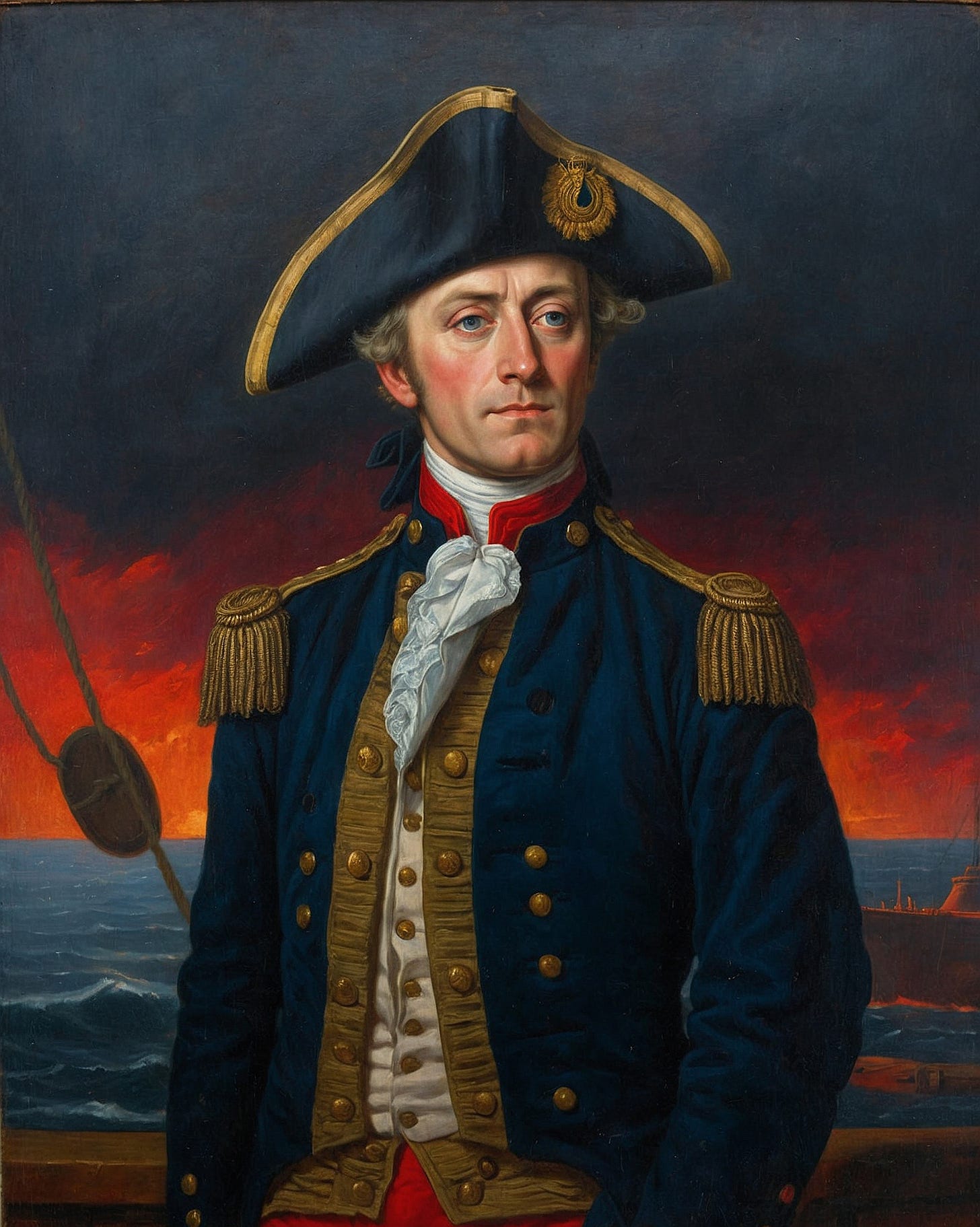
John Paul Jones, whom Congress had elevated to captain on the same day they adopted the flag in 1777, best expressed the virtue of valor on September 23, 1779. While his ship was sinking, he famously declared, “Surrender? I have not yet begun to fight!” Jones lost his ship but won the battle, becoming America’s first naval hero.
When Congress defined the flag’s red stripes, they also knew of the valor of black heroes such as Peter Salem. A freed slave and minuteman, Salem was credited with shooting Major Pitcairn, a British officer, at the Battle of Bunker Hill. The patriots blamed Pitcairn for the war’s first shots in 1775. Salem was one of 5,000 black soldiers who fought in the American Revolution.
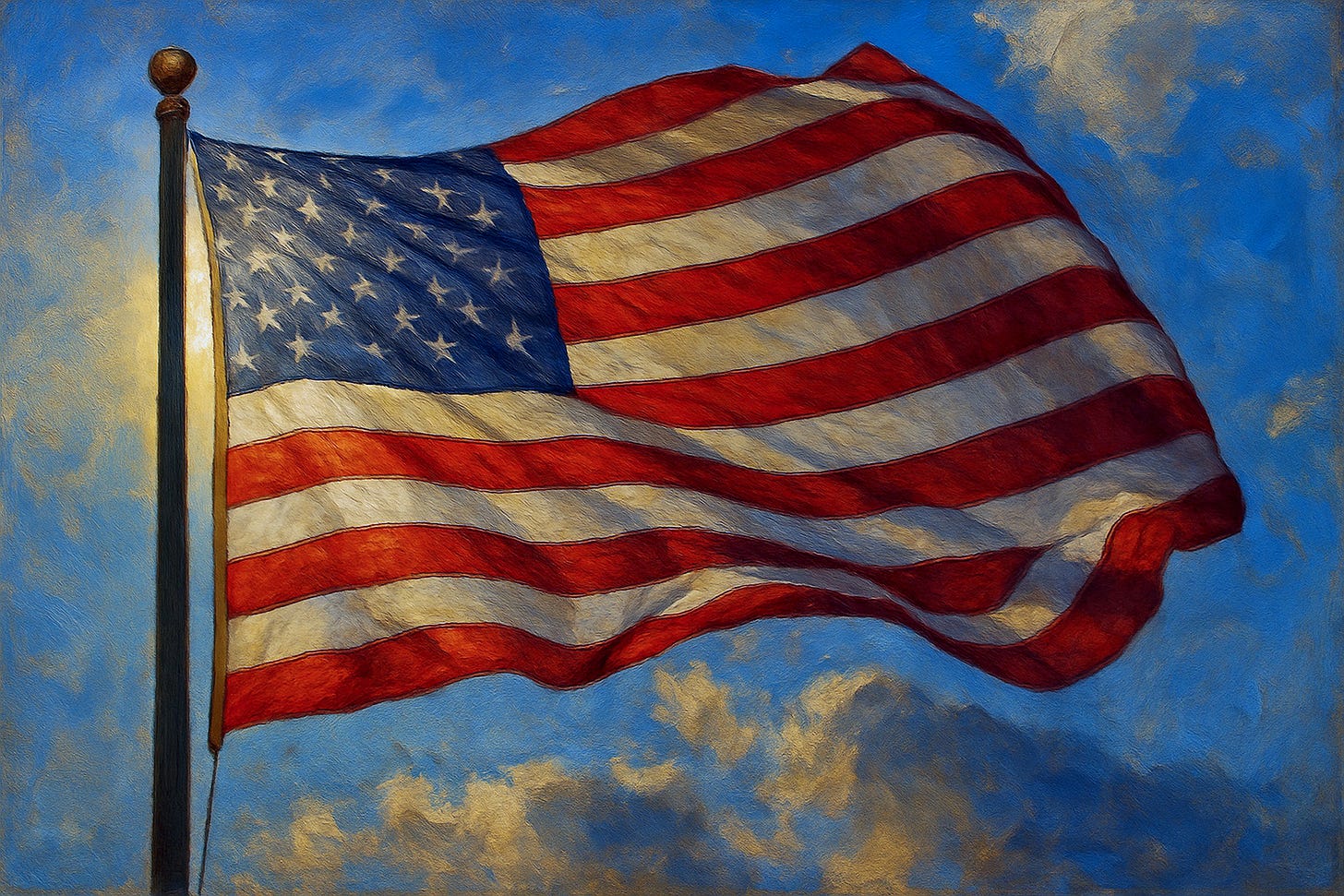
Congress gave the white stars and stripes the virtues of purity and innocence. These gentle words seem out of place. Yet, Congress understood that innocence and purity implied loyal motives, their children and the generations to come.
On July 2, 1776, General George Washington told his men that they weren’t just fighting for their future but for future Americans. “The fate of unborn millions will now depend, under God, on the courage and conduct of this army.”

Congress gave the color blue the virtues of vigilance, perseverance, and justice.
Vigilance means watchfulness. After Philadelphia Quaker Lydia Darrah overheard a British officer planning a surprise attack on Washington’s Army in December 1777, she slipped out of town, found the army’s camp and warned Washington’s men. When British soldiers tried to attack, the Continental Army was ready. The redcoats retreated thanks to Darrah’s vigilance.
Watchfulness also meant gathering intelligence. From New York’s Culper spy ring to General Lafayette’s intelligence circle at Virginia’s Yorktown, many spies had shown vigilance.


When James Armistead, a slave and spy, infiltrated British General Cornwallis’s command at Yorktown in 1781, he kept watch for the patriots and gave Lafayette intelligence that led to the war’s last battle. When he became a free man after the war, he changed his last name to Lafayette.
America had also persevered, especially the Continental Army. As Washington said goodbye to his soldiers, he reflected on their determination: “The singular interpositions of Providence in our feeble condition” and “the unparalleled perseverance of the armies of the United States, through almost every possible suffering and discouragement, for the space of eight long years, was little short of a standing miracle.”
Congress knew that undergirding the colors was the final meaning for blue—justice. The Declaration of Independence’s central premise was a statement of justice.
“We hold these truths to be self-evident, that all men are created equal, that they are endowed by their Creator with certain unalienable Rights, that among these are Life, Liberty and the pursuit of Happiness.”
This clause became America’s creed. John Adams included it in the Massachusetts Constitution. In 1783, a judge declared that slavery was unconstitutional based on this clause in the Massachusetts Constitution. Massachusetts became the first state to abolish slavery. Because of this act of justice, the end of the American Revolution was the start of the abolition movement to eradicate slavery culminating in the 1863 Emancipation Proclamation. The Civil War finished what the Revolutionary War started.
Over the centuries, civil rights leaders claimed the Declaration’s justice clause for different groups. In the 1800s, Elizabeth Cady Stanton, Susan B. Anthony and Ida B. Wells-Barnett applied the Declaration’s promise to women and to slaves. Martin Luther King also claimed the Declaration’s promise for black Americans in the 1960s.
When Congress released the Great Seal in 1782, they were introspective. They knew what the nation’s colors meant. They had witnessed valor, hardiness, purity, innocence, vigilance, perseverance and justice.
For America’s 250th celebrations, we can do the same. The Declaration of Independence planted the seeds of liberty on July 4, 1776. Through these virtues, those seeds flourished over time, making America’s 250th anniversary the harvest of liberty.


Stay updated with the latest in the Constitution State with The CT Centinal