Please Follow us on Gab, Minds, Telegram, Rumble, Gettr, Truth Social, Twitter, YouTube, Instagram
Everyone in Connecticut knows that our state’s Democrat Party has become an ungainly hegemon concerned principally with denying Republicans a place at the state’s political table. That is one of the reasons there has been to date only two brief and inconclusive gubernatorial debates between Governor Ned Lamont and his Republican challenger Ryan Fazio. The Connecticut debates were not political contests in the fashion of the Lincoln Douglas debates. They were largely media shows. Lincoln and Douglas, pretty evenly matched, debated six times in is strategic areas of Illinois, during which the media served as stenographic reporters.
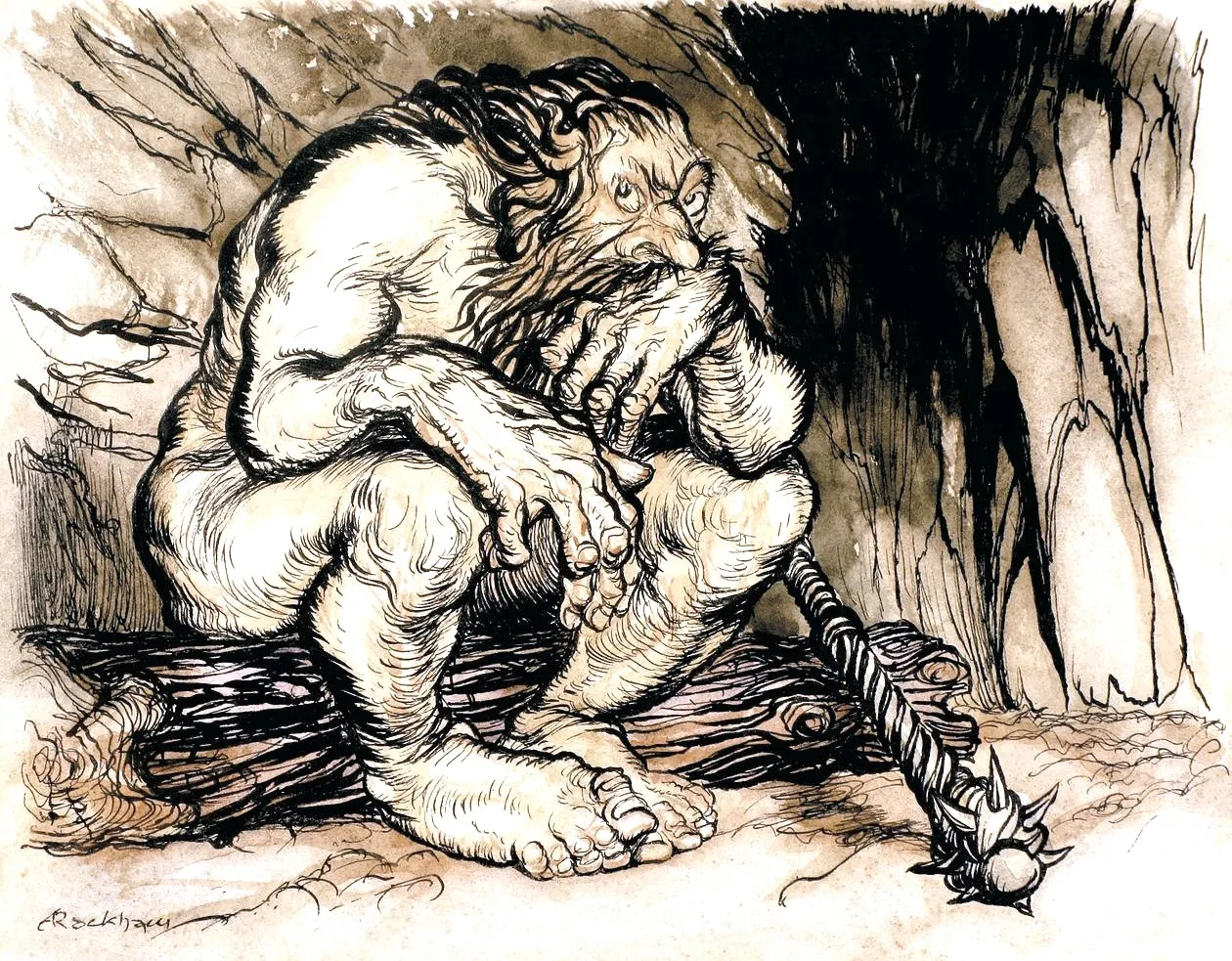
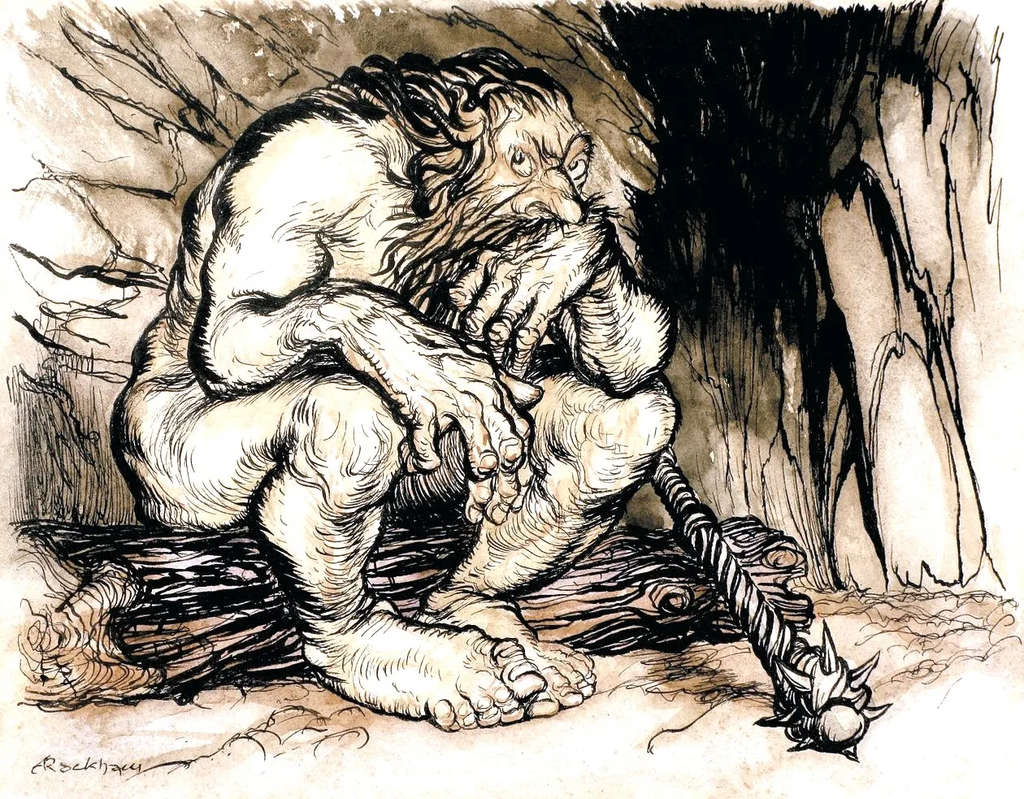
The Democrat Party hegemon in Connecticut may remind some of the giant in the fairy tale who, in hot pursuit of the princess, finds himself with one step far beyond her. Giantism in politics has invariably pointed the way to tyranny. Following the advent of the Stalin era in the Union of Soviet Socialist (emphasis mine) Republics, there was the unitary state. The same is true of Italy under Mussolini, who introduced the world to fascism. Mussolini’s definition of fascism was precise and true. Asked to define fascism, Mussolini said “Everything in the state, nothing outside the state, nothing above the state.” Mussolini was a journalist and a socialist both before he assumed power and shortly before he was hanged in northern Italy. Hitler was a fascist, a leader in Germany’s “National Socialist (emphasis mine) German Workers’ Party,” who rose to power in Germany’s unitary anti-democratic state.
The lesson we should all draw from political giantism is that the unitary state produces giants: Hitler in Germany, Mussolini in Italy, Stalin in Russia, Mao in China, Castro in Cuba, Chávez in Venezuela, etc.
The results of Connecticut’s off year presidential election are predictable, considering the disposition of political forces in the state. One datum may suffice for many: for all practical and political purposes, Connecticut has succumbed to giantism. Among registered voters in the state, Democrats outnumber Republicans by a two-to-one margin. The state‘s larger cities have been Democrat fiefdoms for forty plus years, very likely the result of gerrymandered districts. We know that in-office Democrat politicians are better able than out-of-office Republican politicians to generate both campaign funds and state employee feet on the ground during political campaigns. In addition, the state’s hegemonic Democrat Party has managed to escape critical analysis from a media that is, partly for business reasons, ideologically supportive of the reigning Democrat hegemony. Only active politicians are able to produce political news, and politics in the state, for reasons stated above, is conducted solely by Republican averse Democrats. Members of the state media, no less than state workers, are anxious not to bite the hand that feeds them. In an era of forced political change, as detailed in the Democrat Socialists of America manifesto, timidity is punishable, in the absence of a gulag, by ostracism.
The state Democrat Party, in other words, is fully armed. Perhaps the most important armory controlled by state Democrats is, in addition to a compliant media, an assortment of public employee unions cosseted over the years by left of center state Democrats who know what side their bread is buttered on.
There is an important difference, never overlooked by vote hungry Democrats, between state tax supported public employee unions and what one might call free market supported unions. The pay master is different in both cases. A carpenter’s union, for instance, depends for its sustenance on a vibrant free market economy less burdened than Connecticut’s under the weight of unfriendly job killing regulations produced by a state employee union dependent leftist government. This writer has sometimes referred to state union employee head honchoes as Connecticut’s “fourth branch of government” – and, of course, everyone will agree that dependency works both ways. In all political welfare schemes, there is a co-dependency between the receiver of political favors and he supplier of favors. The backscratcher needs backs to scratch.
In a politics rooted in giantism, it always helps to have a co-dependent giant working cheek by jowl with the giant-in-chief who may be relied upon to produce cartloads of costly regulations, the purpose of which is to slow to a trickle the vibrancy of a free market that just might, to choose but one example among many, make new home construction much more affordable and attractive to young people who have been avoiding setting down stakes in a state that political favoritism has made unaffordable. Stop spending, reduce taxes, cut regulations should be the watch words of every nutmegger in love with his or her state.
Searching diligently, this writer has happened upon only one political writer in Connecticut, fiercely independent, an astonishing contrarian, who has written persuasively about government cosseted unions, educational institutions free of stultifying leftist politicians, the value of a free market economy, and a quasi-socialist economy that has not yet, to turn a phrase of Maggie Thatcher, “run out of other people’s money.” That would be Chris Powell, the Thomas Paine of Connecticut politics.
Despite all obstacles, he keeps banging away: “State government has become far bigger than the civic virtue and journalism available to manage it in the public interest. That is, it has grown beyond control, and it will not stop growing by itself.”





Stay updated with the latest in the Constitution State with The CT Centinal