Please Follow us on Gab, Minds, Telegram, Rumble, Gettr, Truth Social, Twitter, YouTube, Instagram
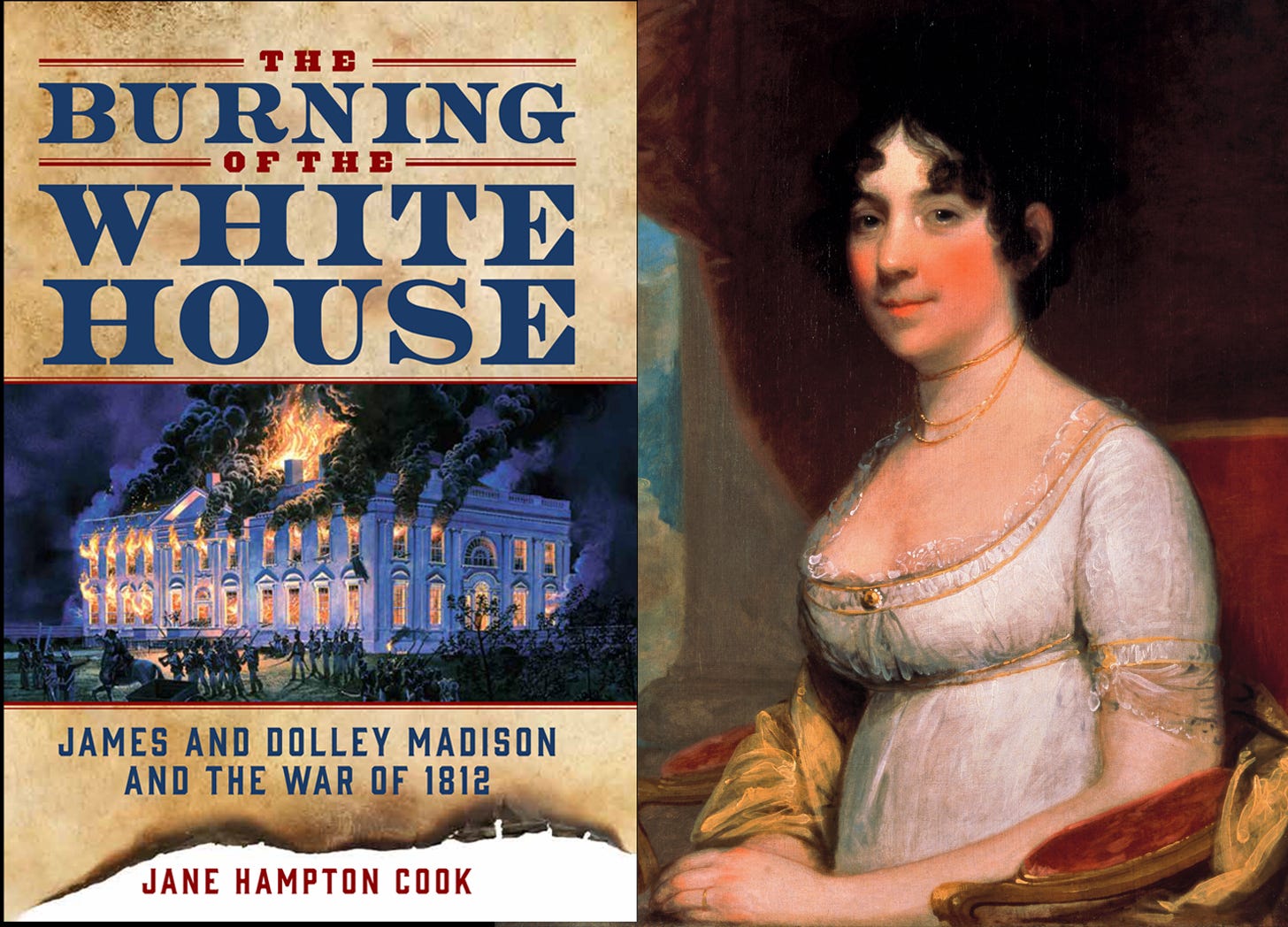
In the coverage of music legend Dolly Parton's death, I have also thought about the other legendary Dolly, Dolley Madison, who is the main heroine in my literary nonfiction book, The Burning of the White House.
But there is more to Dolly vs. Dolley than simply their names. Familiarity with Dolly Parton can help you better understand Dolley Madison.
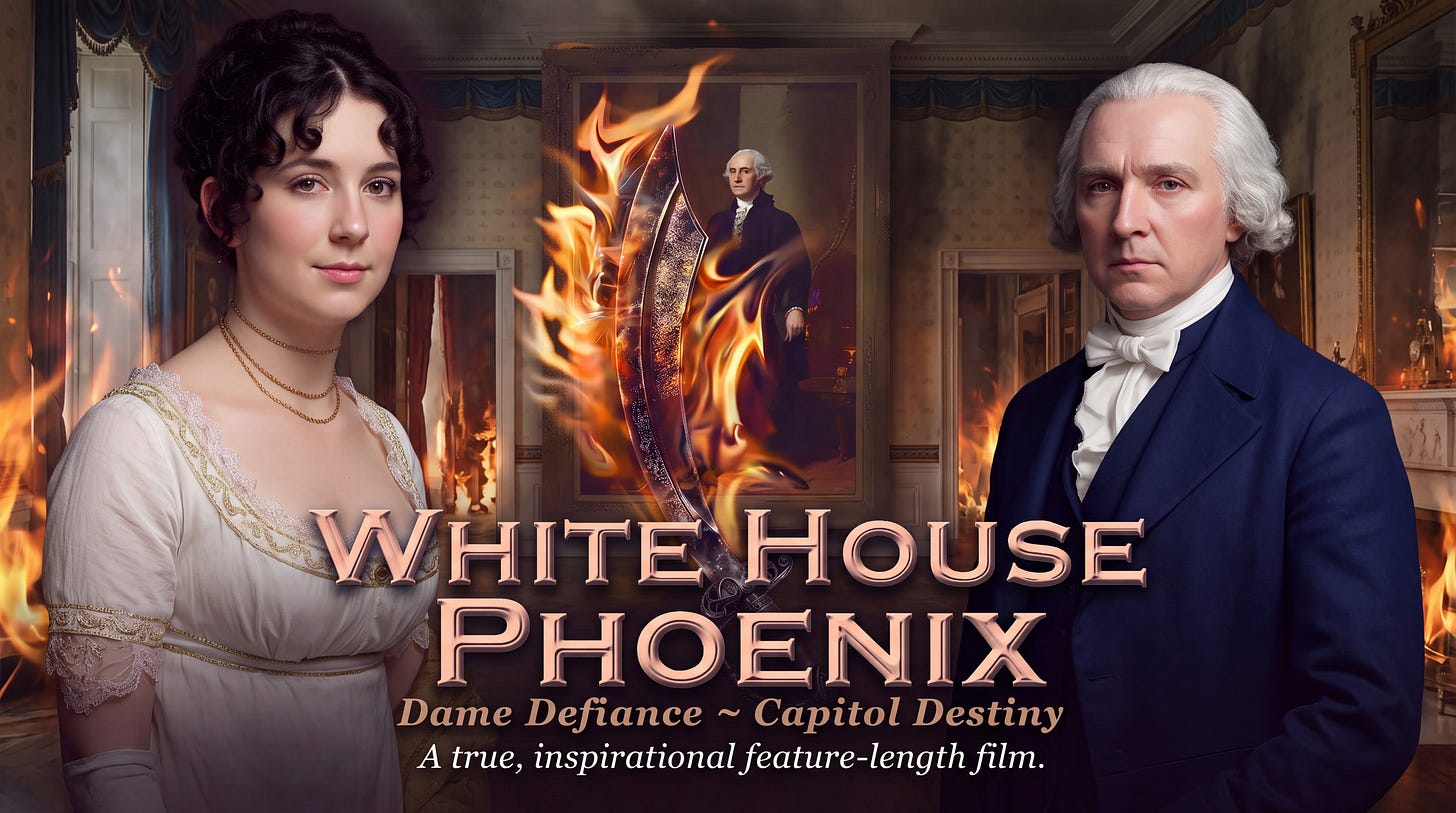
In fact, there are enough similarities between the two that when I hire an actress to play Dolley Madison in my feature-length film, WHITE HOUSE PHOENIX, I will point her to Dolly Parton as an example of Dolley Madison’s personality. They have several things in common.
Dolly Parton’s and Dolley Madison's similar characteristics:
The Differences
Their physical differences are obvious. Both well-endowed, dark-haired Dolley Madison was 5’6” while platinum blond Dolly Parton was 5’, which is my height. Living centuries apart, Dolley Madison was a politician's wife and the first, First Lady while Dolly Parton was as legendary as an entertainer as she was a business woman and philanthropist.
In the coverage of Parton's death, several who knew her have pointed out her charisma. Parton made you feel like you were the most important person in the room when you met her. She calmed people’s nerves. Dolley Madison also had this gift.
In fact, Dolley was far more popular than her husband, James Madison, to the point that it may have swayed the 1808 presidential election. Charles Pinckney, the South Carolinian who lost to the introverted James Madison, credited Dolley for his loss.
"I was beaten by Mr. and Mrs. Madison. I might have had a better chance had I faced Mr. Madison alone," Pinckney quipped.
Anti-political
What stood out to me the most about Dolly Parton in the wake of her death was her approach to politics. Knowing she had fans who were both Republicans and Democrats, Parton removed herself from political controversy by not endorsing politicians or expressing her political opinions.
“My daddy was a Republican, my mama was a Democrat, and I’m a hypocrite!" Parton quipped with a laugh, pronouncing 'hypocrite' as 'hypo-crat' in her signature Southern drawl.
She went as far as to reject both President Trump’s and President Biden’s efforts to give her the Presidential Medal of Freedom. Why? She didn't want to appear partisan or political by accepting the award. We've seen the fruit of Parton’s decision because the reaction to her death has crossed political party lines and transcended our very fractured culture. By setting politics aside, she maintained her popularity. I would love to see more entertainers follower her example.
Obviously, as the wife of a politician who became president, Dolley Madison could not stay out of politics. However, she established a bipartisan social culture, one we desperately need more of today.
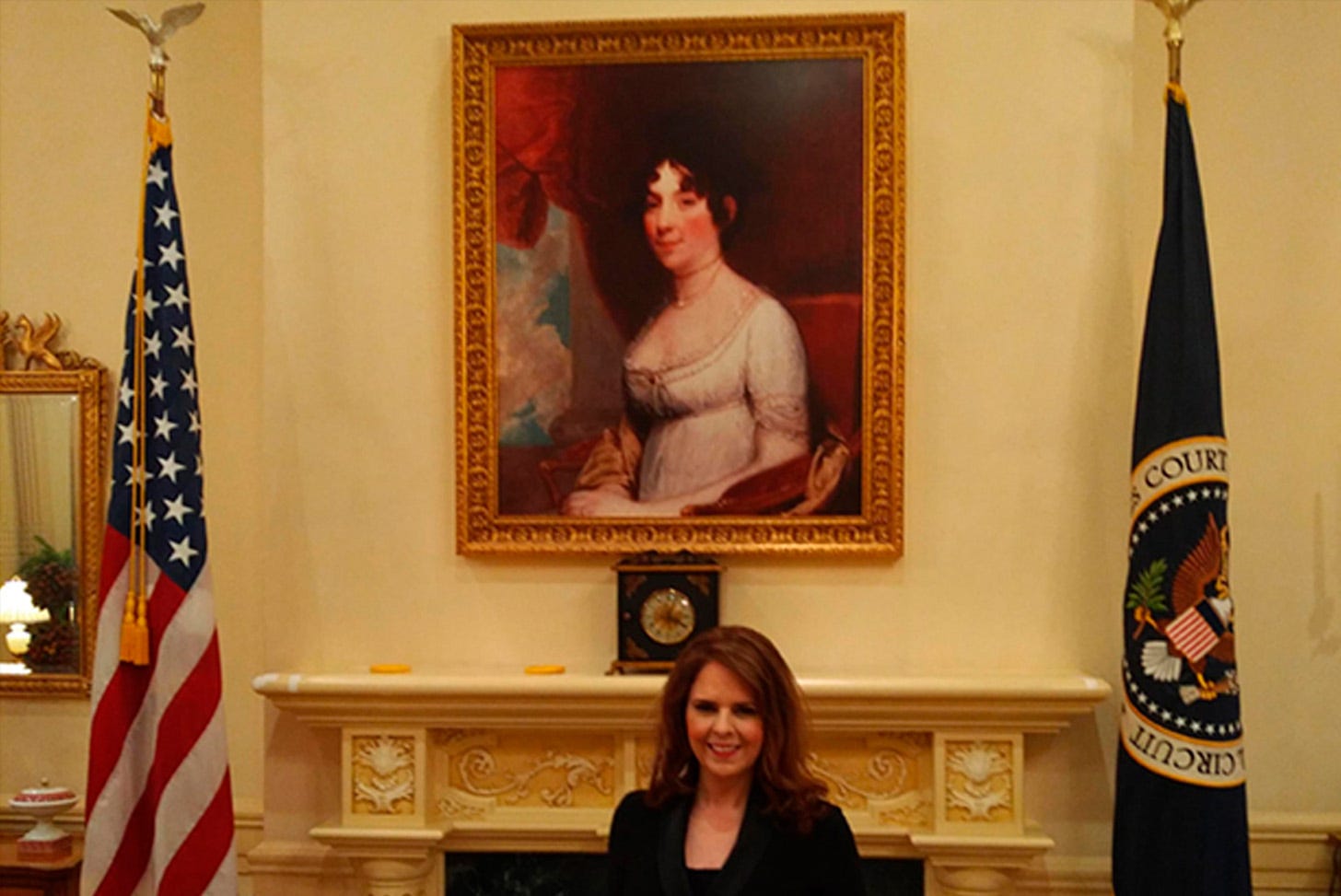
When President Thomas Jefferson held parties at the White House, he rarely invited members of both political parties to the same event. Why? Well, this was the age of duels. If things got too heated between political opponents, they could challenge each other to a duel.
The most famous duel took place on July 11, 1804, when Jefferson's Vice President, Aaron Burr, killed Alexander Hamilton. Hence, Jefferson was understandably hesitant to host bipartisan parties at the White House in case men got too heated and challenged each other to a duel.
When Jefferson’s successor, James Madison became president, his wife rectified this problem. Dolley Madison opened the White House to weekly parties on Wednesdays. Anyone could attend. This open-house approach meant that members of both political parties risked coming to a White House party at the same time as their political opponents. In addition, Dolley made sure that ladies attended because men would not usually challenge each other to a duel in the presence of women. Dealing a death blow to dueling culture, this bipartisan approach created a fashionable and charming society in Washington, DC.
Dolley Madison and Dolly Parton both valued charity.
In the eulogies for Dolly Parton, many mentioned her charity. Because her father was illiterate, Parton wanted to give needy children books to help them learn to read. Parton's Imagination Library has distributed more than 325 million books to young children.
Dolley Madison also focused on children in her charitable work. After the British military burned the White House in 1814, Dolley took stock of her life and priorities. Starting an orphanage for girls, she became the first presidential wife to engage in public service by taking on a platform. This sealed her legacy and earned her the name, “the lady of the land” at her funeral.
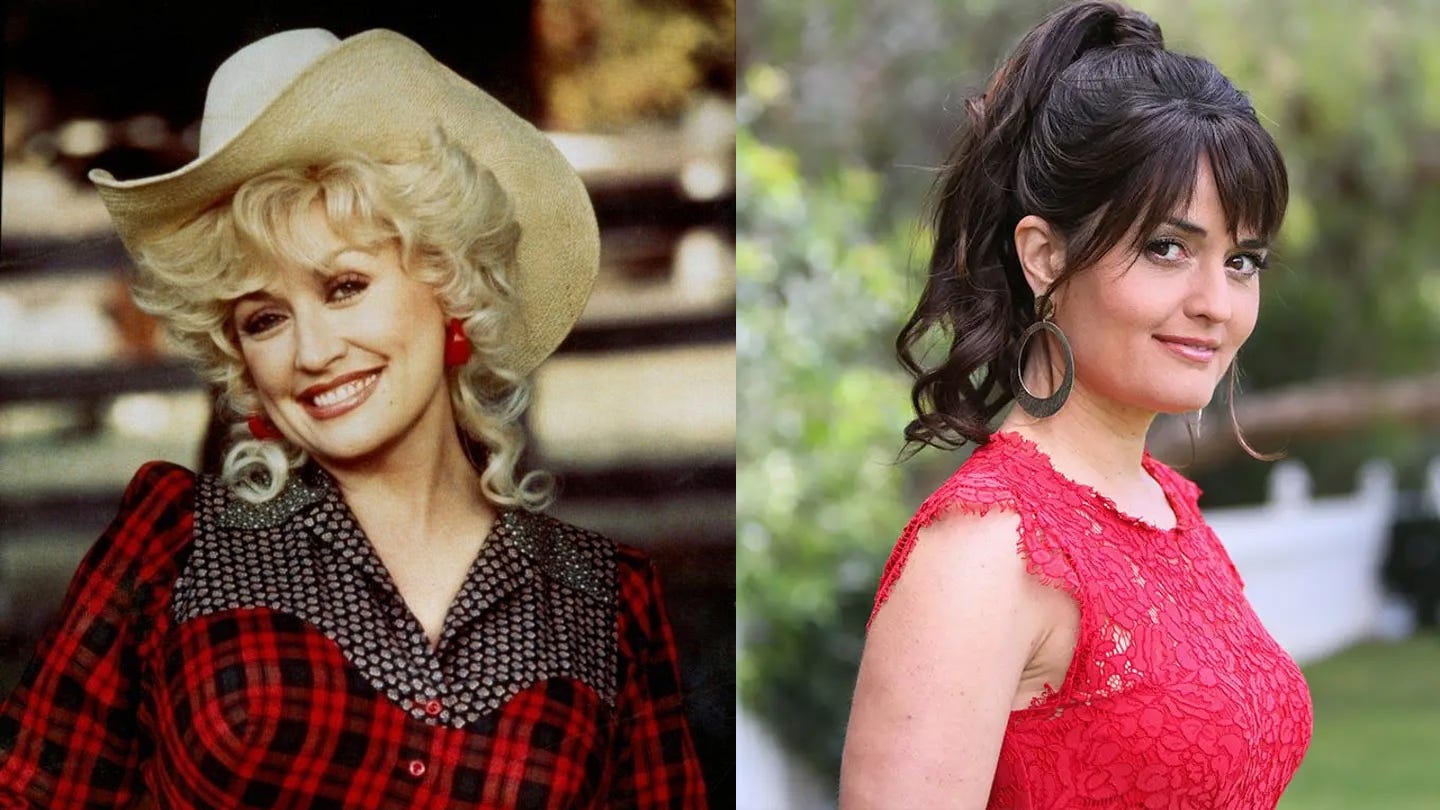
In closing, I want to point you to a Fox News article about actress Danica McKellar's reflections on Dolly Parton. They worked together in a movie called Christmas at Dollywood, which takes place at Dolley's theme park in Pigeon Forge, Tennessee. Parton's Imagination Library also featured McKellar’s children’s book, "Goodnight, Numbers.” McKellar narrated the documentary "The Library That Dolly Built."
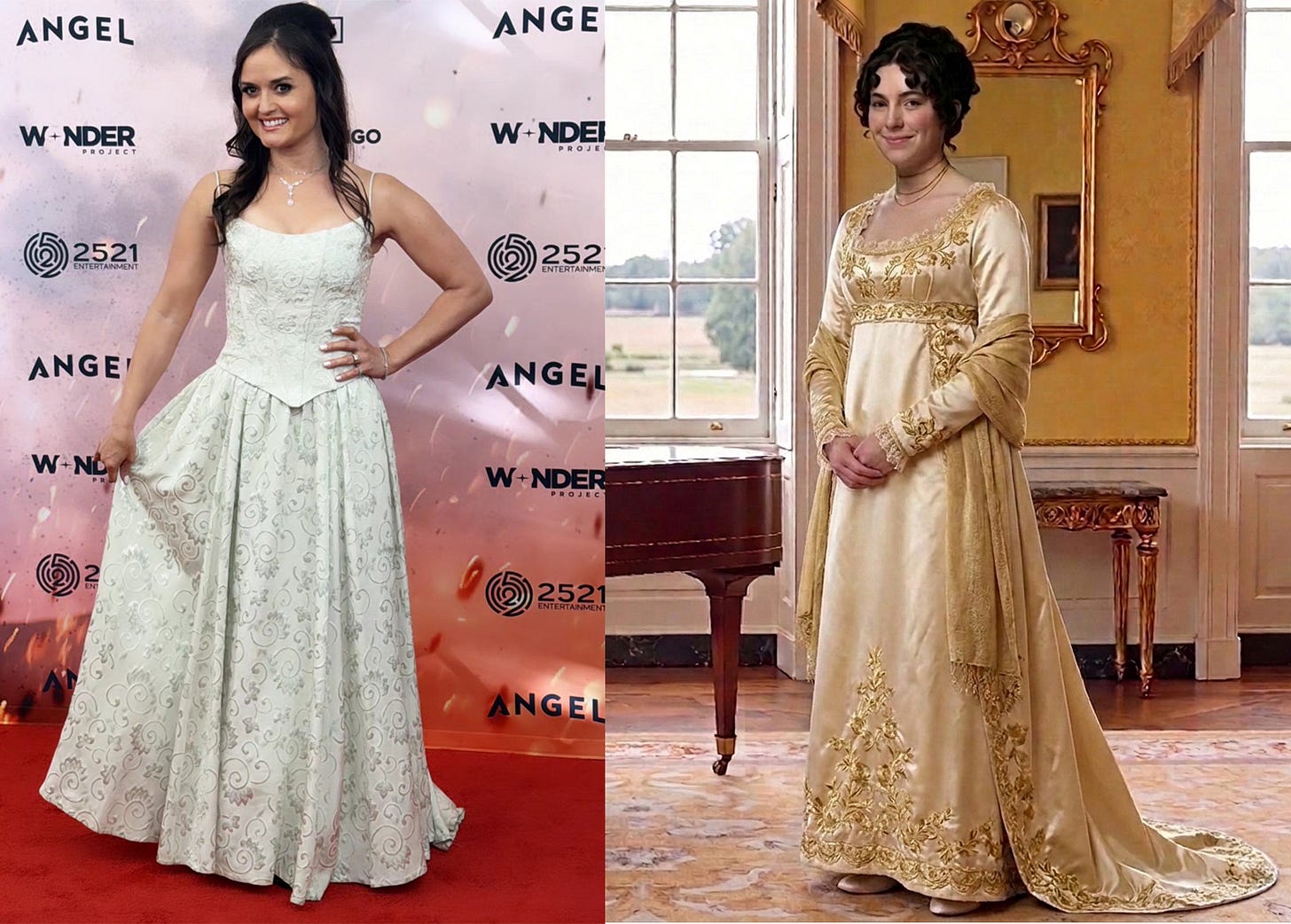
This Fox article also caught my eye because I can see Danica McKellar as Dolley Madison in White House Phoenix, my feature-length screenplay, adapted from my book, The Burning of the White House.
Dolly vs. Dolley shows us that two women living centuries apart can have alot in common. Comparing and contrasting helps us to identify timeless qualities that can inspire us.
Thanks for reading and drop a comment about your thoughts on who should play Dolley Madison!


Stay updated with the latest in the Constitution State with The CT Centinal