Please Follow us on Gab, Minds, Telegram, Rumble, Gettr, Truth Social, Twitter, YouTube, Instagram
The Capitol Region Education Council (CREC), one of Connecticut’s six Regional Educational Service Centers established in 1966 under state statute, continues to place “Demand Equity” at the center of its institutional identity.
Serving roughly 32 member districts in Greater Hartford, operating 16 interdistrict magnet schools, assisting approximately 12,000 students annually, and providing professional development and other services statewide, CREC’s public-facing materials show equity and anti-racism work woven into mission statements, employee groups, professional development training, and even official language.
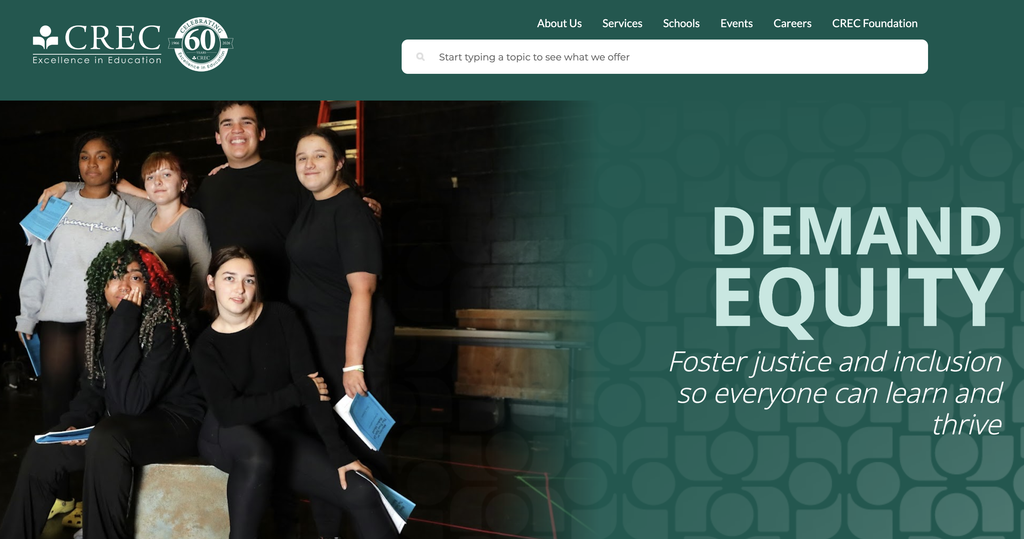
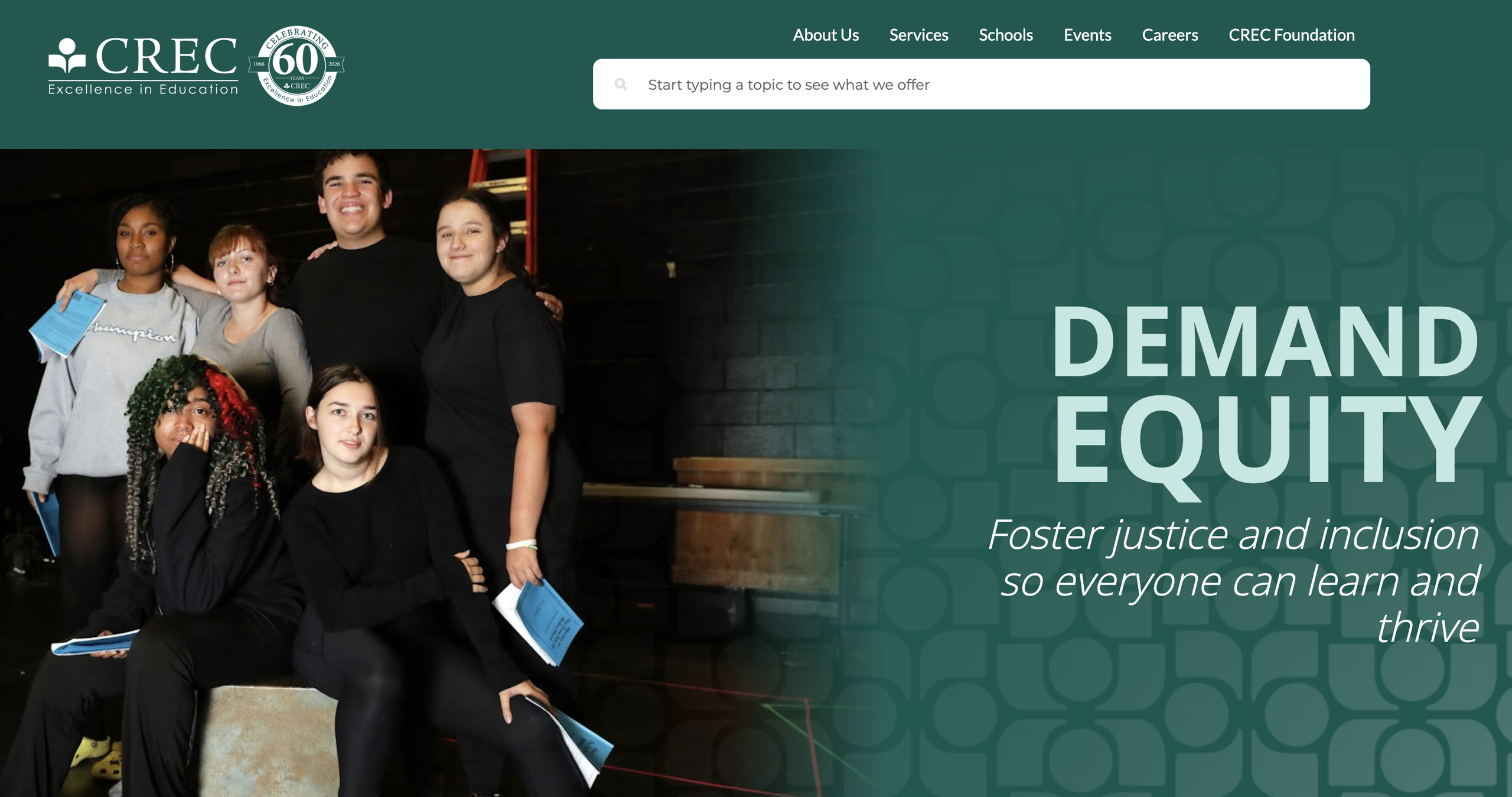
“Demand Equity” appears prominently on the homepage alongside the other values. CREC’s stated mission, vision and core values all incorporate "equity."
CREC's DEI statement asserts that it “strives to understand and confront the symptoms and causes of racism and prejudice—ranging from biases to aggressions to discriminatory policies, practices, and traditions—that harm people from systemically marginalized groups or that benefit privileged groups.”
Staff and students are expected to “acknowledge and respect people of all identifiers” including race, socioeconomic status, gender identity and expression, and other categories.
Anti-racist commitments listed on the DEI pages include understanding that “systemic racism impacts each person’s lived experience,” uplifting voices from systematically marginalized groups, and addressing the needs of those “most harmed by ongoing systemic racism.”
Then there's the Land Acknowledgement, updated in January 2026 in partnership with the Akomawt Educational Initiative and The Institute for American Indian Studies.
It states that the land on which CREC gathers “exists upon the ancestral territory and Indigenous villages,” and that “through dispossession and disease, colonial powers encroached upon their homelands and reservations.” It names federally recognized tribes and state-recognized tribes, and affirms support for their sovereignty. An accompanying explanation frames land acknowledgments as necessary because “settler colonialism is a current ongoing process” and positions CREC’s presence on Native land as requiring ongoing mindfulness and education about diversity, equity, and inclusion.

CREC promotes affinity groups to create a sense of belonging, support an inclusive climate, provide a collective voice, promote internal diversity initiatives, and host professional development.
While CREC states the groups are open to everyone, the named focus on specific identity categories has drawn scrutiny in other workplaces under evolving federal guidance. Recent EEOC technical assistance and related legal commentary have emphasized that Title VII prohibits limiting, segregating, or classifying employees by protected characteristics in ways that affect employment opportunities or status.
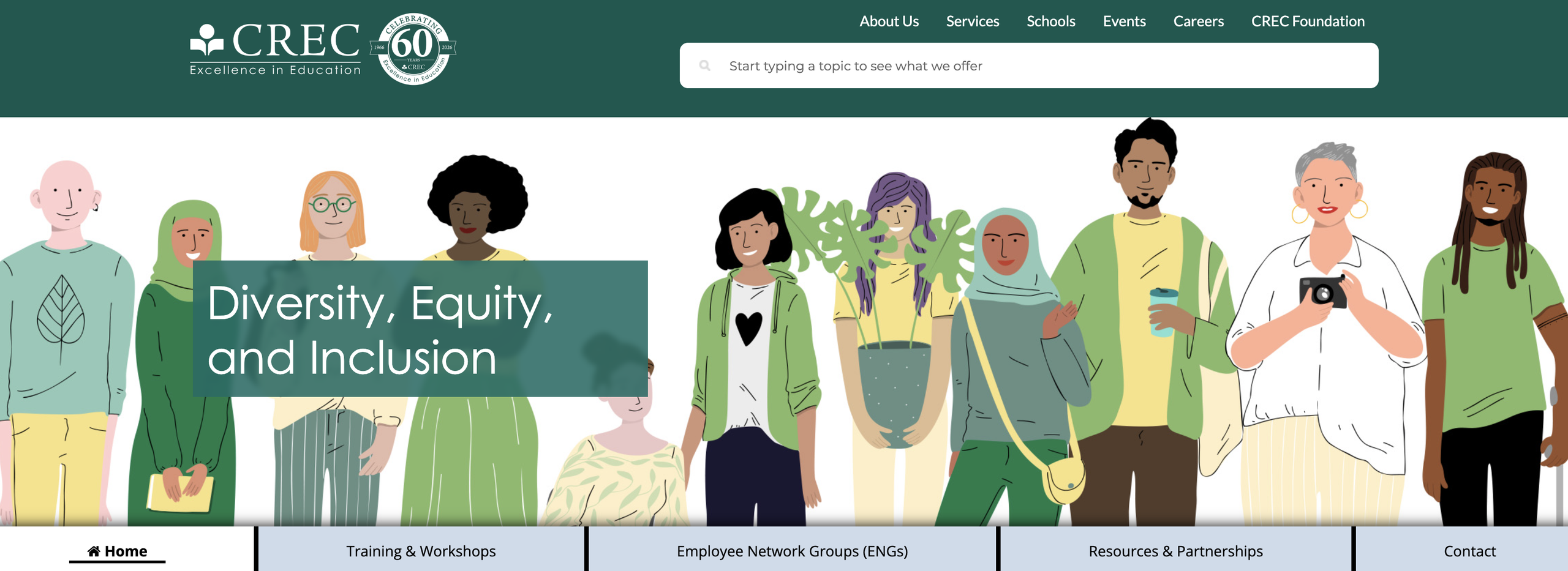
CREC’s Division of Diversity, Equity, and Inclusion provides offers a number of DEI-based services, including Collaborative Learning Sessions for Equity Facilitators, DEI Professional Learning, Equity Program & Curriculum Reviews, and a Continuous Learning Series.
Collaborative learning session topics include:
DEI Professional Learning covers the "language" of DEI, race, racism, and antiracism; belonging and social identity; and tools for interrupting bias and microaggressions.
Equity Program and Curriculum Reviews evaluate practices, perspectives, and materials and recommend steps to address inequities.
The Continuous Learning Series topics include supporting school leaders to lead for equity; understanding social identity, privilege, and bias; culturally responsive teaching and representation in curriculum; restorative practices; supporting student-led advocacy/social justice teams; and recruiting and retaining Educators of Color. Upcoming sessions focus on restorative practices training.

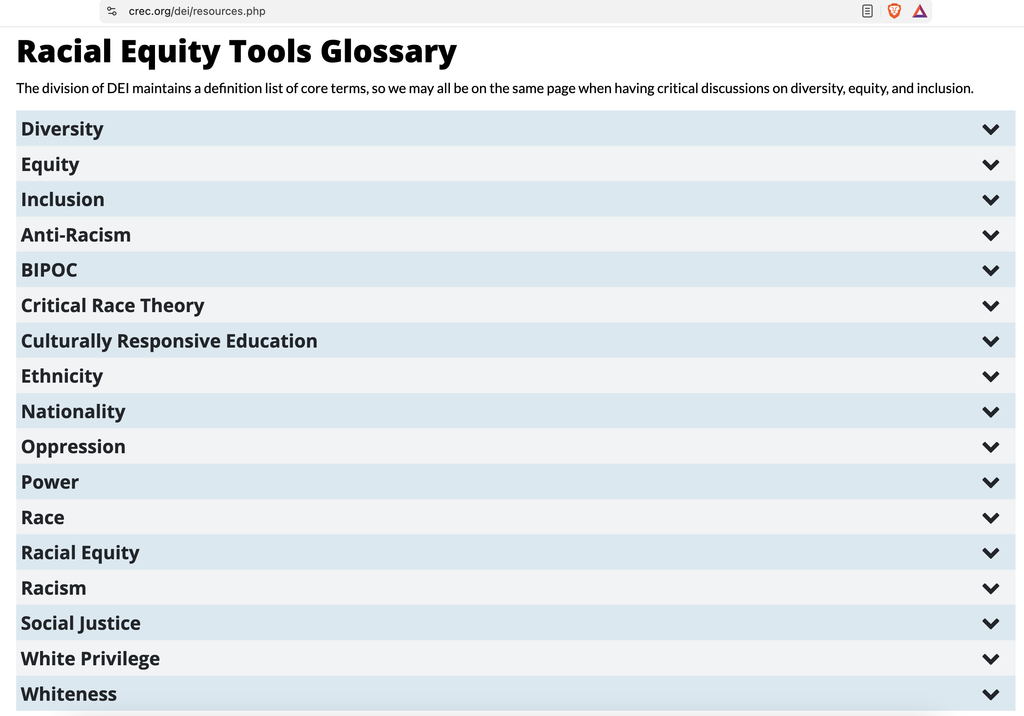
The DEI division even maintains a “Racial Equity Tools Glossary” so staff can “be on the same page when having critical discussions on diversity, equity, and inclusion.”
Terms and definitions include:
CREC’s materials show a consistent institutional priority on equity as defined through these lenses, with dedicated staffing, public statements, training pathways for both internal facilitators and external districts, and official language that treats systemic racism and related concepts as central to the organization’s work.
Yes, academic excellence appears alongside equity in the mission statement, but the volume and prominence of the equity infrastructure—from the homepage core value through the glossary, land acknowledgment, identity-focused employee groups, and specialized training—make clear that these topics remain a major ongoing focus of the regional education council.
So much for the Trump Administration's efforts to end these divisive programs. It's still full steam ahead for DEI in Connecticut.





Stay updated with the latest in the Constitution State with The CT Centinal