Please Follow us on Gab, Minds, Telegram, Rumble, Gettr, Truth Social, Twitter, YouTube, Instagram
A Bethel parent is asking why her child’s AP Art History class is assigning worksheets that require students to define core Islamic religious terms—including the Five Pillars—and label architectural elements of a historic mosque, while questioning whether comparable depth is given to Christianity or other faiths.
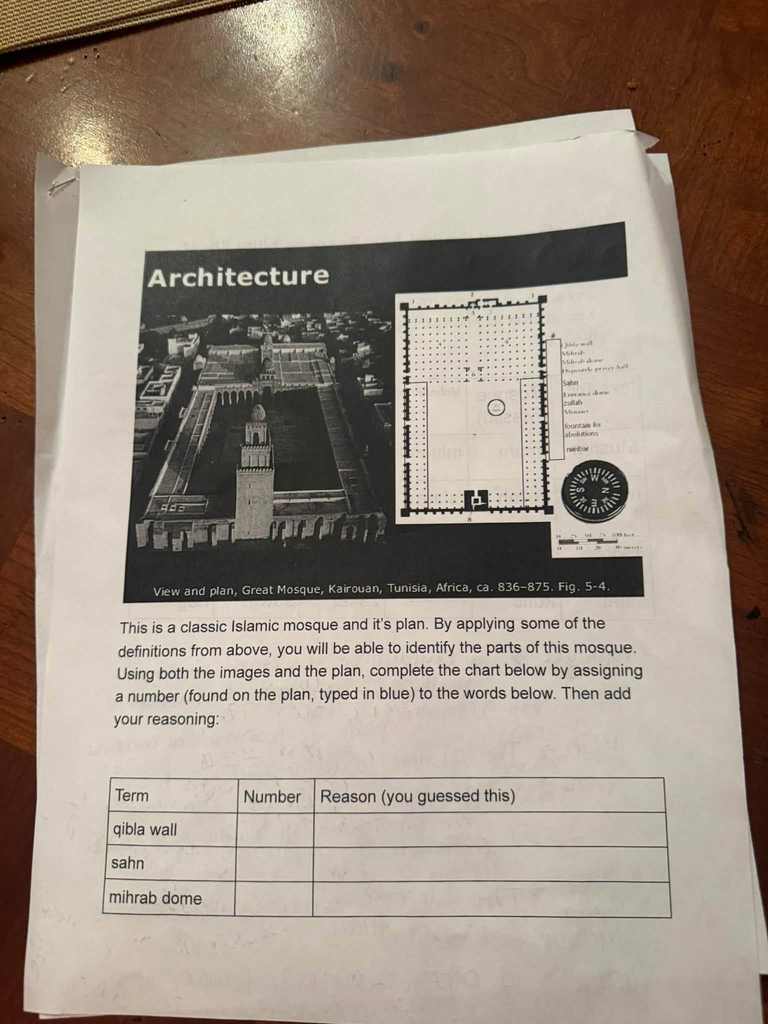
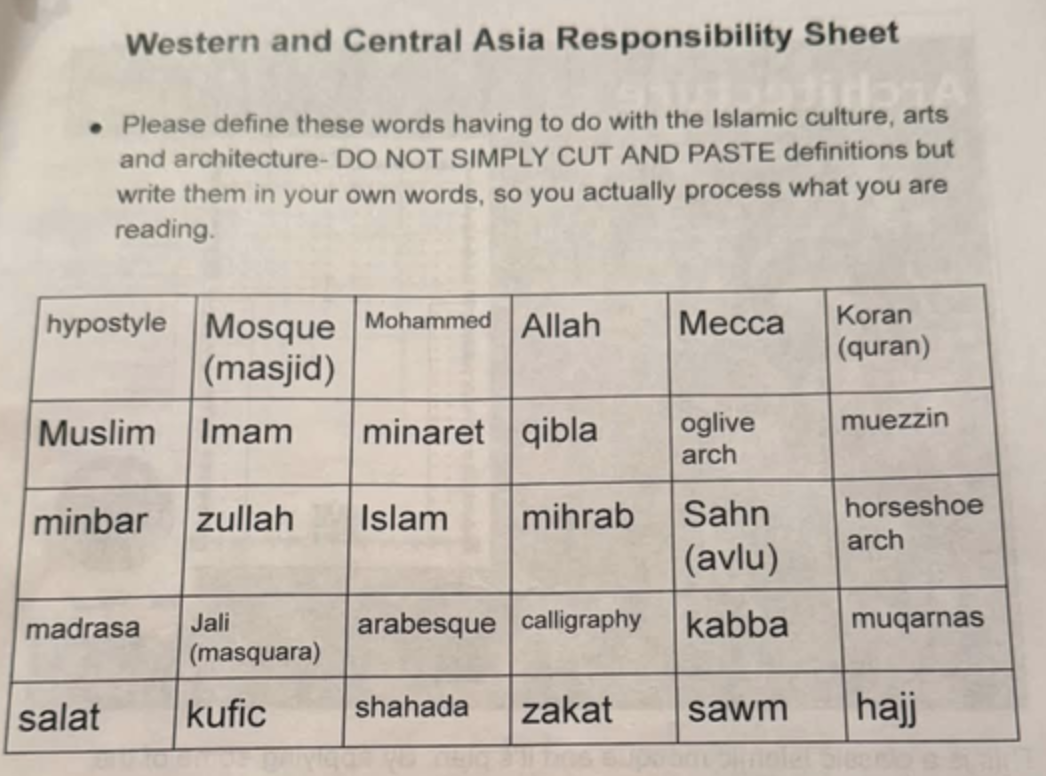
In a Facebook post that has drawn hundreds of reactions, Ericka Barnes shared photos of a “Western and Central Asia Responsibility Sheet” and an accompanying architecture worksheet. The materials instruct students to define, in their own words, terms such as Allah, Mecca, Koran (Quran), Muslim, Imam, minaret, qibla, mihrab, minbar, salat, zakat, sawm, hajj, shahada, and others tied to Islamic culture, arts, and architecture. A second sheet shows a plan of the Great Mosque of Kairouan (Tunisia, 836–875) and asks students to identify the qibla wall, sahn, mihrab dome, and related features.
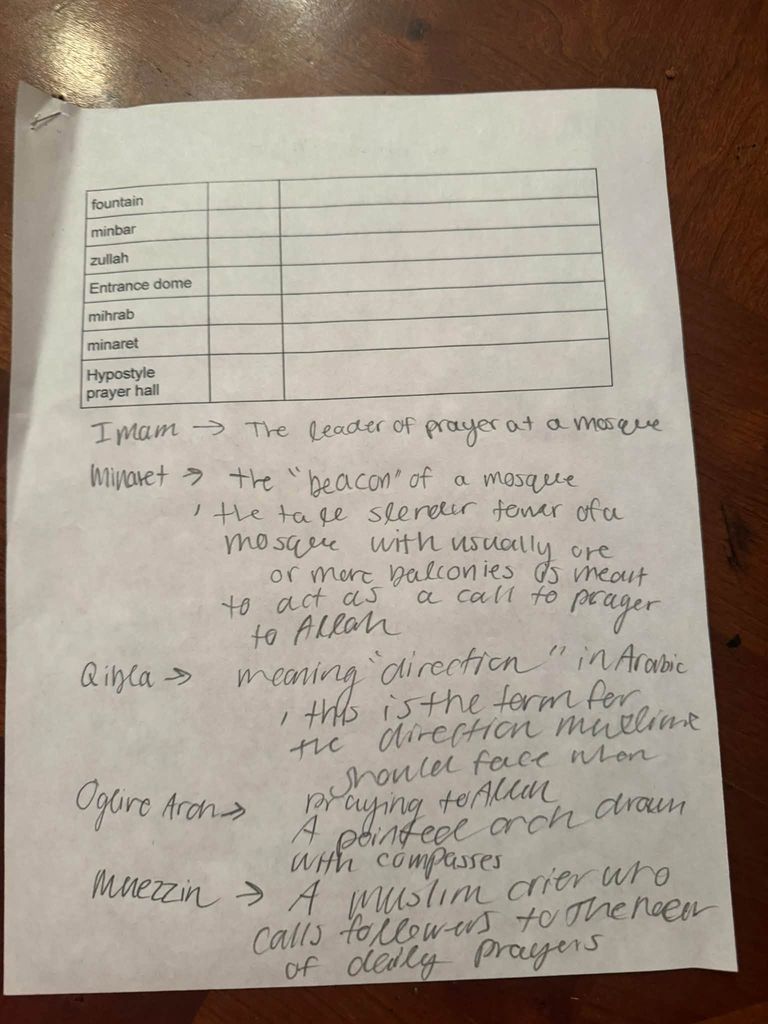
Barnes wrote: “Please tell me why my Christian child is learning about ISLAM in Bethel Connecticut’s Public Schools?!?!? Are we teaching Christianity also? Are all the Muslim kids getting their lessons in Christianity? What do the 5 pillars of Islam have to do with AP art History? Why is this a part of the curriculum?”
The worksheets appear tied to an AP Art History unit on Western and Central Asia, which includes Islamic art and architecture as part of the College Board curriculum. However, the level of detail on religious practice—the Five Pillars (shahada, salat, zakat, sawm, hajj), prayer direction, the call to prayer, and sacred writings—has raised legitimate questions among parents about balance and the distinction between studying historical art and covering doctrinal content.
The parent’s concern arrives amid ongoing debate over Public Act 26-1, the 2026 law that directs the Connecticut State Department of Education to develop optional instructional resources on Arab and Islamic studies and encourages districts to offer them. The materials are not mandated, but the law has drawn criticism from Republican lawmakers, the Connecticut Catholic Conference, and parent groups over First Amendment issues, lack of a dedicated public hearing, and the involvement of outside organizations.
The Connecticut Centinal previously reported that Freedom of Information records showed CAIR-Connecticut submitting names and resumes for the state’s Curriculum Design Leadership Team, including a national CAIR consultant. Critics have asked why a group designated a terrorist organization by some states and countries is positioned to help shape K–12 resources while parent input is limited. Bethel has also recently recognized Eid al-Fitr as an official school holiday, a move welcomed by CAIR-CT as promoting inclusion.
Barnes’ post echoes questions circulating in other Connecticut districts:
Bethel Public Schools has not publicly responded to the specific worksheets shared online.




Stay updated with the latest in the Constitution State with The CT Centinal