Please Follow us on Gab, Minds, Telegram, Rumble, Gettr, Truth Social, Twitter, YouTube, Instagram
Norwalk Public Schools is preparing to offer an optional high school elective in Islamic and Arab studies for the 2027–28 school year. At a November 16, 2026, Curriculum & Instruction Committee meeting, secondary humanities staff described plans to make the course available, contingent on sufficient enrollment under normal course rules. District officials are awaiting state-developed curriculum materials, expected as early as January, before finalizing details and incorporating the offering into the program of studies. The course would not be required for students.

The move follows Public Act 26-1, which directs the Connecticut State Department of Education to develop curriculum materials on Islamic and Arab studies and to encourage local districts to use them. Adoption remains optional for now. The provision was included in a large education omnibus bill that advanced under emergency certification with limited additional public debate.
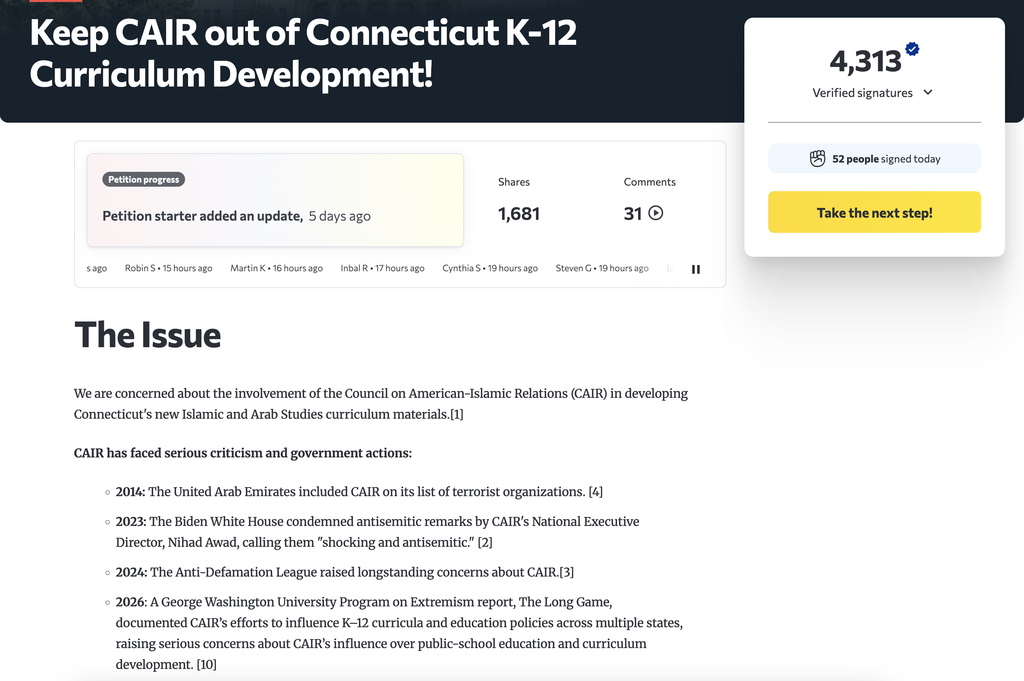
CAIR-CT, which advocated for the measure, recommended individuals for the state’s Curriculum Design Leadership Team, including a national CAIR consultant and several candidates put forward by the Connecticut chapter. Critics, including some Republican lawmakers and the Connecticut Catholic Conference, have raised concerns about the separation of church and state, and the risk of preferential treatment for one religious tradition amid a series of identity-focused curriculum additions. A grassroots petition opposing CAIR’s involvement in the curriculum has collected more than 4,300 signatures.
Norwalk is the most advanced publicly reported district in planning a dedicated elective. Other districts have discussed the materials without announcing a firm commitment to a standalone course:
These discussions occur alongside a broader trend of districts adding Eid al-Fitr as an official school holiday. A November 2026 report indicated that roughly 25 Connecticut districts now close for the holiday, up from about a dozen in earlier years. Districts that have added it in recent years include Stamford, Norwalk, Bridgeport (which also added Eid al-Adha starting in 2027–28), Fairfield, Trumbull, Milford, West Haven, New Haven, Hamden, Waterbury, New Britain, Manchester, Glastonbury, Avon, North Haven, Bethel, and Stratford, among others. Most decisions followed student and family advocacy, often with support from CAIR-CT.
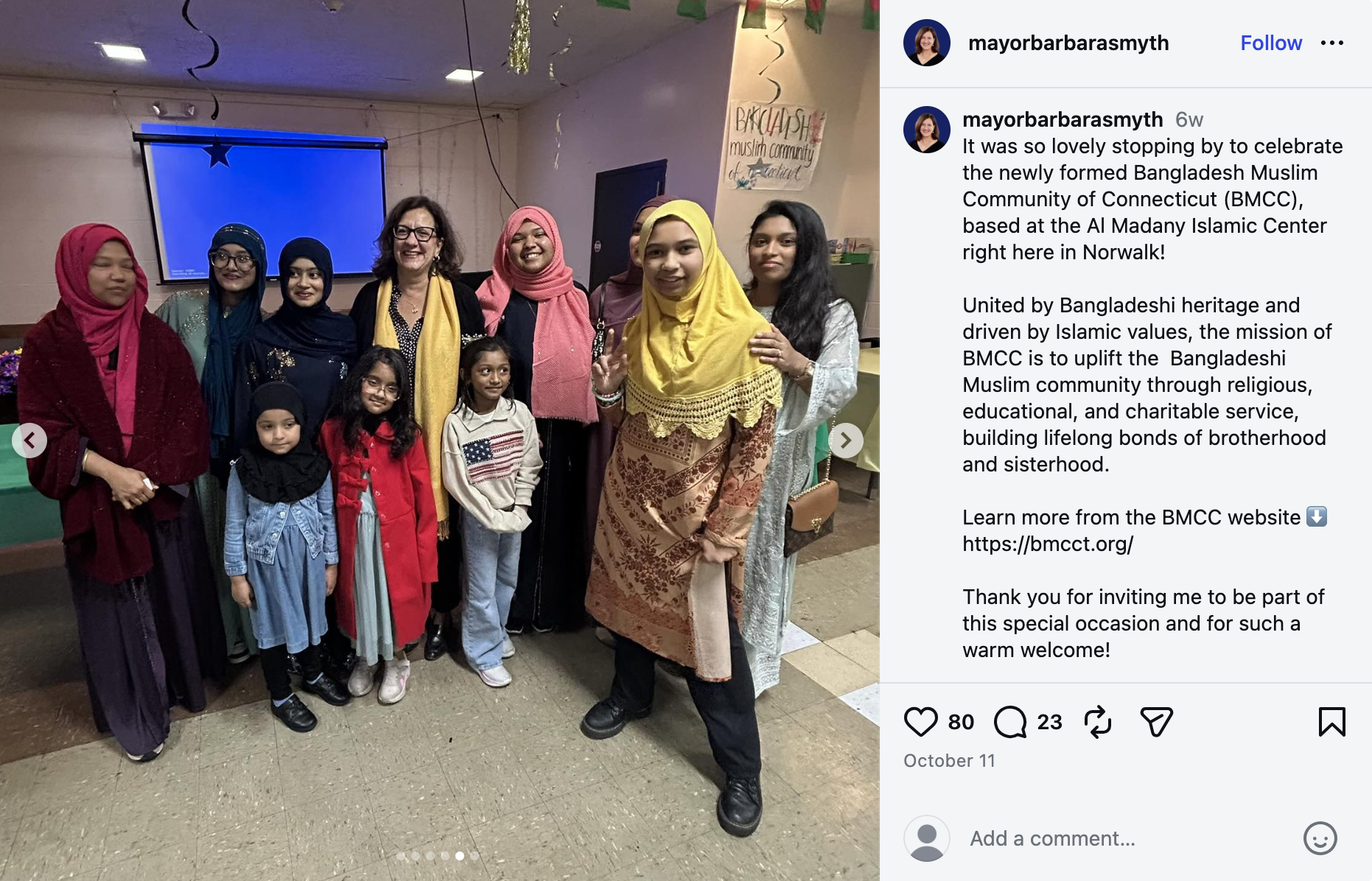
In Norwalk, the institutional presence continues to expand in other ways as well. In October 2026, Senate Majority Leader Bob Duff attended and publicly highlighted the inaugural meeting of the Bangladesh Muslim Community of Connecticut, held at the city’s existing Al Madany Islamic Center. Duff described the gathering as a strength of community diversity.
Norwalk Mayor Barbara Smyth also attended and noted the new group is based at Al Madany, "united by Bangladeshi heritage and driven by Islamic values."
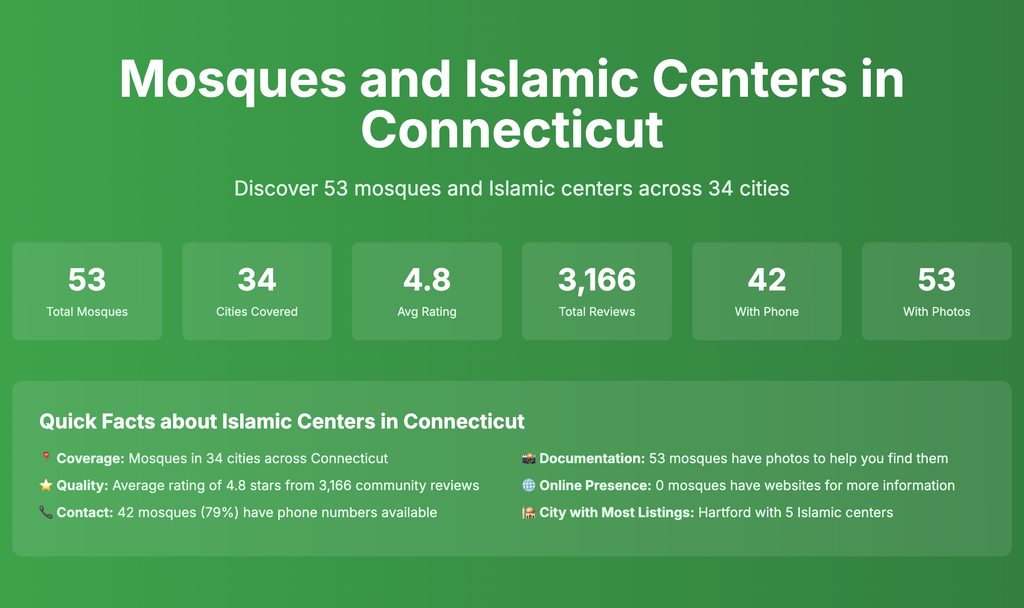
The education policy changes coincide with documented growth in Connecticut’s Muslim population and institutions. The U.S. Mosque Survey counted 36 mosques and Islamic centers in the state in 2010 and 49 in 2020—an increase of roughly 36 percent—driven primarily by immigration and higher birth rates. Current directories list approximately 53 such centers. Pew Research estimated Muslims at about 1 percent of Connecticut’s population around 2014 (roughly 36,000 people); more recent estimates range higher, with some community and media figures citing figures approaching or exceeding 100,000 amid continued immigration from South Asia, the Middle East, and Africa. Local centers in places such as New Haven have reported significant growth in Friday attendance and membership.
The combination of CAIR-linked influence on materials, an expedited legislative process, expanding holiday closures, and demographic shifts risks tilting public education toward one religious community’s priorities while parallel offerings for other faiths remain limited.






Stay updated with the latest in the Constitution State with The CT Centinal