Please Follow us on Gab, Minds, Telegram, Rumble, Gettr, Truth Social, Twitter, YouTube, Instagram
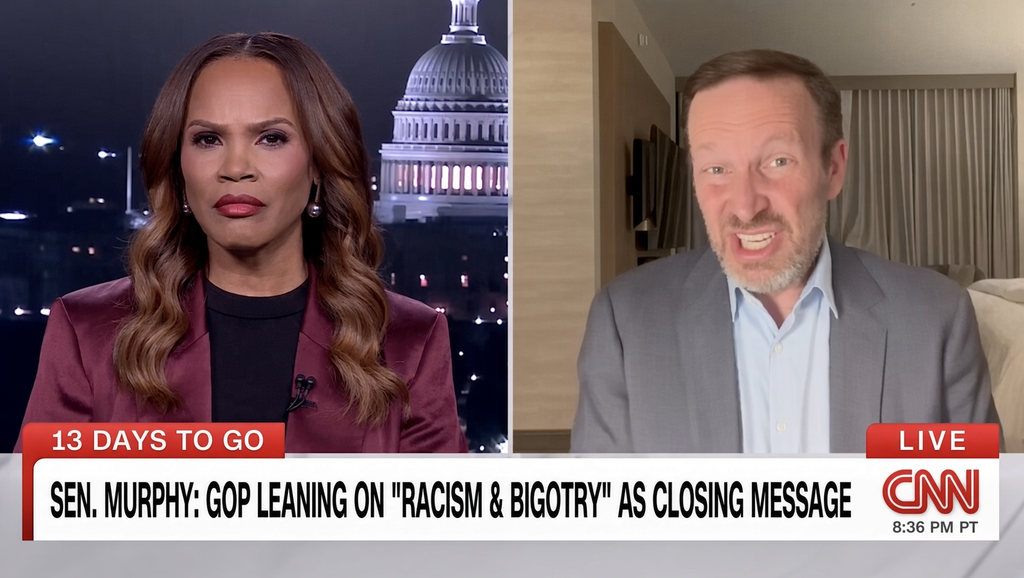
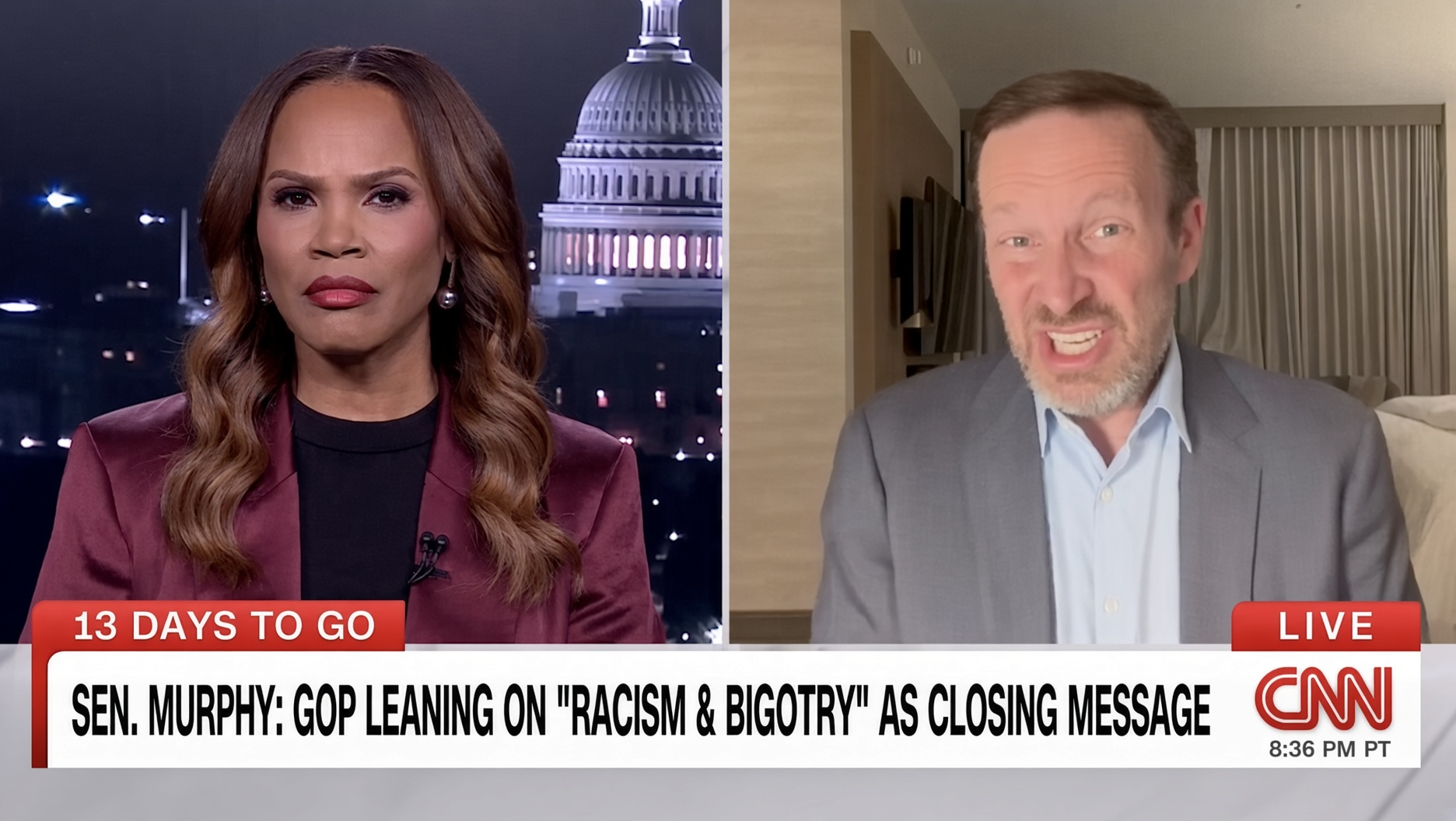
Senator Chris Murphy went on CNN this week and did what Democrats have perfected: he took a debate about ideology, associations, and national security and reframed it as straight-up religious bigotry.
Murphy’s claim is that Republican Michigan Senate candidate Mike Rogers is trafficking in “racism and bigotry” and basic Islamophobia for pressing Abdul El-Sayed on his documented ties and associations. Rogers’ actual comments, and the record of course, tell a different story.
Rogers has repeatedly drawn the distinction Murphy pretends does not exist.
In post-debate remarks he said he disagrees with Islamophobia, that nobody should practice it, and that the issue is not “the way you pray” but “the way you think.” Rogers has noted that many Muslims on his own campaign and in the broader community oppose the Muslim Brotherhood. In the debate and subsequent interviews he focused on El-Sayed’s alleged funding links to donors connected to CAIR and groups associated with Hamas and Hezbollah, family statements, and specific political associations—not on El-Sayed’s personal faith or ordinary Muslim practice.
Those associations are not imaginary.
El-Sayed signed a 2012 Arabic-language letter, published while he was a medical student, as one of 46 “leaders of the Egyptian community.” The letter backed Mohamed Morsi’s power grab and called on the Muslim Brotherhood-aligned president to “purge the media and the police as quickly as possible.”
His half-sister later posted that the family “has long been MB,” referenced their mother’s activism in the Brotherhood in 1970s Egypt, and noted relatives jailed for it. El-Sayed has denied the family claims (calling the posts “hearsay”) and has disavowed the Brotherhood in some settings, but he has not substantively addressed the 2012 letter.
As an undergraduate he also served as vice president of the Muslim Students Association at the University of Michigan—an organization with documented historical origins linked to Brotherhood networks and listed in the Explanatory Memorandum from the Holy Land Foundation trial.
His father-in-law has held leadership roles with ISNA and CAIR-Michigan.
Murphy’s CNN framing erases all of those facts. Scrutiny of a candidate’s political affiliations, funding sources, and ideological statements is suddenly labeled “Islamophobia” the moment the candidate is Muslim. That is not analysis. It is a rhetorical shield.
The same pattern appears closer to home. FOIA records show that Connecticut’s Islamic and Arab Studies Curriculum Design Team includes a CAIR National consultant (Maryam Hasan) and multiple candidates selected with CAIR-CT’s input. CAIR has long faced questions over its own associations and has been named an unindicted co-conspirator in major terrorism-financing cases. Yet when legitimate concerns are raised about those associations—whether in a Senate race or in the development of state curriculum materials—the response from figures like Murphy is to label the questions themselves as bigotry.
Leave it to Murphy to turn legitimate questions about ideology and associations with known terror organizations into an accusation of religious hatred. By labeling any scrutiny “Islamophobic,” it shifts the conversation from El Sayed's record (what he signed, what family members publicly said, which groups he led or is connected to through relatives) to a claim of religious animus. That move does not shield ordinary Muslims from discrimination. It just protects political actors from accountability for the company they keep and the statements they have endorsed.



Stay updated with the latest in the Constitution State with The CT Centinal