Please Follow us on Gab, Minds, Telegram, Rumble, Gettr, Truth Social, Twitter, YouTube, Instagram
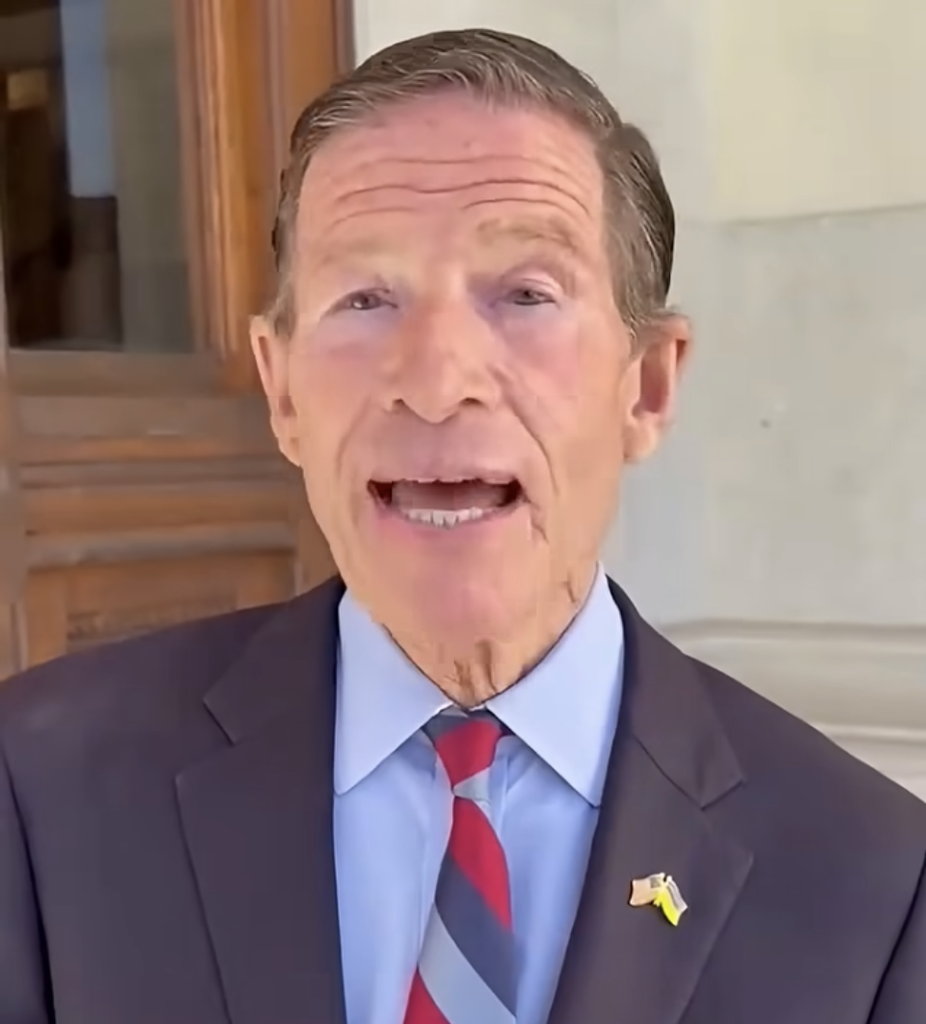
Connecticut Senator Richard Blumenthal is unhappy about Trump's Russian fuel deal.
On October 27 Blumenthal fired off a letter to the managing director of Eastern Mediterranean Maritime Limited, the Greek firm whose Maltese-flagged tanker Agioi Fanendes left Russia’s Primorsk port carrying roughly 40,000 metric tons of diesel with a declared destination of the Port of New York and New Jersey.
In the letter—and in the accompanying social-media post—Blumenthal warns the company that delivering the cargo would violate the 2022 Ending Importation of Russian Oil Act. He declares that “no President can unilaterally override a statute,” demands the vessel be recalled, and asks for a full accounting of everyone involved in the transaction. He even accuses the company of “aiding & abetting sanctions evaders” for profit.
The shipment is the first publicly identified Russian diesel cargo headed toward the United States since the 2022 ban. It follows President Trump’s October 9 announcement of an agreement with Vladimir Putin under which Russia would supply hundreds of thousands of tons of diesel to the U.S. and global markets. Treasury issued General License 135 to facilitate related transactions. The stated purpose was straightforward: increase supply and help ease diesel prices for American truckers, farmers, and consumers ahead of the midterms.
Blumenthal’s legal argument rests on the claim that the 2022 statute can only be lifted through a formal presidential certification to Congress (requiring Russian withdrawal from Ukraine and other conditions) followed by a 90-day window for congressional disapproval. A Treasury license, he says, changes nothing. House Judiciary Ranking Member Jamie Raskin has made similar threats of civil and criminal liability against companies that participate.
What Blumenthal does not emphasize is that the 2022 ban was always more political theater than airtight energy policy. Diesel is a global commodity. Russian volumes displaced by Western sanctions simply found other buyers—primarily in Turkey, Brazil, and parts of Asia—while U.S. refiners and consumers absorbed higher prices and tighter supply.
The current arrangement is modest in scale relative to total U.S. diesel demand, yet even limited additional barrels matter when inventories are tight and prices are elevated. Blumenthal knows this. His priority, however, appears to be preserving the political symbolism of the 2022 Biden-era ban—even if it means standing in the way of additional diesel supply.



Stay updated with the latest in the Constitution State with The CT Centinal