Please Follow us on Gab, Minds, Telegram, Rumble, Gettr, Truth Social, Twitter, YouTube, Instagram
Connecticut Democrats, along with national Democrats, were predicting a gloom and doom scenario prior to the blue wave washout in the recently concluded midterm elections. In an astonishing reversal of dark future economic predictions by Connecticut Democrats, we now find the state flush with yet another new surplus, the result of an invigorated financial market and yet more tax increases.
Wall Street, against which billionaire socialist U.S. Senator Bernie Sanders has been fulminating for as long as he has been engaged in politics, roughly 44 years, once again has been kind to Connecticut.
The Hartford Courant reports, that “Connecticut’s most recent budget projection shows a $363.1 million General Fund surplus for fiscal year 2027, alongside a $207 million surplus in the Special Transportation Fund. This marks the eighth consecutive year of budget surpluses [ emphasis mine] and places the state’s rainy day fund — the Budget Reserve Fund — at its legal cap of $4.48 billion, with temporary deposits pushing the balance above that limit
In a recent story -- CT expects to collect $800 million more in taxes as state budget surplus grows -- the Courant notes, “While consumers have been hit by high gasoline prices from the Iran War and higher-than-expected prices at the grocery store, the state budget shows another side of the economic picture as it is highly dependent on Connecticut millionaires and billionaires who have been reaping huge gains from their Wall Street portfolios…Based on the latest consensus revenue estimates released by financial officials, the state now expects an additional $800 million in taxes beyond earlier expectations for the current fiscal year and another $566 million in the 2028 fiscal year that starts on July 1, 2027. The biggest increases include an additional $300 million this year from capital gains taxes that are generated on Wall Street and largely paid by Fairfield County millionaires.”
This is simply a round-about way of saying what everyone in Connecticut has known for decades: The richer the government apparatus, the poorer the people.
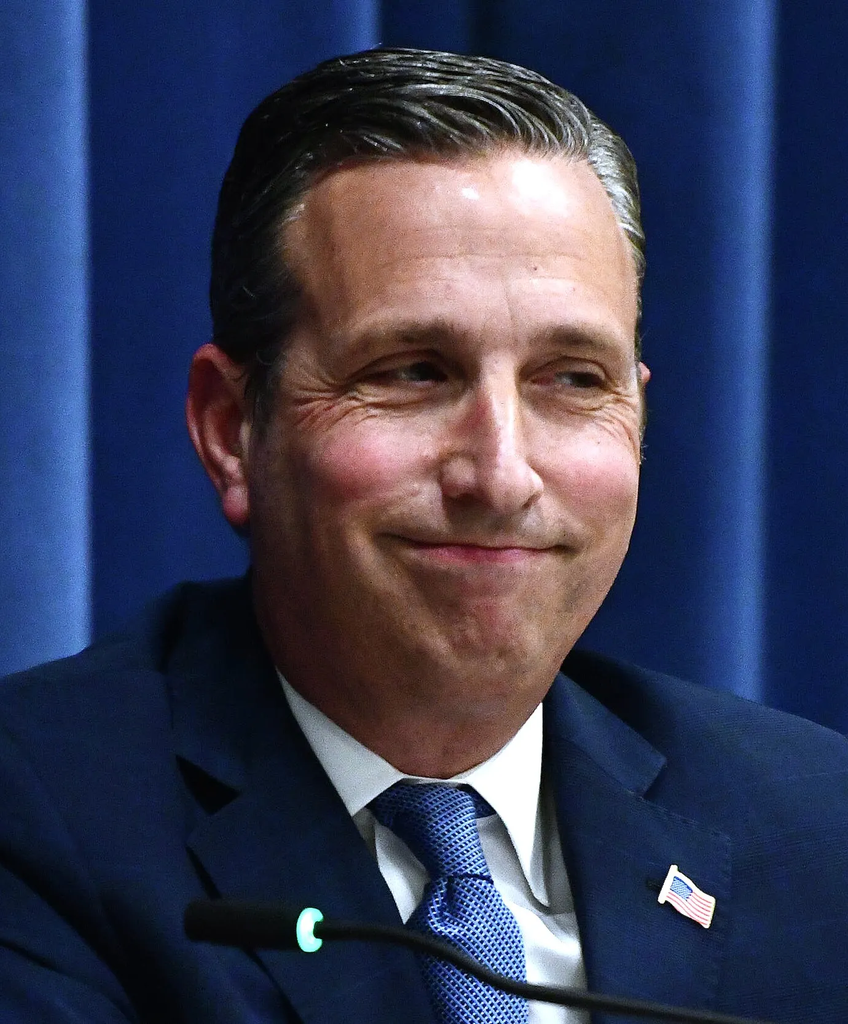
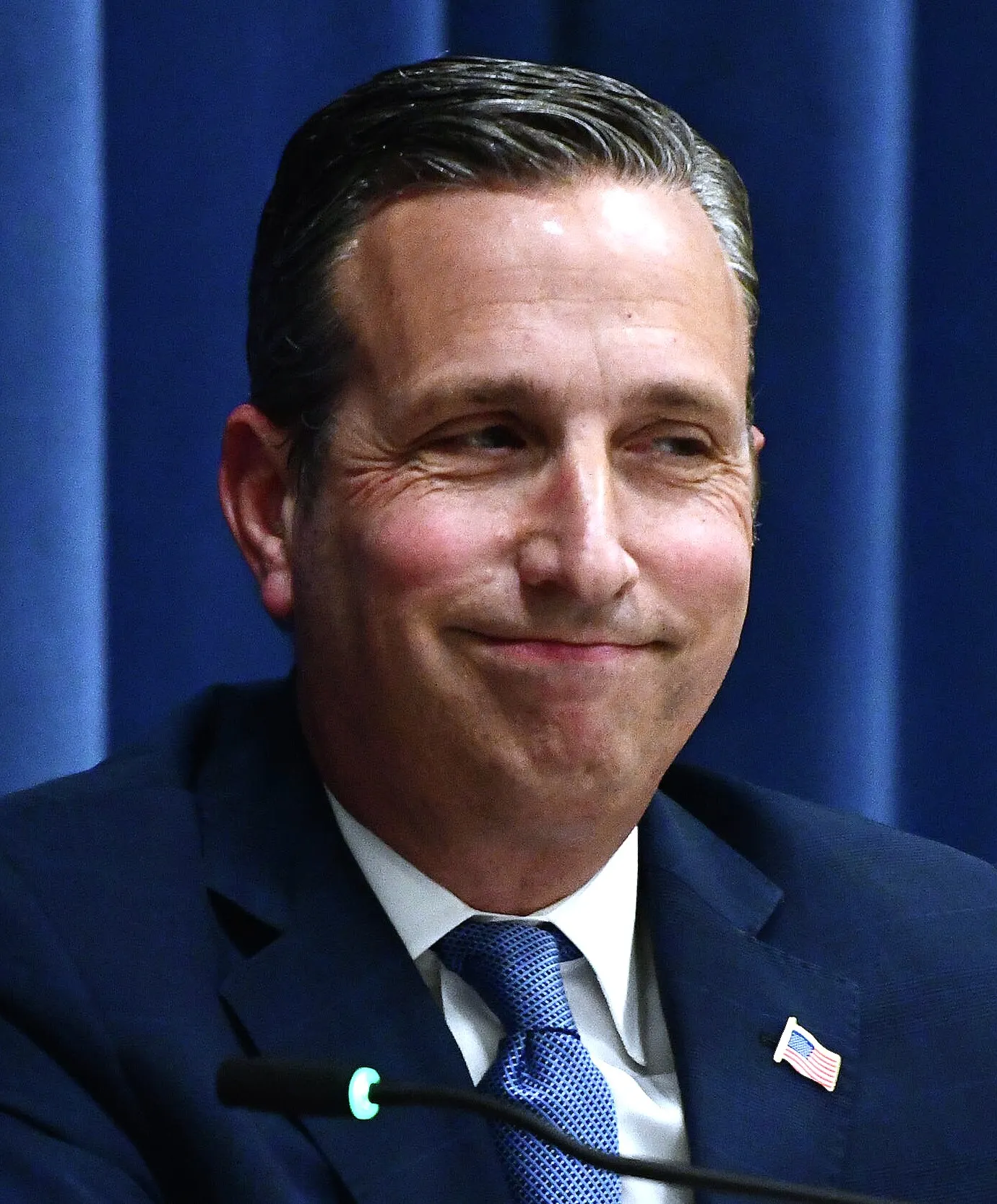
Connecticut’s new State President Pro tempore Bob Duff is smiling, a gleaming sun playing brightly on his face. Duff, always true to his tribe, will be presiding, thanks to the anti-Trump blue wave, over a state senate in which Republican representation has been reduced to three (3) hearty Republicans. Democrats hold 33 seats in the state Senate. Republican participation in the state House has been reduced to forty nine (49) members. Democrats hold, post-election, 103 seats. The reduced numbers certainly benefit Duff and majority Democrats in the state General Assembly.
The question that should be foremost on the minds of Connecticut taxpayers is: When is more than enough – remember, the state has been running surpluses for eight (8) years – enough? Republicans achieved parity in the General Assembly several years ago and managed, along with bipartisan middle of the road Democrats, to establish a ceiling on state spending. The spending ceiling, the so-called “spending guidelines,” generated continuing surpluses and convinced major rating agencies to pull the state up from the bottom of the barrel. Increasingly, as the Democrat hegemon increases spending, the debt limits must be raised or workarounds must be instituted.
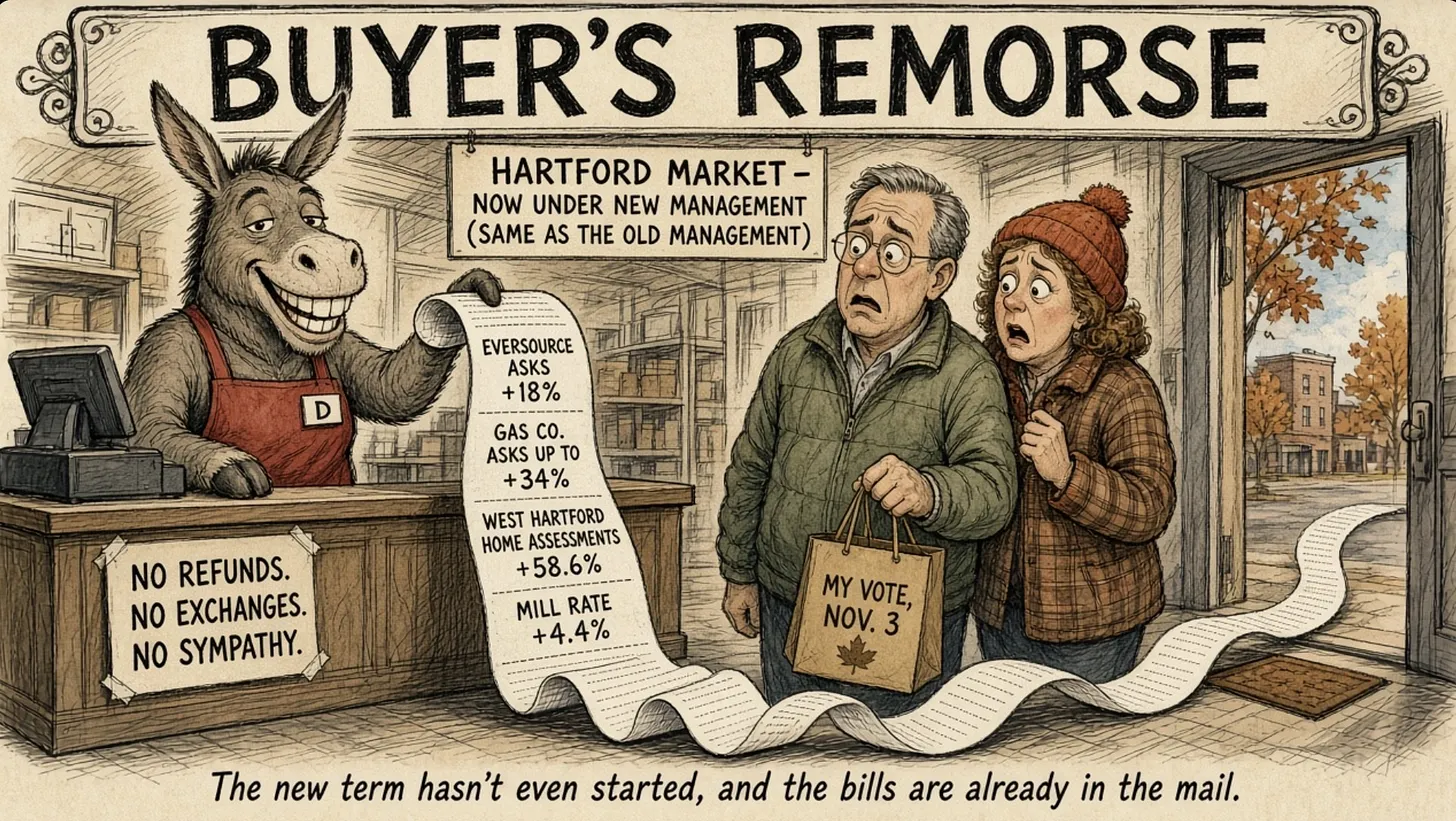
As Democrat numbers in the General Assembly have steadily increased, concern about affordability in one of the most heavily taxed and heavily regulated states in the nation has decreased. Despite all the weighty campaign propaganda concerning middle class affordability, Connecticut’s Democrat Party continues to spend and regulate recklessly. Municipalities lie crushed under burdensome and costly state regulations, and wealth taxes – imposed most recently on millionaire’s assets – continue to rise, along with spending.
No one in Connecticut’s newly reformed quasi-socialist Democrat Party has yet proposed a reduction of regulations in the building industry as a measure that would increase the housing stock, and no one dares suggest that marginal tax reductions would enlarge rather than reduce state budgets by increasing competitive business enterprise. A growing economy, President John Kennedy insisted about a year before he was assassinated, would produce more state and federal tax income. More tax payers will increase tax revenue, he told the nation in a Reganesque speech he delivered to the New York Economics Club.
Conservative pro-growth economists tell us that whatever you tax tends to disappear in a free economy. If Connecticut’s progressive members of the General Assembly manage to impose a confiscatory tax on its Gold Coast millionaires, the assets of Greenwich millionaires – including those of Mr. and Mrs. Lamont -- will become ghostly, an untaxable mirage. Tax wealth and assets will disappear. And what will Sanders socialists do when they run out of middle income taxpayers?
We know this much: Nothing will induce them to cut spending.




Stay updated with the latest in the Constitution State with The CT Centinal