Please Follow us on Gab, Minds, Telegram, Rumble, Gettr, Truth Social, Twitter, YouTube, Instagram
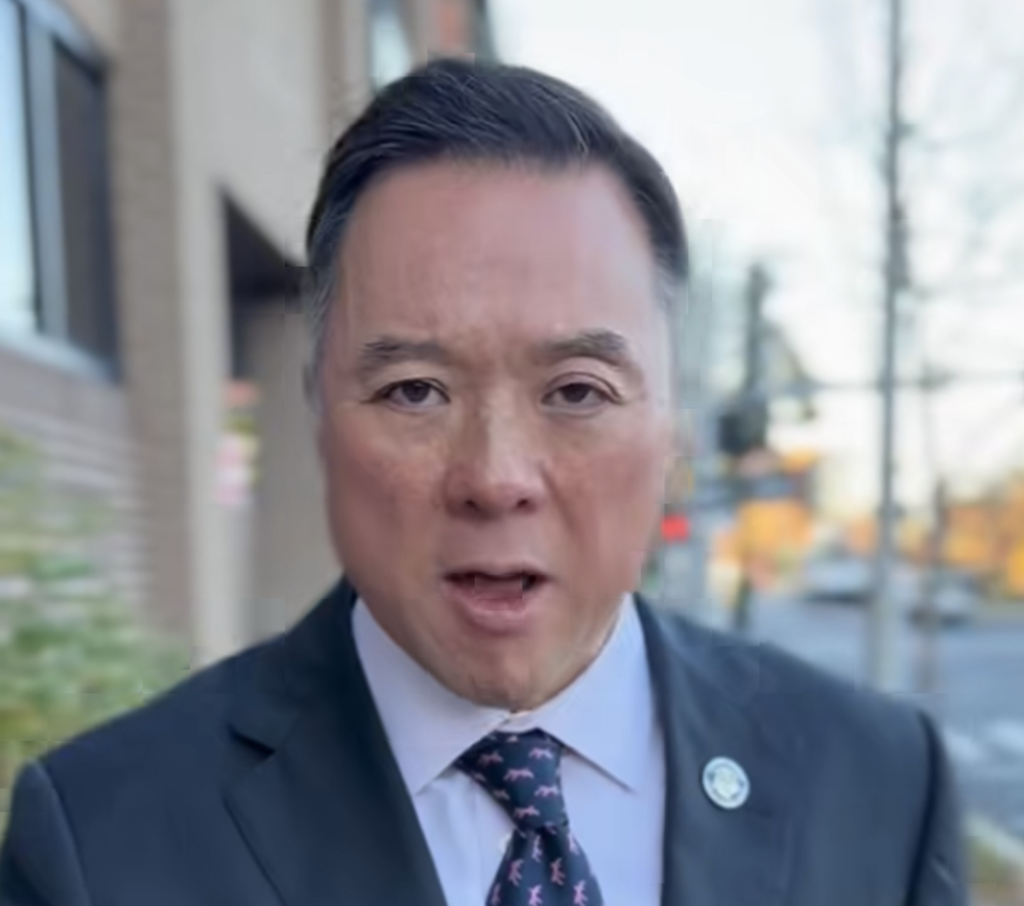
It was only a matter of time before State Attorney General William Tong had been put down by a federal Judge who was able to make the proper distinction between campaign posturing and U.S. Constitutional prerequisites.
U.S. District Judge Vernon D. Oliver’s decision left no wiggle room for Tong, Governor Ned Lamont and Connecticut’s General Assembly. It was a straitjacket ruling that blocked enforcement of a new state law intended to restrict the operation of federal immigration agents.
The judge wrote: “The federal government’s sovereignty is supreme, so no state government can exclude the federal government from the exercise of any authority conferred upon it by the Constitution or obstruct its authorized officers against its (SIC) will. If the rule were otherwise, there would be a breakdown of federal law enforcement nationally, due to conflicts arising from inconsistent requirements across the several states.”
The disruptive state law, adopted by Connecticut’s General Assembly last Spring, “regulated the use of force by federal agents, enable prosecution of agents who state authorities believe use force unjustifiably, prevent agents from wearing masks and require them to wear personal identification,” according to the Hartford Courant.
The Connecticut law in question --Senate Bill 397, titled “An Act Concerning Democracy and Government Accountability,” combines several measures, including new protections for designated “sensitive locations” and fresh rules on how state and local officials interact with federal immigration officers. The bill subjects federal officers operating in Connecticut to the state’s use-of-force standards.
Bills such as this one, carrying with them the promise that states could regulate the constitutionally authorized powers of federal agencies, figured prominently in the Democrat’s midyear election sweep. In Democrat ads and political pronouncements, Democrats tarred the Trump administration as a blood brother to Adolf Hitler’s Nazi terrorist regime. The propaganda worked, a triumph of what Mark Twain used to call political “stretchers” over policy.
“Oliver dismissed the suit against Tong,” but not “the state, Gov. Ned Lamont [and] two senior state prosecutors,” according to the Courant. In a stinging rebuke to Tong, the judge additionally noted in his decision that the “Connecticut Attorney General has only civil authority and would have been unable to prosecute the law’s criminal provisions.”
Oliver’s decision rests unshakably in the supremacy clause of the U. S. Constitution, Article VI, Clause 2. The clause affirms that the Constitution, federal laws, and treaties are the supreme law of the land, overriding any conflicting state laws, and it instructs judges in every state that they are bound by federal law, even if state constitutions or statutes conflict with it ( emphasis mine), as is the case with Senate Bill 397. Oliver and all state judges therefore must operate within the constraints of Constitutional law. “Oliver called the state law well-intentioned but an unambiguous violation of the U.S. Constitution’s supremacy clause,” the Courant tells us.
The clause states: ““This Constitution, and the Laws of the United States which shall be made in pursuance thereof; and all treaties made, or which shall be made, under the authority of the United States, shall be the supreme law of the land; and the judges in every state shall be bound thereby, anything in the constitution or laws of any state to the contrary notwithstanding.”
Conn. Gen. Stat. § 1‑118 created the office of Attorney General. The statute formally establishes the Attorney General as the chief legal officer of the State of Connecticut. The statute provides the process for the Attorney General’s appointment by the Governor and confirmation by the State Senate. It outlines the Attorney General’s responsibilities, such as representing the state in legal matters, advising state agencies, enforcing state laws, and acting as the state’s principal legal advisor (emphasis mine).
Oliver’s decision raises a series of unanswered questions. If it is the statutory duty of the Attorney General to act as the state’s principal legal advisor, why didn’t Tong intervene with Lamont and the state legislature to explain, before the defective law was passed, that the governor and legislature must abide by U.S. Constitutional Provisions, in particular the document’s supremacy clause?
If, as noted by Oliver in his decision, the “Connecticut Attorney General has only civil authority and would have been unable to prosecute the law’s criminal provisions,” was there no one among the gaggle of lawyers attached to the Attorney General’s office who might have instructed the governor and Tong that the Attorney General has no statutory authority to prosecute the law overturned on constitutional grounds by Oliver?
The Courant story notes: “House Republican leader Vincent Candelora said legislative Republicans were unanimously opposed to the bill because ‘we believed it violated the supremacy clause. Democrats are more interested in press releases than they are in upholding the Constitution,’ he said.”
Republican representation in the State Senate has been whittled down to three (3) members, and Republican representation in the State House is at a historic low. The Democratic Party controls the offices of governor, secretary of state, attorney general, and both chambers of the state legislature. Purely as a practical matter, Democrats, in the absence of a contrarian media, can well afford to make countless political mistakes – so long as the headlines are favorable. In fact, judicial and policy errors are useful in political campaigns.
At one point during their encounters, Alice in an upside down Wonderland warns the Queen of Hearts that she cannot use the same word to mean both A and not-A. Says the Queen, there is only one question – who wins. When long serving U.S Senator Dick Blumenthal finally retires and current Attorney General William Tong steps in to fill the void, there may be a place for the Queen of Hearts as Connecticut’s new Democrat Attorney General.





Stay updated with the latest in the Constitution State with The CT Centinal