Please Follow us on Gab, Minds, Telegram, Rumble, Gettr, Truth Social, Twitter, YouTube
I compared the two Georges in my book, Stories of Faith and Courage from the Revolutionary War. With Presidents Day taking place in February and America’s 250th anniversary year, I wanted to share these excerpts with you.
Enjoy!

Panic. They had panicked.
Not only was George Washington shocked over his own miraculous preservation after General Braddock’s defeat, but he was also disappointed in the British regular soldiers who fought alongside him. Washington couldn’t have felt more let down had his fellow soldiers committed treason.
“We were attacked by a party of French and Indians, whose number, I am persuaded, did not exceed three hundred men; while ours consisted of about one thousand three hundred well-armed troops, chiefly regular soldiers, who were struck with such a panic that they behaved with more cowardice than it is possible to conceive,” Washington wrote to his mother shortly after the battle.
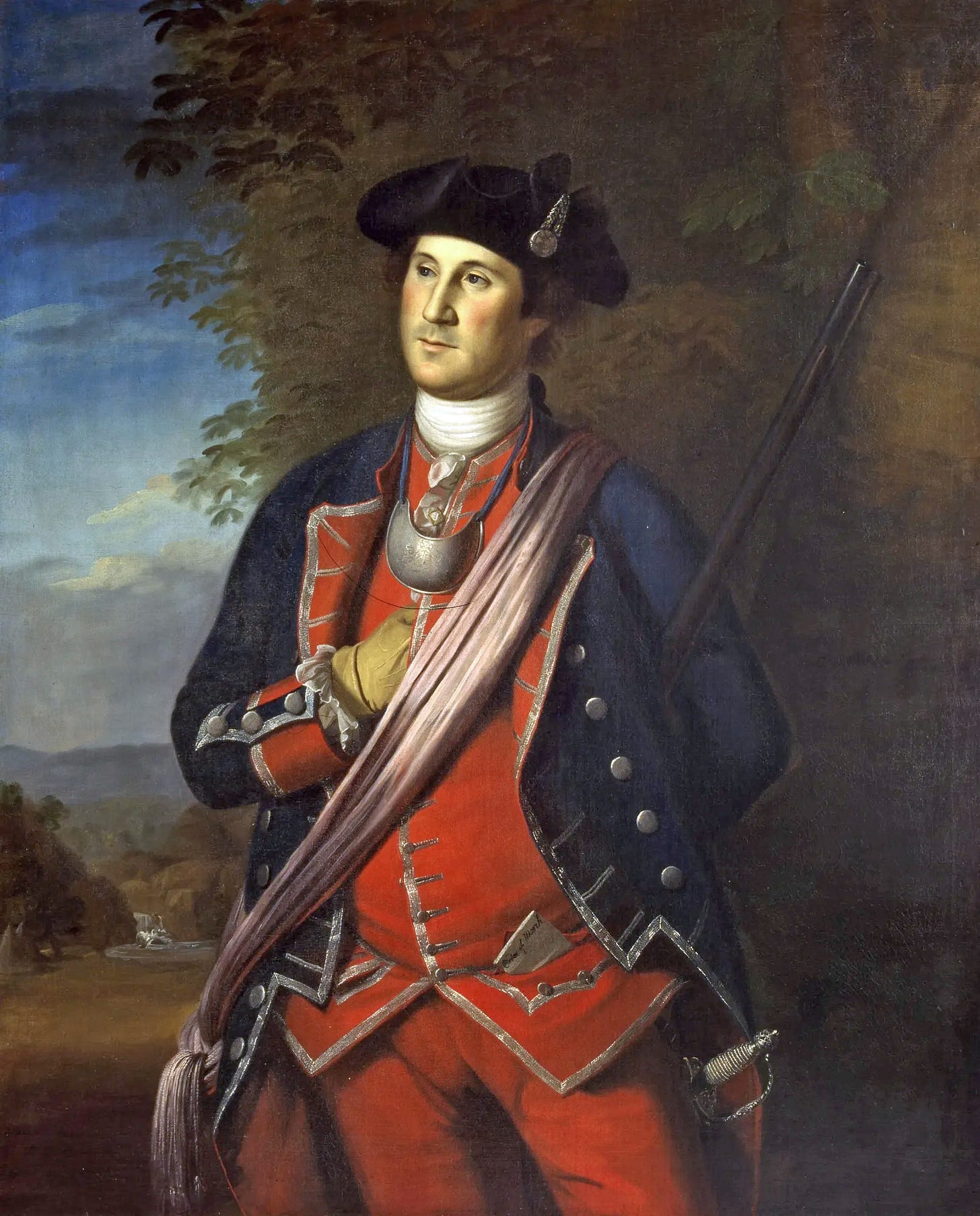
The failure and flight of the regular British fighters was a sight he would never forget. “In short, the dastardly behavior of those they call regulars exposed all others . . . they ran, as sheep pursued by dogs, and it was impossible to rally them,” he wrote.
The warfare Washington had witnessed was far from the traditional forms of fighting practiced by regular British soldiers and their American militia. Braddock’s European-style firing lines were no match for the French and Indians’ tactics of shooting from behind trees.
In his letter to his mother, Washington explained his role in the battle: When General Braddock fell mortally wounded on the field, Washington had stepped up to direct the retreat. “I was the only person then left to distribute the General’s orders, which I was scarcely able to do, as I was not half recovered from a violent illness, that had confined me to my bed and a wagon for above ten days,” he wrote, noting only thirty in Virginia’s regiment survived.
Washington’s statement revealed that he questioned his own leadership abilities. Could he have done more? But he was angrier at the behavior of his fellow Englishmen. He may not have been sure which was more revealing, the failure of the British regulars to fight or the successful surprise tactics of the enemy. Both were lessons he would not forget.
Although Washington was discouraged, others were encouraged. News of his bravery spread throughout the colonies and to England as well. The Reverend Samuel Davies spoke about Washington in a sermon he gave a month after Braddock’s defeat. “As a remarkable instance of this, I may point out to the public that heroic youth, Colonel Washington, whom I cannot but hope Providence has hitherto preserved in so signal a manner for some important service to his country,” Davies proclaimed prophetically.
Like many great sermons of the era, Davies’ message was published and distributed in a pamphlet in America and in England. Through Davies, many heard of the miraculous preservation of young Washington.
George Washington may have been down when he wrote his mother that day in 1755, but he was not out. His life had purpose. He had hope.[ii]
“Contend, O LORD, with those who contend with me; fight against those who fight against me” (Psalm 35:1).
Prayer: Grant me courage to persevere when I am down. Be my Strength when I am weak, fight against those who contend with me.
Certain human qualities sour the soul. When James Waldegrave, the second Earl Waldegrave, penned his analysis of his pupil, Prince George, in 1758, he described one of those costly characteristics.
“He has spirit, but not of the active kind; and does not want resolution, but it is mixed with too much obstinacy,” observed James. “His religion is free from all hypocrisy, but is not of the most charitable sort; he has rather too much attention to the sins of his neighbor.”
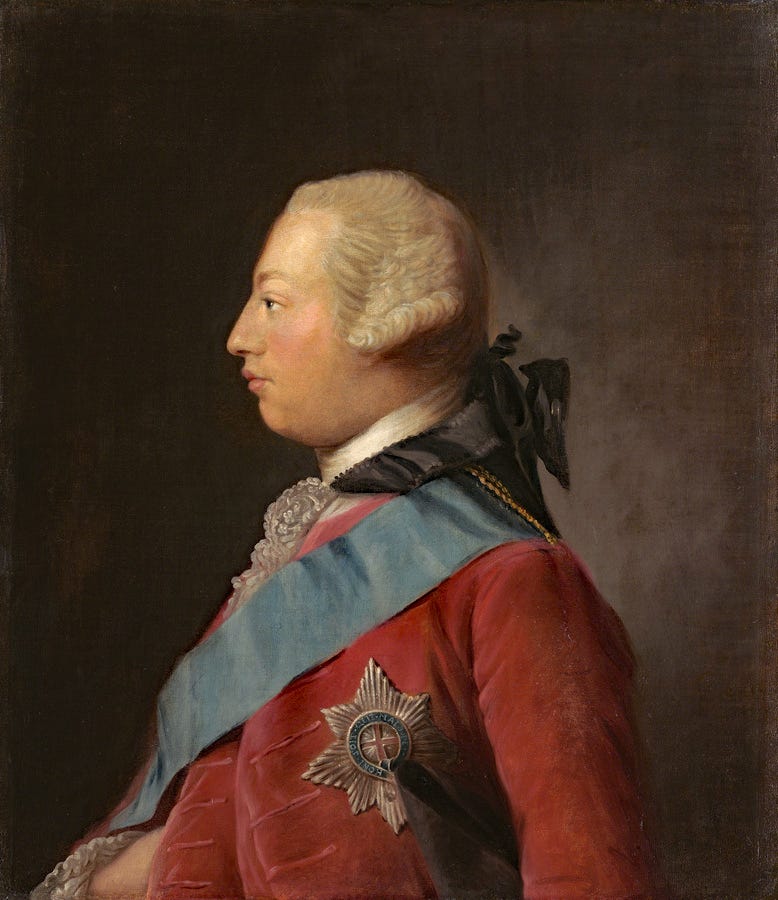
James knew the truth. Twenty-one-year-old George was pigheaded. He could smell the muck on those around him but couldn’t detect when he needed to bathe in his own royal tub. Not only did James view George’s stubbornness as a problem, he also thought the prince lacked the temperament to overcome his obstinacy.
“He has a kind of unhappiness in his temper, which, if it be not conquered before it has taken too deep a root, will be a source of frequent anxiety,” fretted James. “Whenever he is displeased, his anger does not break out with heat and violence; but he becomes sullen and silent, and retires to his closet; not to compose his mind by study or contemplation, but merely to indulge the melancholy enjoyment of his own ill humor.”
Humility is one way to overcome pigheadedness. Unfortunately, George often looked inward, but only to sulk. When someone angered him, he went into his chamber in the castle, closed the door, and pouted. Rarely did a change in attitude emerge at the same time the prince did.
James turned to an old remedy for his pigheaded pupil. He hoped time would salvage George’s character and remove his stubbornness before he became king. “Though I have mentioned his good and bad qualities, without flattery, and without aggravation, allowances should still be made, on account of his youth, and his bad education,” he wrote, chiding the nursery nannies who had spoiled young George.
“During the course of the last year, there has, indeed, been some alteration . . . But whether this change will be greatly to his Royal Highness’s advantage, is a nice question, which cannot hitherto be determined with any certainty,” he concluded.
Perhaps James hoped a few more years would be enough time to prepare George for kingship. However, two years after his analysis, King George II died and Prince George became King George III. Time would do more to prove James, the second Earl Waldegrave, a political prophet than to improve George’s pigheadedness.[iv]
“A man who remains stiff-necked after many rebukes will suddenly be destroyed—without remedy” (Proverbs 29:1).
Prayer: Oh, Lord, help me listen to your voice. Allow humility to replace stubbornness in my heart.


Stay updated with the latest in the Constitution State with The CT Centinal