Please Follow us on Gab, Minds, Telegram, Rumble, Gettr, Truth Social, Twitter, YouTube, Instagram
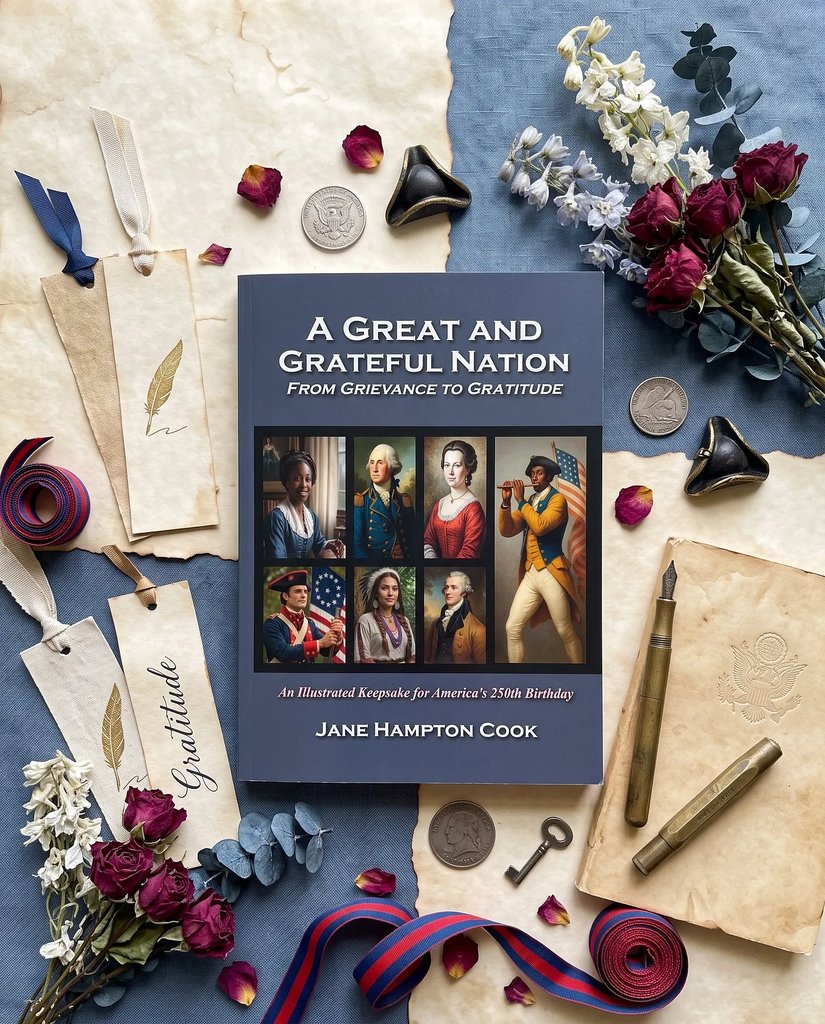
Practical suggestions inspired by the new award-winning book, A Great and Grateful Nation: From Grievance to Gratitude.
Introduction
Are we judging past generations by standards they could not possibly know while taking for granted the freedoms they helped secure? That question does not demand that Americans excuse sin, hide injustice or pretend that every historical figure was perfect. But it does require knowledge and a healthy perspective rooted in gratitude. The people of the past lived without our modern technological advantages, affluence, creature comforts, medical knowledge, political outcomes and ability to look backward at what happened next. Yet, they often faced dangers, hardships and sacrifices that make our liberties and modern living standards possible today.
Perspective-taking is an approach that examines history in its own moment. It helps us acknowledge wrongs, recognize progress, forgive longsuffering injustices and cultivate gratitude for the inheritance of liberty rather than joining the rush to destroy memorials.
The Flaws of the Judgmental Generation
A judgmental generation begins with the assumption that it is morally superior to every generation before it. Classics historian Victor Davis Hanson warned that critics often condemn the “mute dead” by present standards while rarely acknowledging that the toil of prior generations led to their own comfort, security and leisure.
This mindset is not historical understanding. It is historical arrogance. When every virtue is obscured, every motive is twisted and every flaw is magnified, Americans lose the ability to see both the grievous failures and the hard-won advances that made later correction possible.
Consider the campaign against memorials. In 2019, a committee reporting to Washington, D.C. Mayor Muriel Bowser recommended removing, relocating or contextualizing four dozen sites, including the Washington Monument, the Jefferson Memorial and the Benjamin Franklin Statue, because the historical figures did not conform to current definitions of societal diversity. The proposal drew backlash and slowed, but it revealed how quickly a people can move from examining history to purging it.
The pattern is not new. During the French Revolution, radicals decapitated Notre Dame’s iconic statues, including ones that had come from the Holy Land. Destruction may feel like a decisive moral act, but a shattered memorial cannot teach anyone about the complexity of an age, the cost of freedom or the consequences of tyranny. A memorial is not a declaration that a person was sinless. It is an invitation to remember, compare and learn. A nation that preserves historical places can tell the whole story: the flaws that require wisdom, the sacrifices that deserve honor, the outcomes that merit celebrations and the principles that gave later Americans a path to seek a more perfect union.
Implementing a Perspective-Taking Framework
A quick solution takes less than five minutes. The next time you pass a memorial or hear about one in the news, resist the habit of immediately asking whether the person was perfect. Instead, research one fact about the historical moment, one sacrifice connected to it and one liberty or responsibility that remains in your hands today.
Perspective-taking is not permission to dismiss injustice. It is a discipline for resisting shallow judgment while pursuing truth. The method allows us to see historical people as human beings in a real time and place, not as vinyl villains or ceramic saints.
Step 1:
Study historical context by asking what laws, customs, dangers, information and limitations shaped the people involved. This does not mean that every past practice becomes morally acceptable. Rather, it means that fair judgment begins with understanding what people faced, what alternatives were available at the time and how their beliefs may have changed over time.

Step 2:
Recognize the sacrifices made for survival and liberty. John Adams visited Philadelphia’s Potter’s Field in 1777 and wrote that disease had destroyed “ten men for us, where the sword of the enemy has killed one.” He saw the graves of soldiers who had died from smallpox and camp diseases, a sight that made “the heart of stone to melt away.”
Today, that ground is Washington Square, where the Tomb of the Unknown Revolutionary War Soldier remembers those whose names and burial places may be lost. Its message declares, “Freedom is a light for which many men have died in darkness,” and the tomb reminds visitors that a soldier of Washington’s army died to give them liberty. Reading those words in context changes a visit from sightseeing into remembrance.
Step 3:
Forgive longsuffering injustices while celebrating progress. Forgiveness is not denial and gratitude. Nor is it historical amnesia. Americans can acknowledge slavery, discrimination, war, and corruption while also giving thanks for the Declaration of Independence, the Constitution, the Bill of Rights, the ending of slavery and the civil rights advances that came through people applying America’s founding principles more consistently.
This third step is where many conversations fall apart. Some people fear that gratitude will minimize pain while others fear that naming every wrongdoing will erase the good things. Perspective-taking rejects both errors by holding two truths together: humanity is flawed and human beings have also shown courage, perseverance, faith and a determination to secure liberty for people they would never meet.
Use this framework with a controversial event. First, read a primary quotation or document from the era, such as founders.archives.gov. Second, identify one cost paid by people seeking survival, justice or freedom. Third, name one wrong that should be learned from and one inheritance worthy of gratitude. This exercise trains the mind to move beyond condemnation toward wisdom.
Historical context also protects Americans from ancestral fatalism. A person’s current identity and future destiny are not defined by an ancestor’s social status. The American story contains people who changed their minds, enlarged their understanding, resisted tyranny and helped create a nation in which citizens could continue the work of liberty.

Conclusion
A healthy view of American history is not about selective blindness. It requires the moral steadiness to face injustice truthfully, the humility to recognize blessings that we did not create and the gratitude to honor those who suffered so that future generations could live in greater freedom. Learning context, recognizing sacrifice, maintaining forgiveness for past wrongs and expressing gratitude for genuine progress and victories result in a healthier more unified society.
The perspective-taking essays in A Great and Grateful Nation: From Grievance to Gratitude can assist Americans in rediscovering the good in America’s history.
Promo code: Use the code 1776 for a 15% discount on janecook.com/shop.








Stay updated with the latest in the Constitution State with The CT Centinal