Please Follow us on Gab, Minds, Telegram, Rumble, Gettr, Truth Social, Twitter
Republicans in Congress say they are working on how to address the key issue that Democrats used to keep the government shut down for 43 days – the COVID-era Obamacare subsidies that are set to expire at the end of the month.
Key GOP House and Senate leaders are preparing legislation that could finally address Americans’ rising healthcare costs as a result of the so-called Affordable Care Act (ACA).
But will the GOP have the fortitude to stick together on passing legislation that will actually lower the cost of health care for all Americans?
The Democrats’ signature healthcare legislation has been stuffed with so many government regulations and “essential” covered services that premiums have surged, leading to higher numbers of people qualifying for increasing amounts in taxpayer-funded subsidies. Additionally, many small, independent medical practices have closed as a result of Obamacare’s regulations.
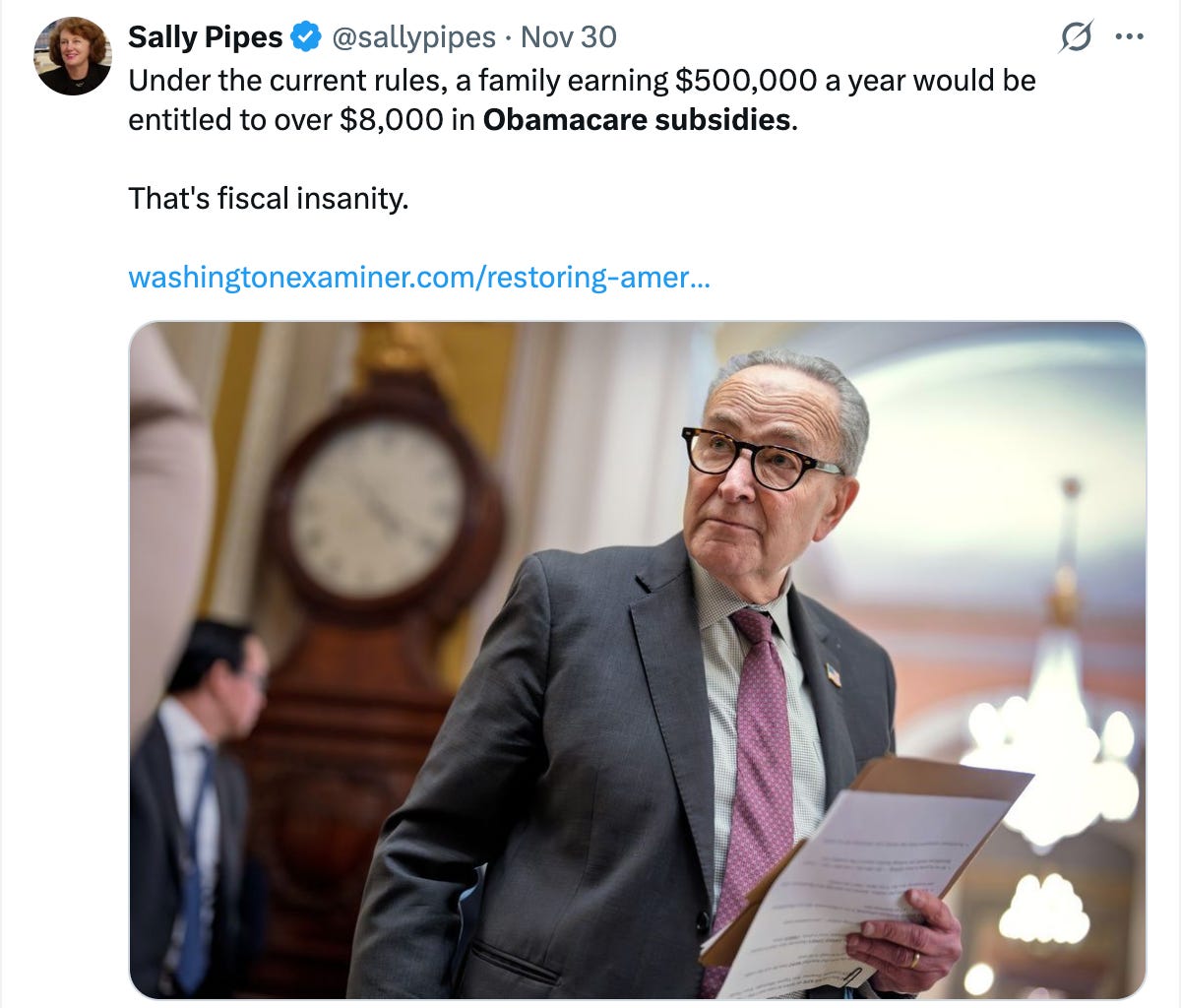
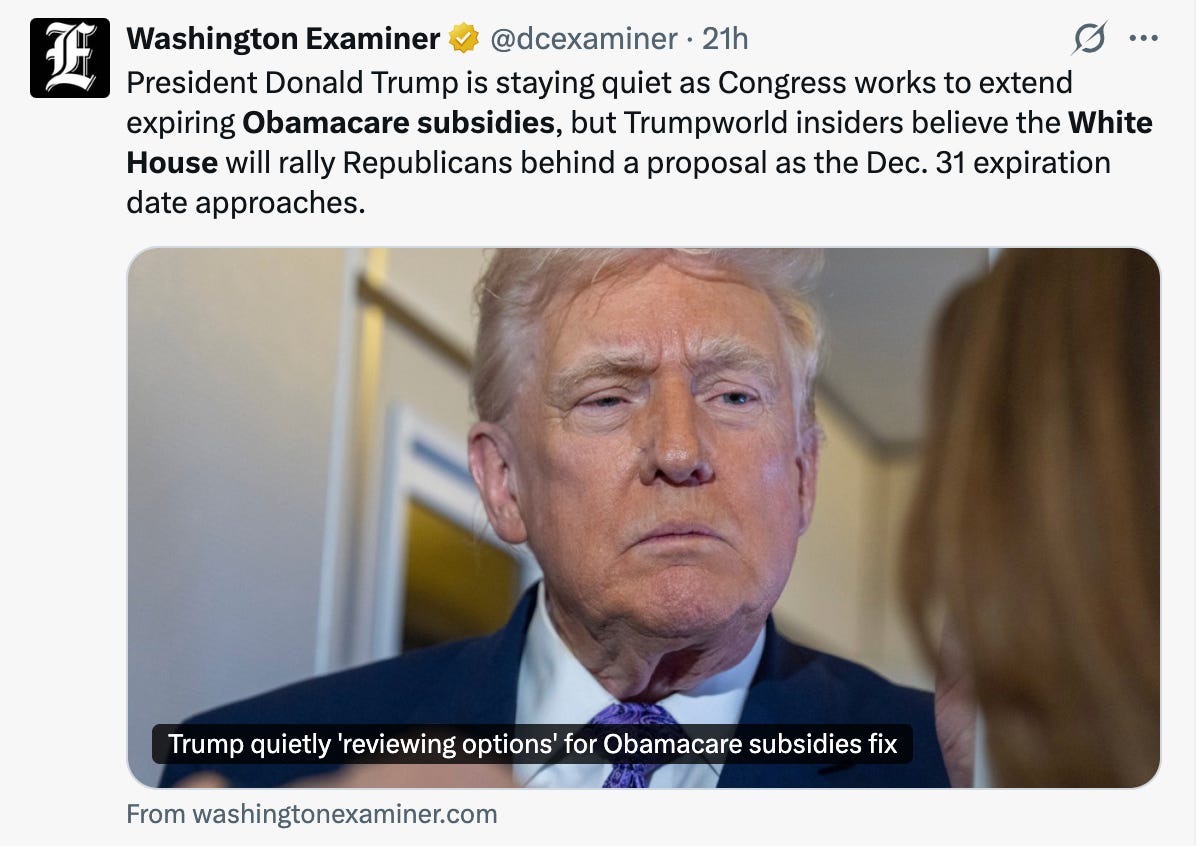
President Donald Trump has said he wants to end the subsidies, which benefit the big health insurance companies, and allow those funds, instead, to “be sent directly to the people so that they can purchase their own, much better, healthcare, and have money left over.”
Some key House and Senate Republicans are trying to work out exactly how to do that. But in a culture in which many Americans have been indoctrinated to believe health insurance coverage should be given to them for free, will they devise a sound proposal and clear language to explain and discuss it?
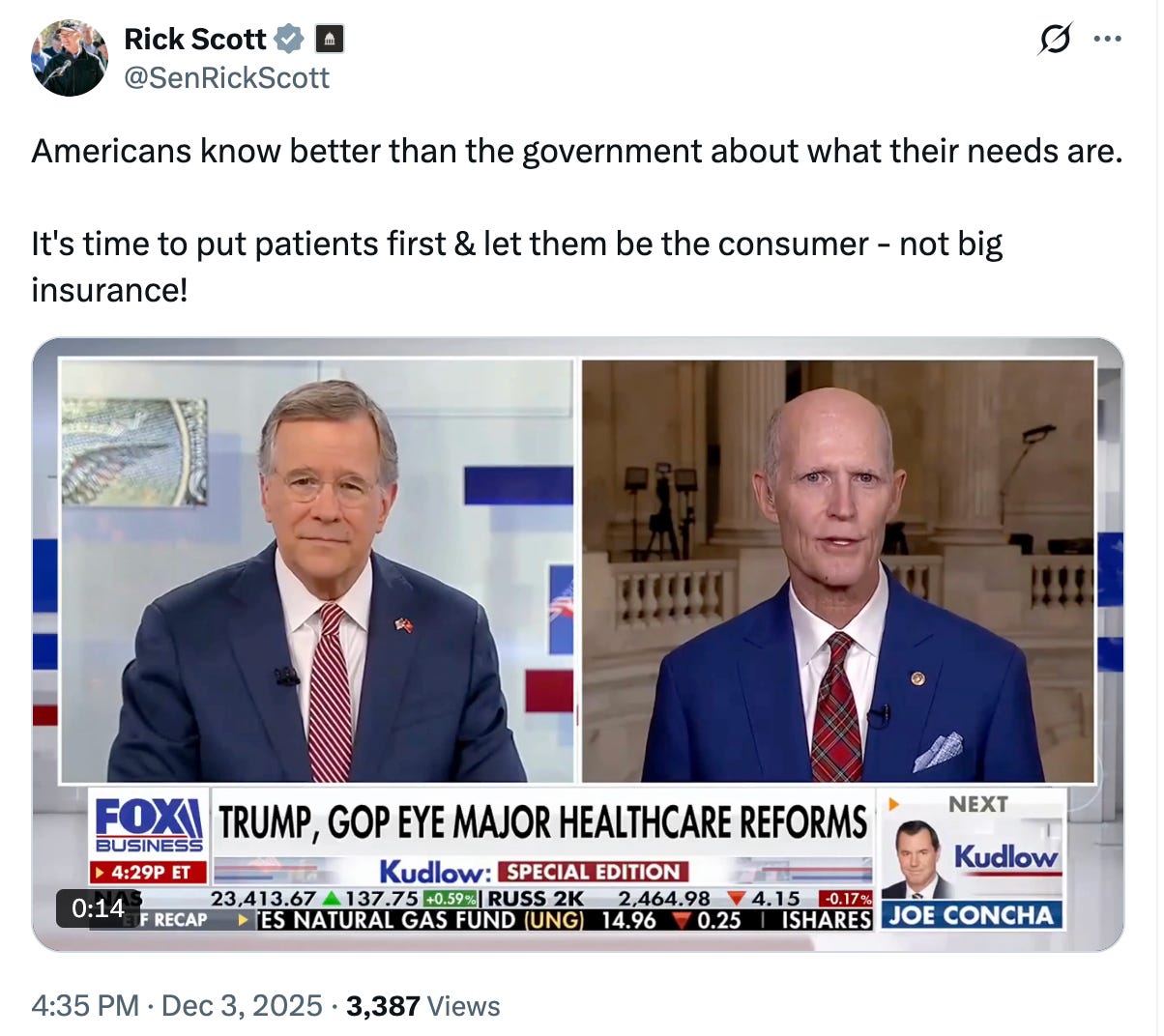
Sen. Rick Scott (R-FL), for example, announced his bill a couple of weeks ago, as one that will “fix Obamacare and drive down health care costs.”
“Obamacare has failed to deliver on its promises: families didn’t get to keep their insurance plans, couldn’t keep their doctors, and didn’t save money – and neither did the federal government,” Scott said. “Instead, Obamacare created a system that left American families with fewer choices, higher costs, and health care that doesn’t meet their needs.”
Scott explained his new bill would make “simple fixes to Obamacare that will make a world of difference to American families by making Americans the consumer, not the government, while giving them options and transparency.”
“Healthcare.gov and state exchanges continue, protections for pre-existing conditions remain in place, and families who need a safety net have one that works for them,” he said.
But can Obamacare be “fixed?”
“Americans have been taught to think that health care is free, meaning that somebody else should pay for it,” Jane Orient, M.D. told Lumen-News during an extensive interview. “It’s your ‘right’. It’s been kind of drummed into their heads, plus just the fact that it has become so expensive that it’s terrifying. And the reason it’s so expensive is because somebody else is paying for it, and there’s this big load of administration on top of that.”
Orient, the executive director of the Association of American Physicians and Surgeons (AAPS), added:
There’s also been a futile attempt to try to control the cost, because if the physician or the hospital doesn’t care how much it costs, and the patient doesn’t care how much it costs, then – because they’re not responsible for it – well, then, they’ll just keep expecting the insurance company to pay it, which will, in turn, just ratchet up the premium.
“So, people just don’t see the connection,” she explained, emphasizing that “the most important thing” is for “people to find out what things really cost.”
“That’s why Surgery Center of Oklahoma has been so wonderful,” Orient noted. “They post their prices online. And I think other places are beginning to imitate that to a certain extent.”
Many Americans, she said, are now patients of large, corporate medical practices where they may not see an actual physician during their visit for an issue of concern to them.
“You don’t have anyone who considers themselves to be your doctor who actually can do what he thinks is best, as opposed to just going by the best practices that is defined for him,” she described.
While Orient ultimately views Obamacare as not being “fixable,” she says it’s no longer “reasonable” to expect a total repeal of the disastrous legislation.
“I think that you can’t really say repeal Obamacare and expect it to go anywhere, but they can repeal certain aspects of it,” she said. “They could repeal the insurance mandate; they could repeal a ban on physician-owned hospitals; and they could repeal the requirement that insurance offer all of these expenses – benefits for a certain political class of people, that people either find morally objectionable or they know they don’t need them – then that would lower the cost.”
Alternately, Orient suggests eliminating restrictions on the types of health insurance coverage people opted for in years past, an example being catastrophe-only insurance.
“Then there will be a chance for free markets to develop,” she said, realistically acknowledging that “develop” means they would emerge – but not instantly.
“I mean, you’re not going to bring all these plans that got killed back into existence immediately, but at least there will be the possibility for them to develop,” she asserted, noting as well that even so-called “preventive care” procedures don’t necessarily save healthcare costs.
“You do a huge number of expensive, supposedly preventive procedures, which are really early diagnosis procedures, and they can cause their own problems with false positives or with bad results, you know, like perforating the colon, in the case of colonoscopy, and things like that,” Orient explained. “They don’t save money, and, theoretically, they may benefit the individual, but really, individuals might be more motivated to find things that are less intrusive – like now there are better, non-invasive tests for colon cancer, even blood tests or stool tests. So, it incentivizes people to be having these huge clinics where they need colonoscopies all the time, most of which really are marginally of benefit to anybody. And if you didn’t have them paid for, you might think of some better alternative.”
Scott’s bill would:
In the House, Rep. August Pfluger (R-TX) said Tuesday the Republican Study Committee (RSC), which he chairs, is also working on a bill focused on health care – one that might serve as a sequel to the “One Big, Beautiful Bill Act.”
Appearing on the “John Solomon Reports” podcast, Pfluger emphasized “[w]hat we want to see is competition.”
“First and foremost, we want to see transparency,” he said, adding that there are “plenty of middlemen in this system who are taking away from the savings that the patients, that Americans, should be getting.”
Pfluger noted that bringing down the price of drugs – a priority of Trump’s – will also lower healthcare costs.
“We shouldn’t be paying the exorbitant rates for drugs when you see many other countries that are paying 10%, 20%, 30% of that,” he asserted.
The Texas Republican also mentioned health savings accounts could be part of the RSC’s plan, so that Americans would be able to pursue private coverage, rather than a government-subsidized plan.
Pfluger stressed that “conservative, fair market principles” will be guiding his committee in finalizing its proposal.




Stay updated with the latest in the Constitution State with The CT Centinal