Please Follow us on Gab, Minds, Telegram, Rumble, Gettr, Truth Social, Twitter, YouTube, Instagram
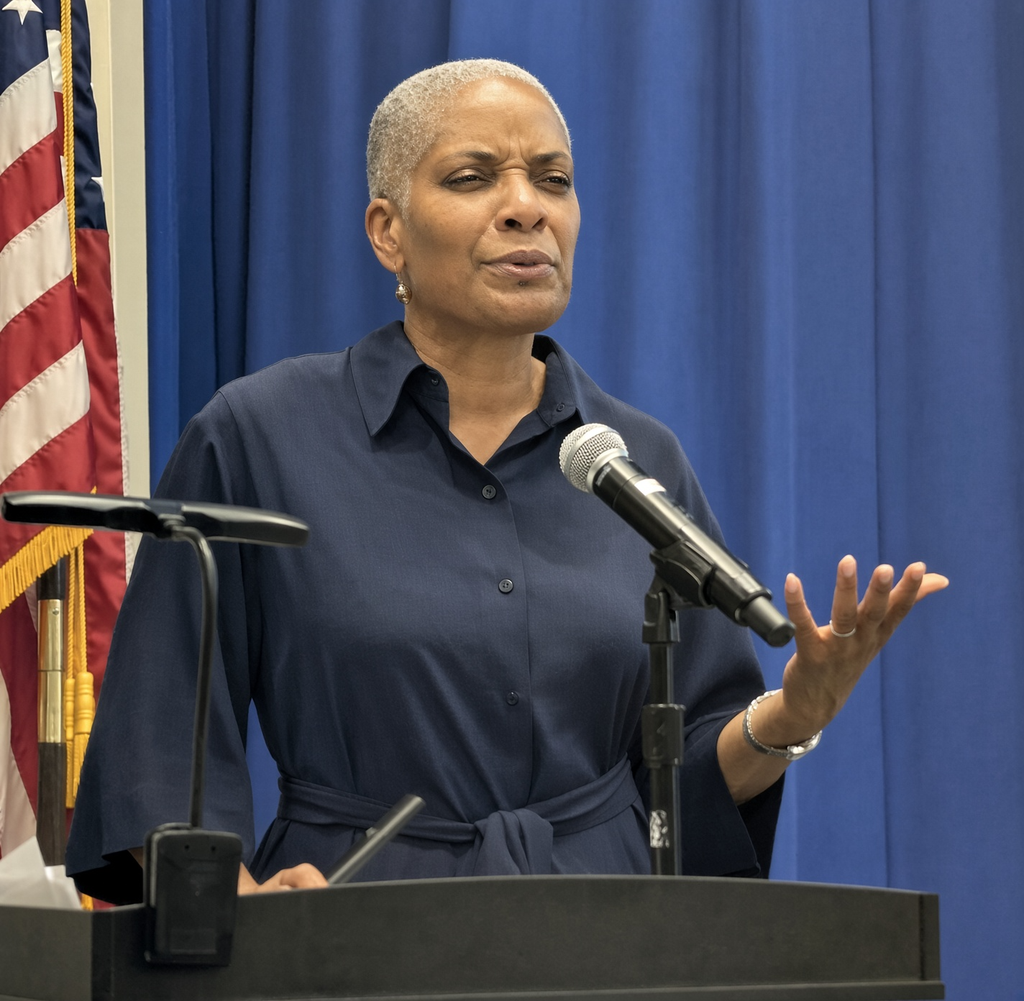
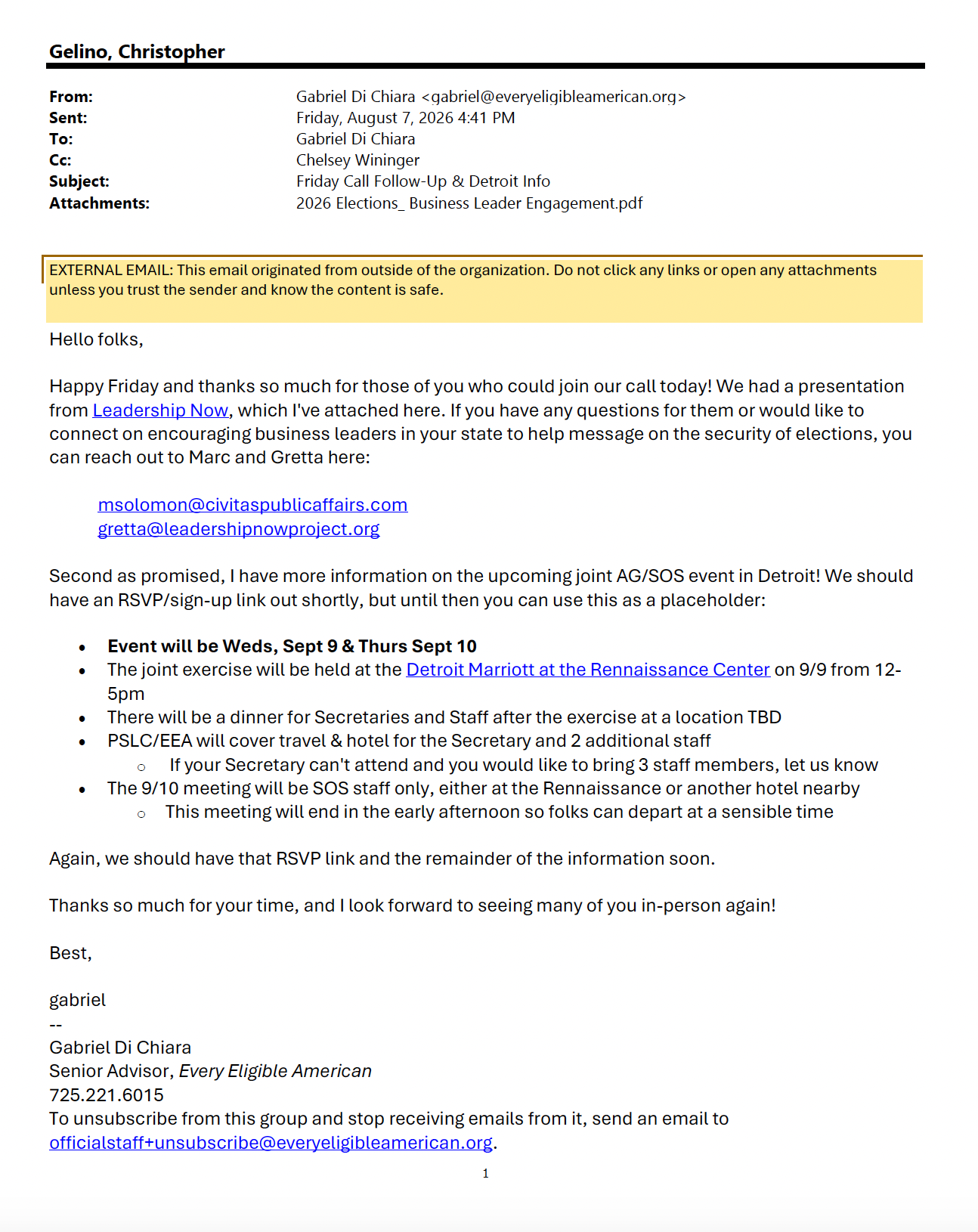
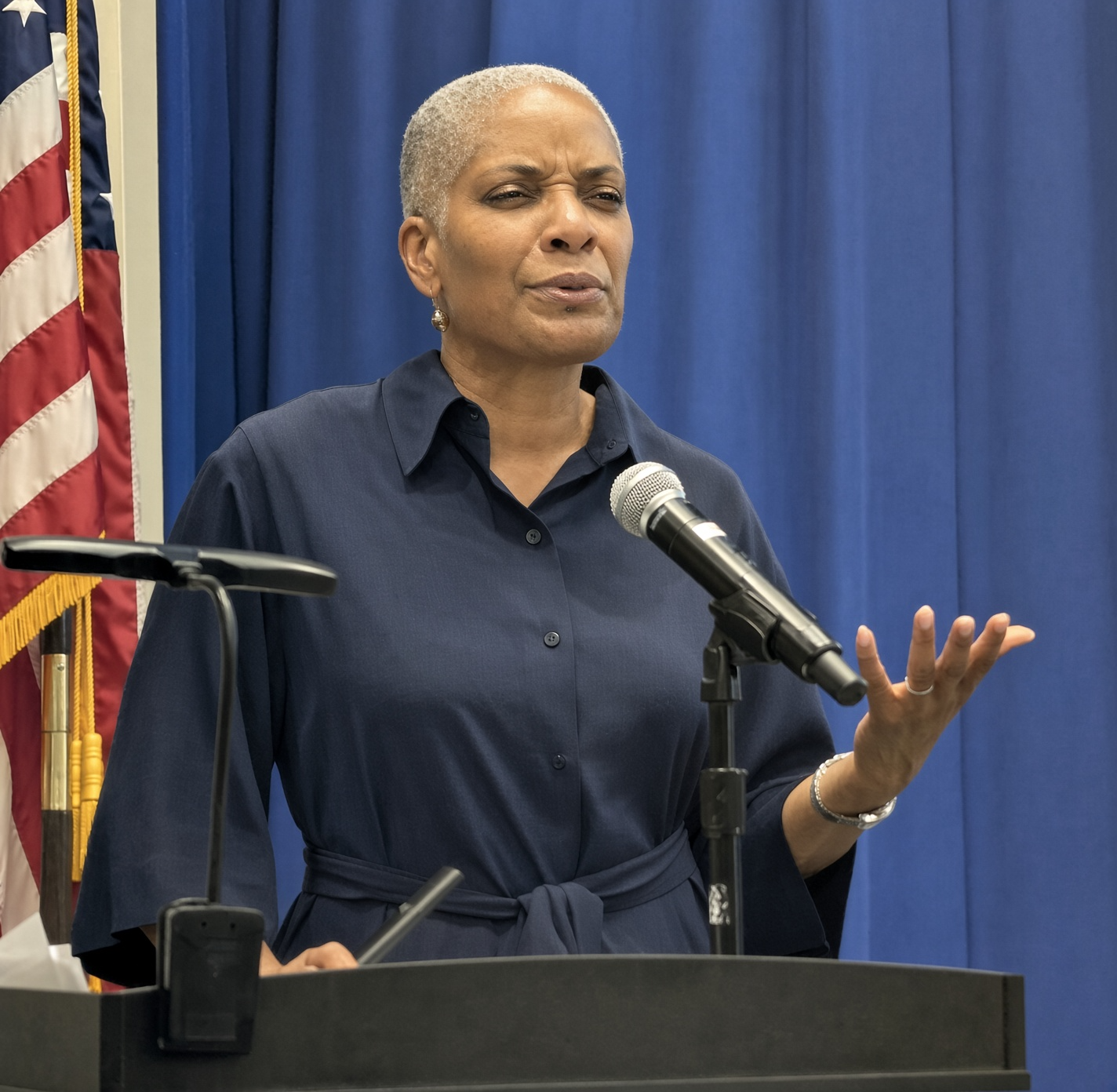
FOIA records obtained by Greenwich Patriots regarding Secretary of the State Stephanie Thomas show she received the Leadership Now Project's August 2026 presentation titled “2026 Elections: Business Leader Engagement.”
The deck, prepared as messaging guidance for the midterms, was forwarded in an email from Gabriel Di Chiara of the progressive political action committee Every Eligible American after a call that included a Leadership Now briefing.
Leadership Now was founded by a group of Harvard Business School alumni. Its CEO and co-founder, Daniella Ballou-Aares, previously served as Senior Advisor for Development to Secretaries of State Hillary Clinton and John Kerry in the Obama administration and is a member of the Council on Foreign Relations. Former COO Meghann Curtis also held senior roles at the State Department under Obama.
The group describes itself as a membership organization of business leaders who believe “a strong democracy is key to a thriving economy and political stability.” Its election protection model centers on education and mobilization, civic engagement through employer toolkits, defending election officials, promoting civic norms via candidate pledges, rapid response, and legal advocacy.
The presentation shared with SOTS Thomas frames election risk explicitly as economic risk—market volatility, operational disruption, and reputational harm—and notes that business remains a relatively trusted messenger even as confidence in fair elections has declined among both parties, according to the Pew and Edelman data it cites.
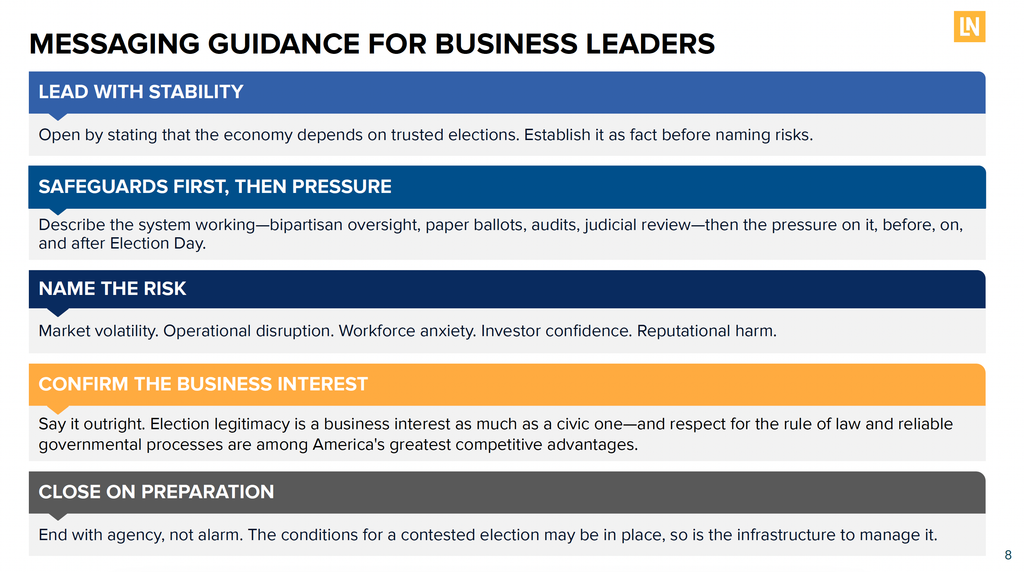
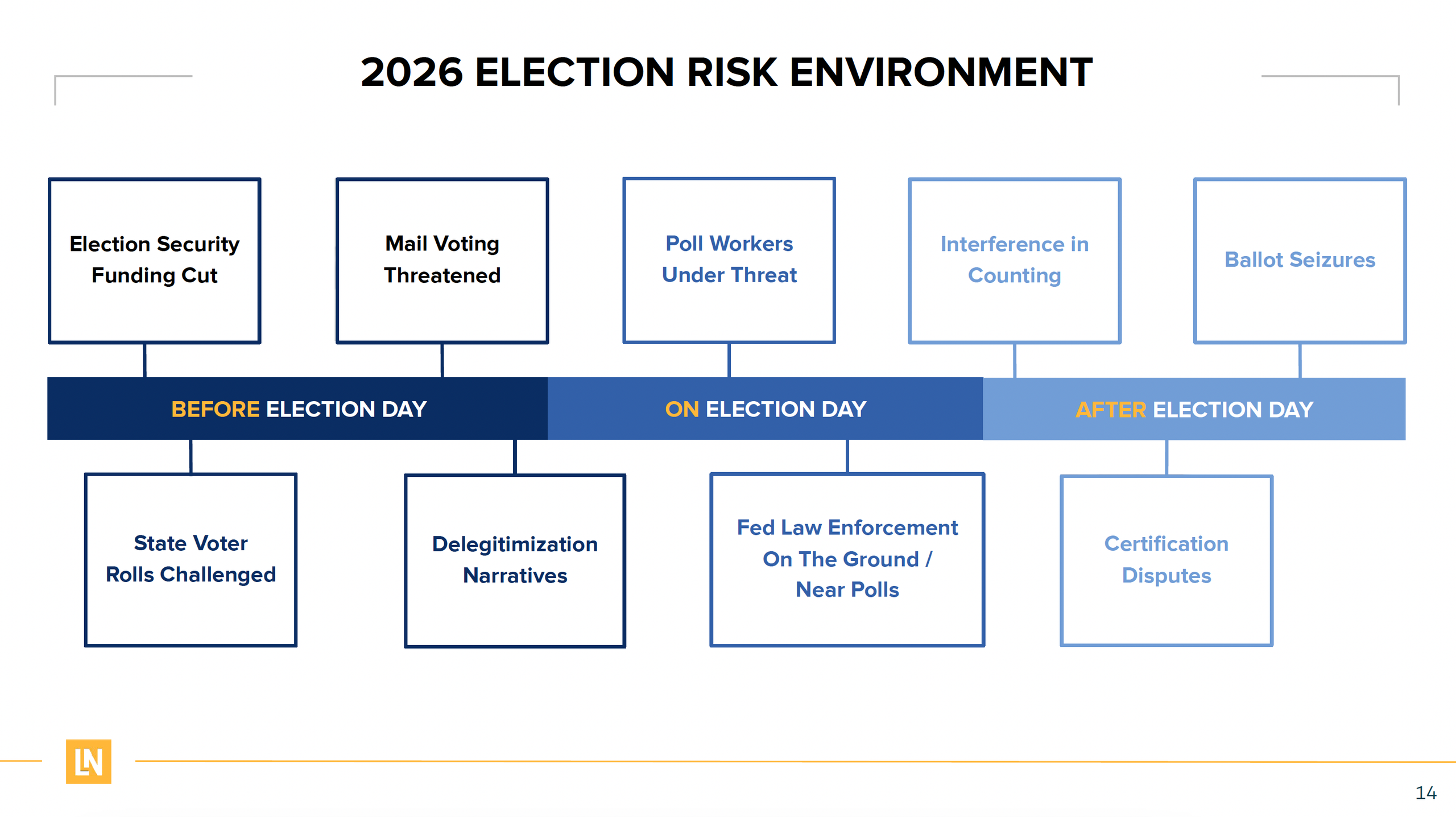
It lays out a “2026 Election Risk Environment” timeline that catalogs threats before, on, and after Election Day, including election security funding cuts, mail voting being threatened, poll workers under threat, interference in counting, ballot seizures, challenges to state voter rolls, “delegitimization narratives,” federal law enforcement near polls, and certification disputes.
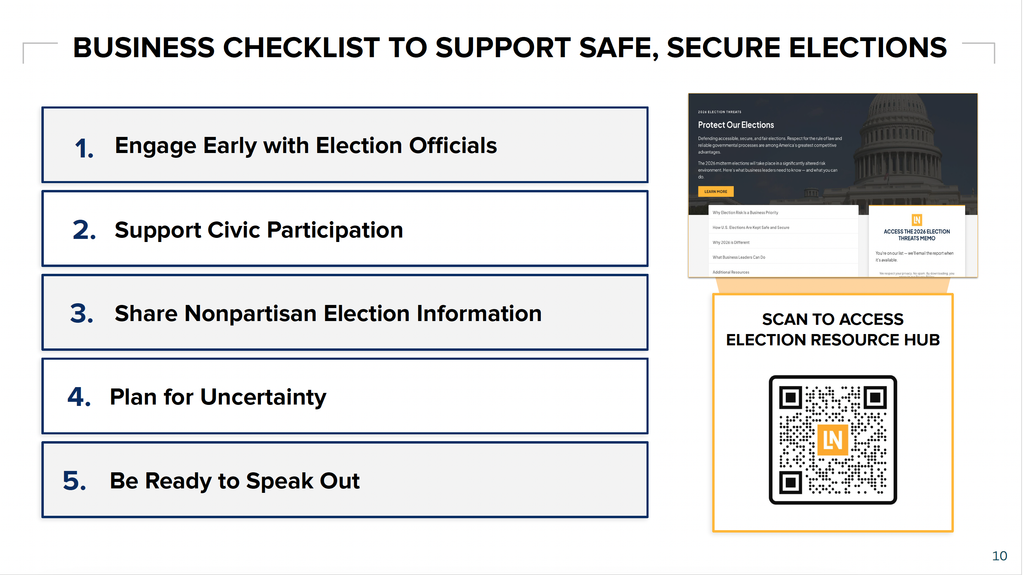
The deck also provides a five-point “Business Checklist to Support Safe, Secure Elections,” directing leaders to engage early with election officials, support civic participation, share “nonpartisan” election information, plan for uncertainty, and “be ready to speak out.”
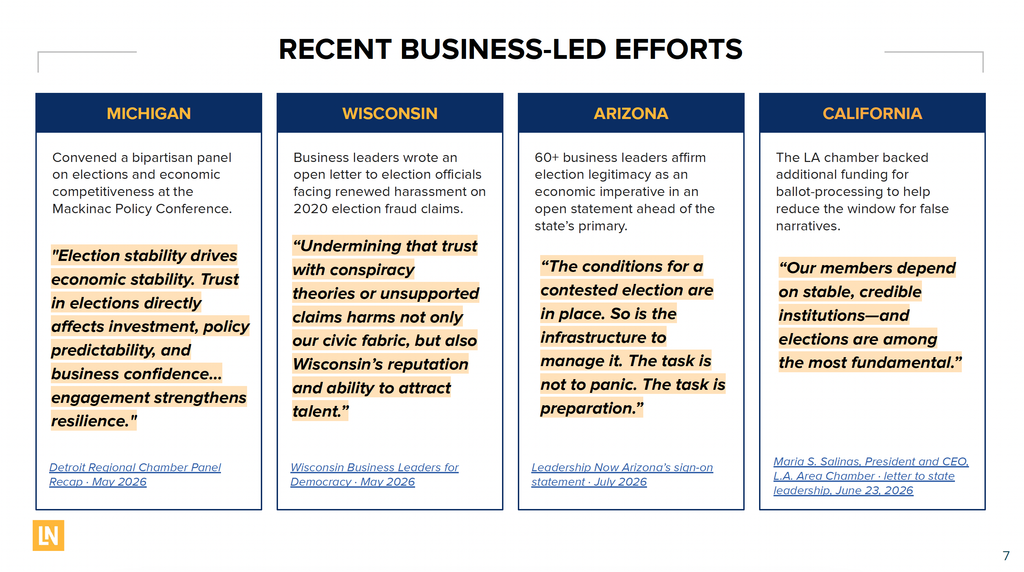
The group’s recent state-level efforts highlighted in the materials include "bipartisan" panels and open letters in Michigan, Wisconsin, Arizona, and California that emphasize preparation over panic, reject “conspiracy theories or unsupported claims,” and treat contested elections or challenges to legitimacy as threats to investment and hiring. Its public site positions this under “Protect Our Elections” work focused on the 2026 midterms in an “altered risk environment.”
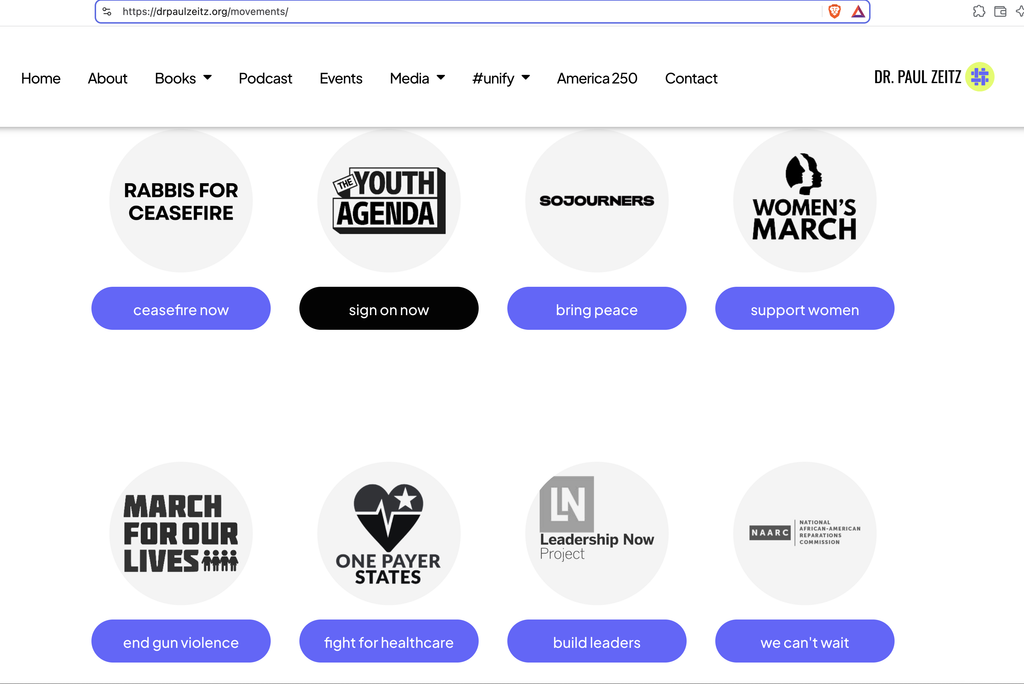
Coincidentally, Leadership Now's CEO and co-founder, Daniella Ballou-Aares, has appeared on the Revolutionary Optimism podcast hosted by Dr. Paul Zeitz, whose #unify movements and Renew American Democracy (RAD) efforts call for a complete and total constitutional renewal, a “United States 2.0,” citizens’ assemblies, and a potential “Third Founding” for the country.
Zeitz has framed the current moment as a legitimacy crisis requiring structural transformation of American governance itself, not mere policy adjustments.
This is part of the color revolution infrastructure detailed in recent reporting and document releases by DataRepublican.
The materials show former USAID democracy officers and allied groups running a color revolution playbook—developing “red line” scenarios in which the federal government could be declared illegitimate, coordinating street mobilization through networks that include Indivisible and No Kings, and preparing for structural overhaul if certain thresholds are crossed—explicitly drawing on nonviolent regime-change frameworks associated with Erica Chenoweth’s 3.5% rule.

DataRepublican’s reporting has specifically tied Indivisible into this network. Ezra Levin, co-founder and co-executive director of Indivisible, appears on one of the planning calls and in a video clip from the materials, as the groups coordinated mobilization and response strategies.
If you haven’t seen DataRepublican’s videos on this topic yet, take a few minutes to watch them, starting with this one. It’s important.
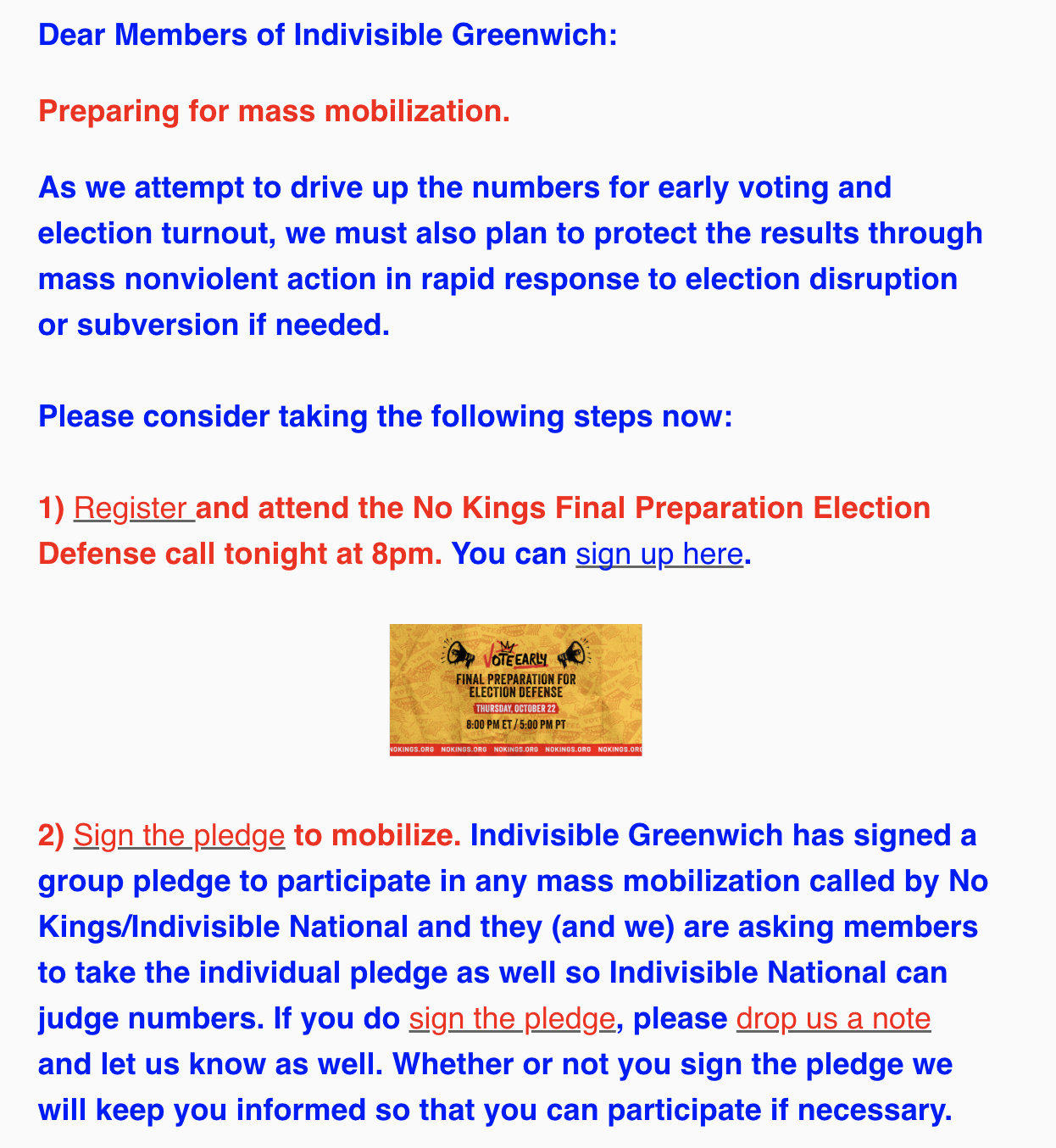
Local Indivisible chapters in Connecticut, including Greenwich, have already circulated materials urging members to prepare for “mass nonviolent action in rapid response to election disruption or subversion,” including No Kings “Election Defense” calls and mobilization pledges.
Thomas has already engaged Indivisible directly.
In April 2026 she met with Indivisible Stamford, where she told attendees “we’re all in this together”—a line repeated frequently during the COVID plandemic. In that meeting, Indivisible focused on expanding voting access and countering perceived threats from the Trump administration and federal actions.
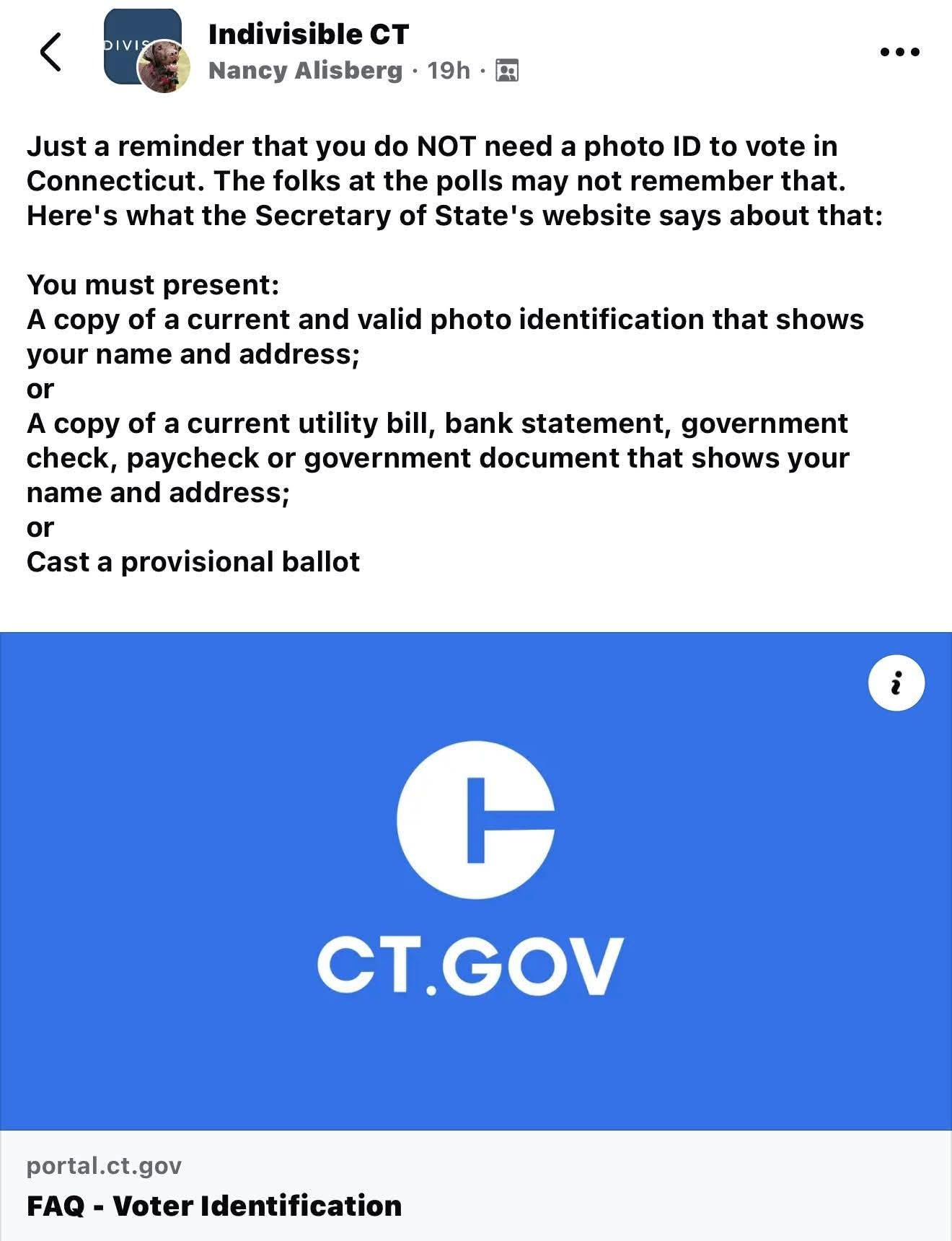
Meanwhile, her pals at Indivisible CT have been reminding people they don’t need a photo ID to vote in Connecticut—just use a current utility bill, a grocery store coupon card or even a theater membership card with a name on it, or they can simply cast a provisional ballot. What could possibly go wrong?
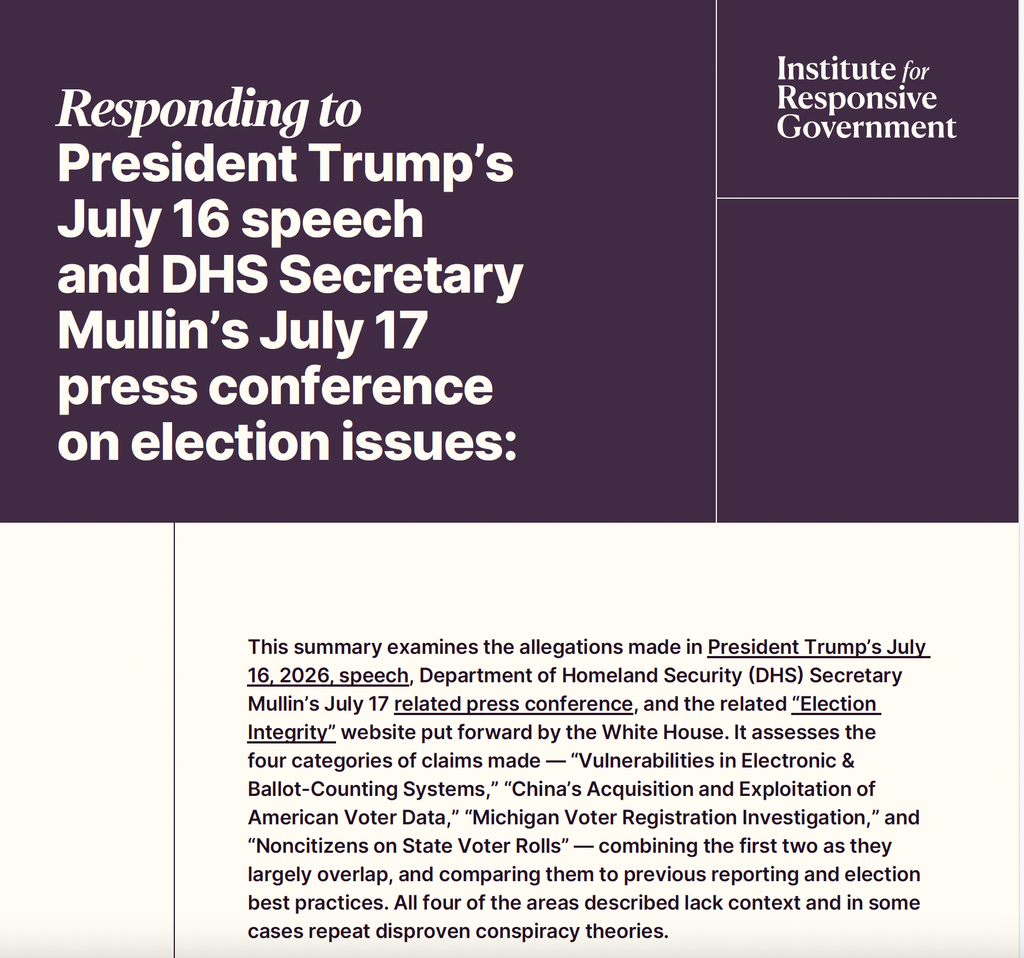
Additional materials that reached Thomas’s office included reporting and analysis from the left-wing Institute for Responsive Government, which has responded to claims from President Trump and DHS officials by arguing they lack context or recycle “disproven conspiracy theories,” as well as communications associated with Marc Elias and Democracy Docket.
Coincidentally, Congressman Jim Himes told Indivisible Greenwich last week that Elias, the lawfare king, will be on hand for the midterms to challenge any perceived threats to voting access.
What we want to know is why the official charged with the neutral administration of elections in Connecticut is receiving tailored messaging guidance and materials from a set of radical organizations engaged in a color revolution aimed at toppling a duly elected President, while local activist groups in the same broader network are organizing for a rapid street-level response if the results are contested?
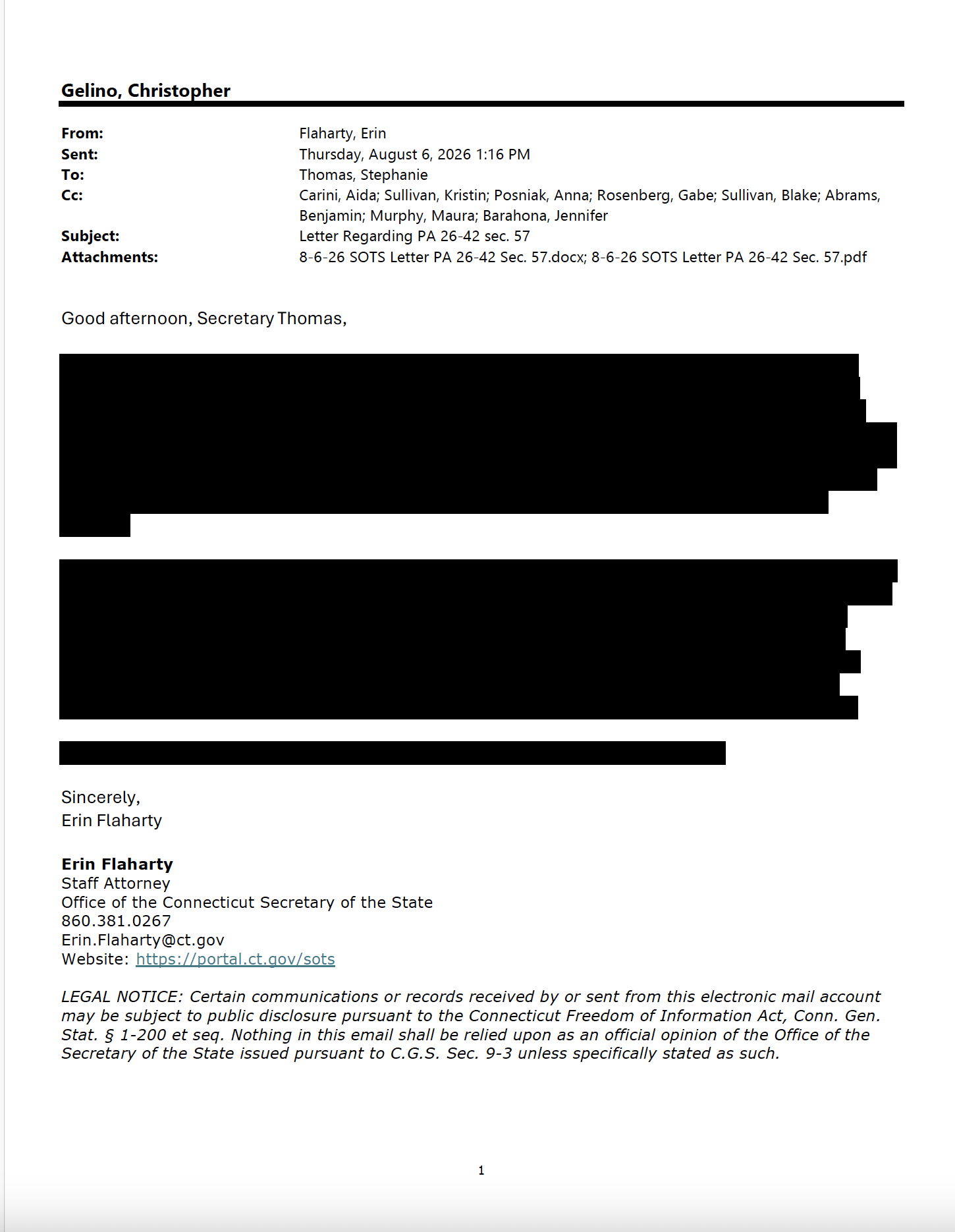
And if the law is as straightforward as the Secretary claims, why did her own staff attorney feel the need to black out every single word of an email about Public Act No. 26-42, the new election law meant to keep law enforcement (especially ICE) out of polling places? Weird, isn’t it?



Stay updated with the latest in the Constitution State with The CT Centinal