Please Follow us on Gab, Minds, Telegram, Rumble, Gettr, Truth Social, Twitter, YouTube, Instagram
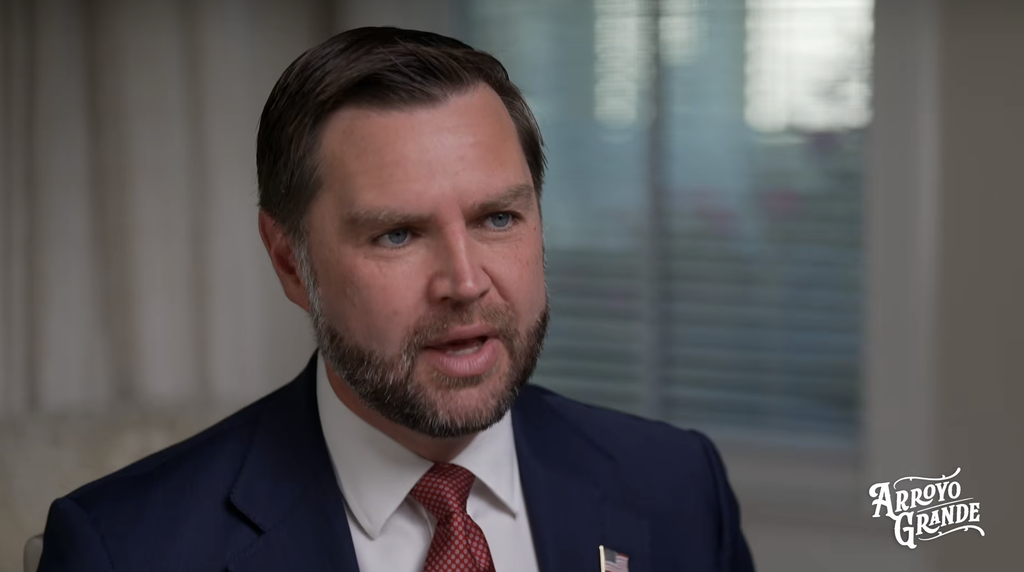
Vice President JD Vance said this past week that U.S. Church leadership, “in particular, has missed an opportunity” to weigh in clearly on the issue of massive immigration and the nation’s right to control its borders.
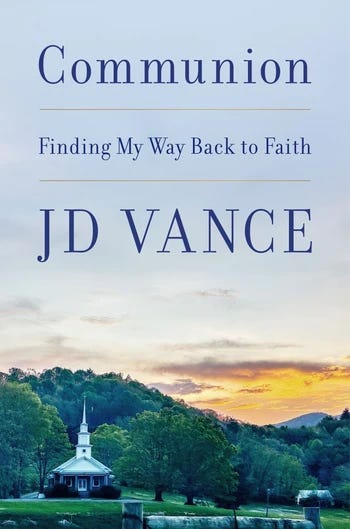
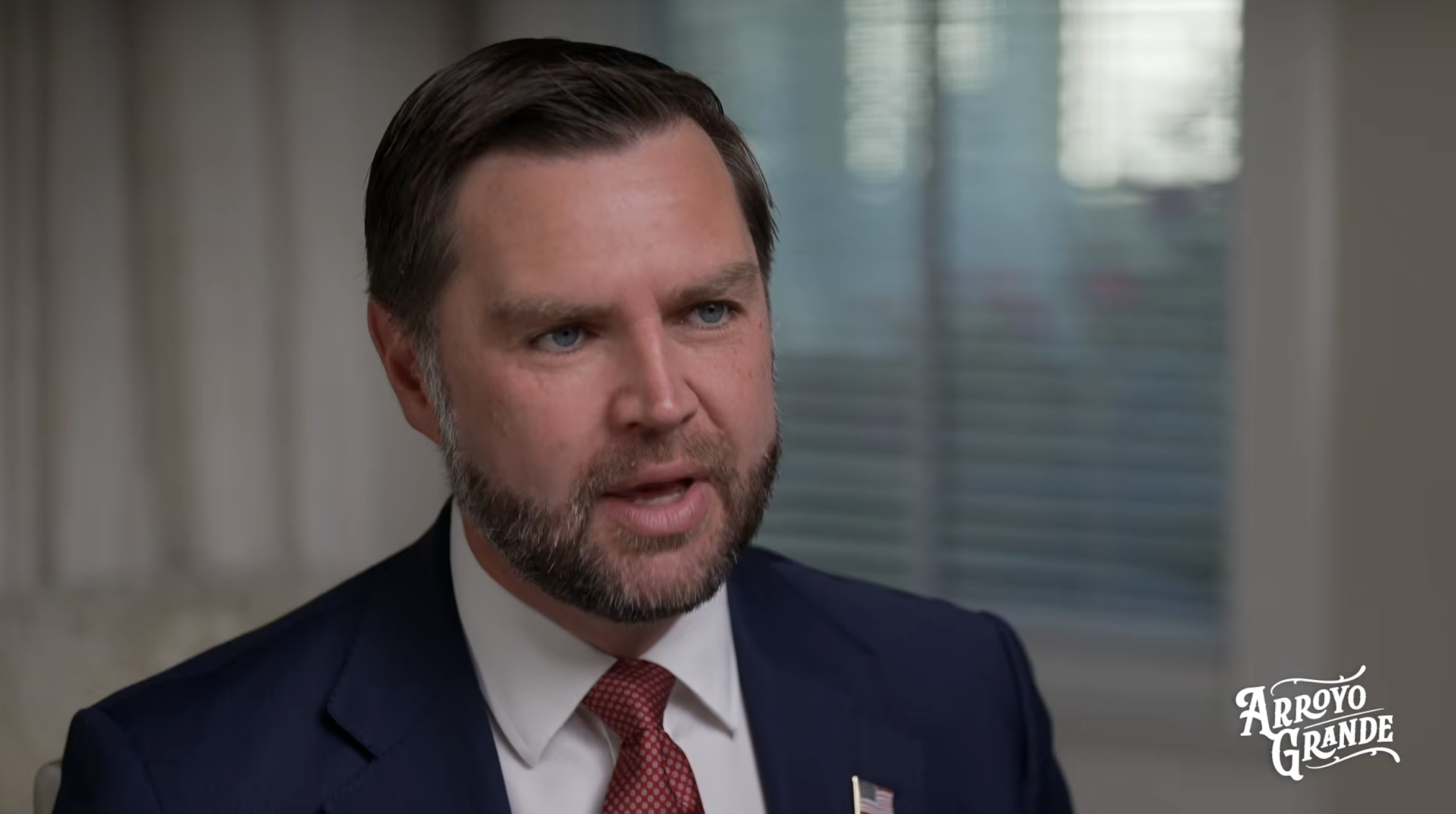
A convert to Roman Catholicism, Vance spoke with Raymond Arroyo, host at EWTN and of the podcast Arroyo Grande, about some of the vice president’s views addressed in his recently published book, Communion: Finding My Way Back to Faith.
“[I]n your book Communion, you talk about the church being too vague in its prescriptions when it comes to immigration,” Arroyo noted. “Are they, are they naive? … I mean, the church now says welcome the stranger. They don’t care who the stranger is. We just welcome the stranger.”
“Well, you can welcome the stranger, but you also have to ask some difficult questions about who the stranger is,” Vance replied. “And if that stranger is a person who wants to commit violence against you, then you have to be, I think, restrictive about what access you give that person. You have to ask difficult questions.”
But Vance said he would never “accuse the Church of being naïve.”
“I do think that the Church will say two things, two things that I fundamentally believe in and agree with, but I think 90% of people would agree with,” he explained. “Which is, one, you must be welcoming towards a stranger. On the other hand, nations are allowed to control their borders. Well, who disagrees with that, Raymond? I think everybody would say, of course, that’s our view on immigration, but I think the devil is in the details.”
The vice president then argued that the U.S. must be “specific about who is it that we’re welcoming”:
What is the balance between social solidarity and welcoming the newcomer? How do you ensure that when you bring somebody in, they don’t undercut the social trust or the wages of the native population? You have to balance these things, and I do think that, that the Church has, let me put it this way: I think that Church leadership in the United States, in particular, has missed an opportunity in an age of mass transit. Because, we have to remember, the airplane is less than 100 years old. The idea that people could rapidly come from one place to another is a very new phenomenon. I do think the Church has to figure out what should the immigration policy of an advanced economy be in a world of mass transit. I think that’s an opportunity. I wouldn’t say the Church is naive, but I do think it’s missed that opportunity.
The U.S. Catholic Bishops delivered what was called a “special message” in November of last year in which they overwhelmingly agreed to condemn what they called the Trump administration’s “indiscriminate mass deportation of people” in the country illegally.
After lodging numerous complaints against the Trump administration’s illegal immigration crackdown, midway in the bishops’ message was what some said appeared to be an obligatory paragraph in which they acknowledged “that nations have a responsibility to regulate their borders and establish a just and orderly immigration system for the sake of the common good.”
“Without such processes, immigrants face the risk of trafficking and other forms of exploitation,” they said. “Safe and legal pathways serve as an antidote to such risks.”
The message drew a firestorm of criticism from Trump administration Catholic border czar Tom Homan who argued the consequence of the bishops’ conference action would likely embolden more foreigners to risk crossing the U.S. border illegally.
“So according to [the bishops], the message we should send to the whole world is: ‘If you cross the border illegally, which is a crime, don’t worry about it,’” Homan posed. “If you get … removed by a federal judge, that’s due process, don’t worry about it, because there shouldn’t be mass deportations.’”
“If that’s the message we send the whole world, people are still going to put themselves in harm’s way to come to the greatest nation on earth,” he argued, adding that during the Biden administration – “when there was no immigration enforcement, over 4,000 aliens died making that journey” and “a quarter of a million Americans died from fentanyl.”
Several veteran Catholic writers also expressed dire concern over the bishops’ “message.”
One such journalist was Robert Royal, editor-in-chief at The Catholic Thing. Royal told Arroyo’s podcast The Prayerful Posse that the bishops’ statement reflected yet another confused narrative about what the Church actually believes.
“We are really in a different world, but it’s not the one that points back to this kind of open world in which we’re supposed to build bridges and not fences,” he said. “I think it’s time to start building some fences, and not only in the secular world, but in the Church as well. We need to get back to the point where we have a clear definition of what it is to be inside the Church and outside the Church, what actually belongs to the faith and doesn’t belong to the faith.”
Vance said he agrees with the two key principles highlighted in the debate about illegal immigration: protecting borders and expressing humanity.
“[T]he actual prudential, pragmatic application of these principles, I think, the Church should be and could be a lot more specific, especially again when you have mass transit and mass migration,” the vice president said. “These are totally new problems, and I think the Church fathers have to figure out how do we apply the principles of the Church to this very new problem.”




Stay updated with the latest in the Constitution State with The CT Centinal